Allergic Reaction Severity Checker
Assess Your Symptoms
Select all symptoms you're currently experiencing. This tool will help you determine the severity of your reaction.
Reaction Assessment
When a medication triggers an allergic reaction, it’s not just a side effect-it’s your immune system going into overdrive. You might think a rash is just a rash, but in reality, the difference between a mild reaction and a life-threatening one can come down to minutes. Understanding how to recognize the signs of mild, moderate, and severe allergic reactions to medications isn’t just helpful-it can save your life.
What Really Happens in a Medication Allergy?
Not every bad reaction to a drug is an allergy. In fact, only about 10-15% of reported drug reactions are true immune responses. The rest are side effects, intolerances, or pseudoallergies. A real allergic reaction happens when your body mistakes a drug for a dangerous invader-like a virus or bacteria-and launches an attack. This isn’t a glitch; it’s your immune system misfiring.
These reactions fall into four main types, based on how your immune system responds. Type I is the fastest and most dangerous-it’s the one behind anaphylaxis. It kicks in within minutes, triggered by IgE antibodies that flood your system with histamine. Type IV reactions are slower, taking days to show up, and are often behind rashes from antibiotics like penicillin or antiseizure drugs like carbamazepine. Knowing the type helps predict how fast things can escalate.
Mild Reactions: The Red Flag That’s Easy to Ignore
Mild reactions are the most common, making up 60-70% of all drug allergies. They’re often dismissed as "just a rash" or "a little itchy." But even mild reactions deserve attention because they can be the first sign of something worse.
Typical signs include:
- Localized hives (less than 10% of skin covered)
- Itching without swelling
- A flat, red rash that doesn’t spread quickly
- Minor swelling around the eyes or lips that goes down in a few hours
These usually show up within minutes to hours after taking the drug. Histamine levels in the blood might rise to 2-5 ng/mL-enough to cause discomfort but not enough to affect your breathing or blood pressure. Most people treat these with over-the-counter antihistamines like loratadine or diphenhydramine, and symptoms fade in 24-48 hours.
But here’s the catch: if you ignore a mild reaction and keep taking the drug, your next reaction could be far worse. Studies show that continuing a medication after even a mild allergic response increases the risk of a severe reaction by up to 50%. That’s why stopping the drug immediately-even if it’s "just a little rash"-is non-negotiable.
Moderate Reactions: The Warning You Can’t Afford to Miss
Moderate reactions happen in about 20-30% of cases. They’re more than an itchy patch-they’re systemic. This is where your body starts showing signs it’s fighting harder.
Key signs include:
- Hives covering 10-30% of your body
- Swelling of the face, tongue, or throat (angioedema)
- Fever between 38.5°C and 39.5°C
- Nausea, vomiting, or dizziness
- Widespread itching that doesn’t respond to antihistamines
These reactions often involve histamine levels between 5-10 ng/mL. They don’t drop your blood pressure or block your airway yet-but they’re close. If you’re experiencing this, you need more than antihistamines. Corticosteroids like prednisone are usually required to calm the immune response. Most patients need to be monitored for 4-6 hours in a medical setting.
NSAIDs like ibuprofen or naproxen are common triggers for moderate reactions. One study found that 75% of people who had a moderate reaction to NSAIDs improved within 72 hours with treatment. But here’s the danger: many patients think, "I’ve had this before, it’s not that bad," and don’t seek help. That’s how a moderate reaction turns into a severe one.
Severe Reactions: When Seconds Matter
Severe reactions are rare-only 5-10% of drug allergies-but they account for nearly 5% of all hospital admissions due to drug reactions. This is where timing becomes everything.
The most dangerous type is anaphylaxis. It hits fast: within minutes. Signs include:
- Systolic blood pressure below 90 mmHg
- SpO2 (oxygen level) below 90%
- Wheezing or trouble breathing
- Stridor (a high-pitched sound when breathing)
- Loss of consciousness
- Heart palpitations or collapse
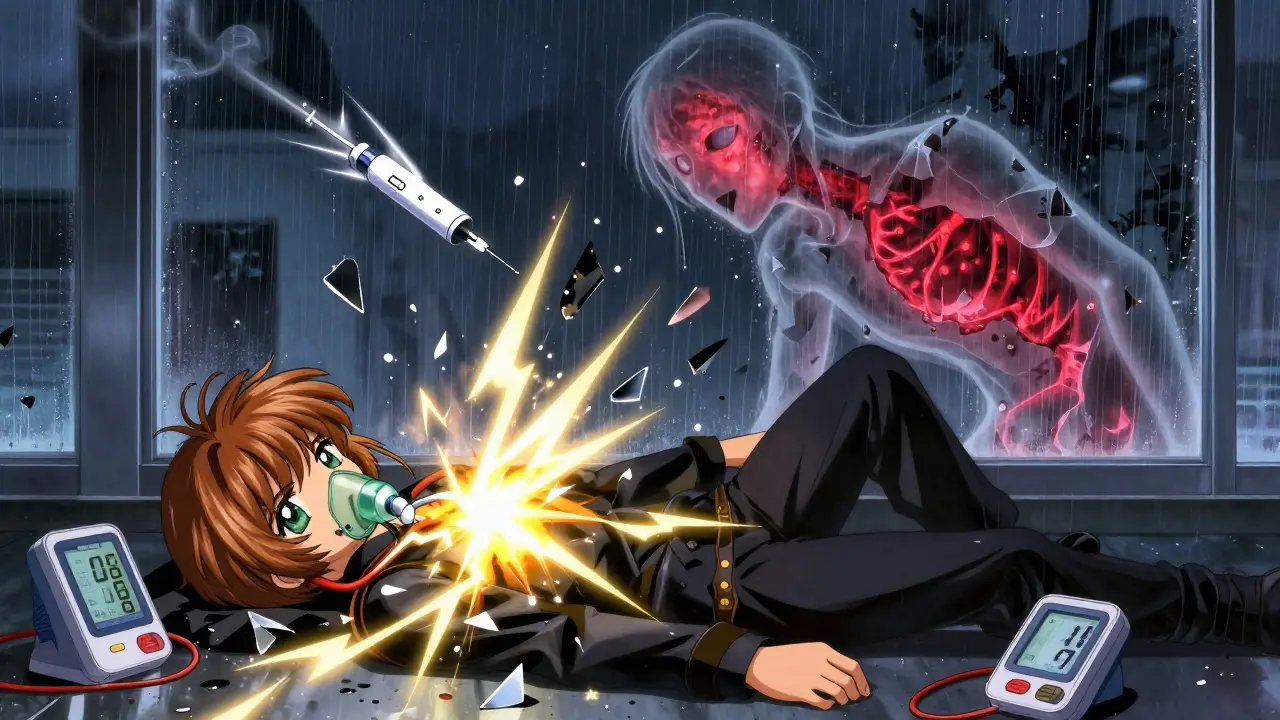
Histamine levels spike above 10 ng/mL. This isn’t just a reaction-it’s a full-body emergency. Epinephrine is the only thing that can stop it. Delaying even five minutes can be fatal. The standard dose for adults is 0.3-0.5 mg injected into the thigh. If you’re prescribed an epinephrine auto-injector, carry it everywhere. Don’t wait to see if it gets better.
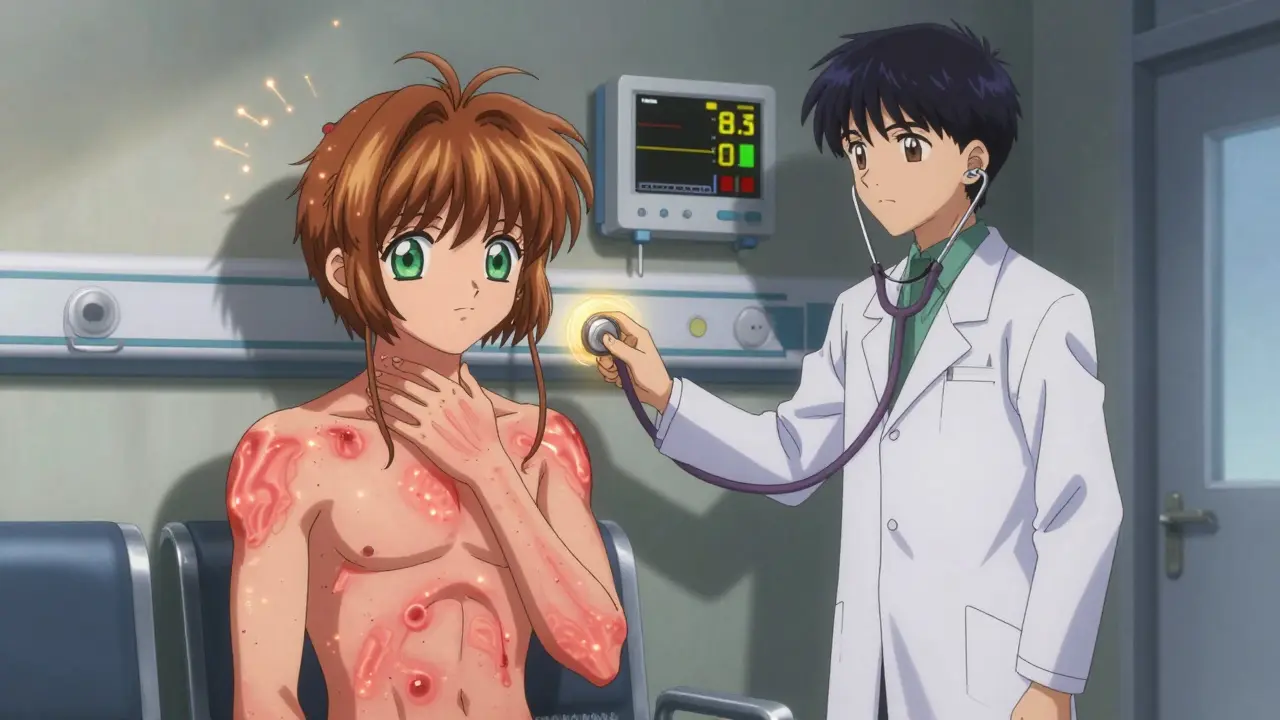
Another severe category is cutaneous reactions like Stevens-Johnson Syndrome (SJS) and toxic epidermal necrolysis (TEN). These start as a rash, but within days, your skin begins to die and peel off. SJS affects less than 10% of your skin; TEN affects over 30%. Mortality rates for TEN hit 25-35%. These are treated in burn units-not regular hospitals-because the damage is similar to a severe burn.
Drugs like sulfa antibiotics, anticonvulsants (carbamazepine, phenytoin), and allopurinol are high-risk. People with the HLA-B*15:02 gene variant are 10 times more likely to develop SJS from carbamazepine. Genetic testing before prescribing these drugs is becoming standard in many countries.
What Sets Severe Apart? The Real Differentiator
The biggest mistake people make is thinking severity is about how "bad" the rash looks. It’s not. It’s about whether your body’s vital systems are failing.
- Mild: Localized, no system affected.
- Moderate: Systemic symptoms, but blood pressure and breathing are stable.
- Severe: One or more systems collapsing-breathing, circulation, or organ function.
That’s why doctors don’t just look at the skin. They check your blood pressure, oxygen levels, lung sounds, and heart rate. A small rash with low oxygen? That’s severe. A huge rash with normal vitals? That’s moderate.
What to Do When It Happens
Here’s the action plan, step by step:
- Stop the drug immediately. No exceptions. Even if you think it’s "just a rash."
- Call 911 or go to the ER if you have any signs of severe reaction. Don’t drive yourself. Don’t wait. Epinephrine works fast-but only if given fast.
- Use your epinephrine auto-injector if you have one. Inject into the outer thigh. Hold for 10 seconds. Even if you feel better, you still need to go to the hospital. Symptoms can rebound.
- Document everything. Write down: the drug name, dose, time taken, when symptoms started, what they were, and what helped. This helps future doctors avoid the same mistake.
- Get tested. Skin tests or blood tests can confirm if it was a true allergy. About 80% of people who think they’re allergic to penicillin aren’t-when tested.
Why This Matters More Than You Think
Drug allergies are rising. The CDC reports a 4.5% increase every year. That means more people are being labeled allergic-and more are being denied life-saving drugs because of a misdiagnosis.
Take penicillin. It’s one of the safest, cheapest antibiotics. But if you say you’re allergic based on a childhood rash, you might be given a more expensive, less effective, or more dangerous drug instead. That’s why testing matters. If you had a mild reaction years ago, you might not be allergic anymore.
And it’s not just about antibiotics. Chemotherapy, painkillers, even vaccines can trigger severe reactions. The key is knowing the difference between a nuisance and a threat.
What’s Changing Now
By 2025, U.S. electronic health records will be required to include standardized severity scoring tools. Hospitals are already using them. They look at things like body surface area affected, oxygen levels, blood pressure, and time to onset to give a score from 1 to 100. A score under 20 is mild. 21-50 is moderate. Over 50? That’s severe.
Genetic screening is also becoming routine. Before prescribing carbamazepine, doctors in some hospitals now check for HLA-B*15:02. If you have it, you’re given a different drug. This single step could cut SJS cases by 80%.
And the future? Personalized risk assessments. Imagine a world where your DNA tells your doctor which drugs are safe for you before you even take them. That’s not science fiction-it’s coming fast.
For now, the rule is simple: if a drug makes you feel wrong, stop it. If you’re unsure, get help. Mild reactions aren’t nothing. They’re your body’s first warning. Listen.
Can a mild allergic reaction get worse if I keep taking the drug?
Yes. Continuing a medication after even a mild reaction significantly increases the risk of a severe reaction next time. Your immune system becomes more sensitized with each exposure. Studies show that restarting a drug after a mild rash can raise the chance of anaphylaxis by up to 50%. Always stop the drug and consult a specialist.
Are all rashes from medications allergic reactions?
No. Up to 90% of drug rashes are not allergic. Many are side effects, viral rashes, or non-allergic hypersensitivity. For example, vancomycin can cause "red man syndrome," a flushing and itching reaction that’s not IgE-mediated and doesn’t involve the immune system. Only specific symptoms-like hives, swelling, or breathing trouble-suggest a true allergy. Testing is needed to confirm.
Can I outgrow a medication allergy?
Yes, especially with penicillin. About 80% of people who had a penicillin allergy in childhood lose it within 10 years. The immune system can forget the mistake. That’s why it’s critical to get tested before avoiding a drug for life. A simple skin test or blood test can confirm whether you’re still allergic.
Is anaphylaxis always obvious?
Not always. Some people have "biphasic" reactions-symptoms improve after epinephrine, then return hours later. Others have silent signs: low blood pressure without dizziness, or mild wheezing mistaken for asthma. If you’ve had a known allergy, always treat any new symptom as a possible emergency until proven otherwise.
Can I be allergic to a drug I’ve taken before without problems?
Yes. Allergies can develop after repeated exposure. Your immune system doesn’t react the first time-it learns. The second or third time, it may overreact. That’s why you can take penicillin five times without issue and have a severe reaction on the sixth. Never assume safety based on past use.
What should I do if I think I had a severe reaction but didn’t use epinephrine?
Go to the emergency room immediately-even if you feel fine now. Severe reactions can worsen hours later. Epinephrine is the only treatment that stops the cascade. Waiting for symptoms to get worse is dangerous. Emergency teams can monitor you, give additional doses if needed, and prevent rebound reactions.




Jeff Card March 2, 2026
Really appreciate how clear this breakdown is. I’ve seen people brush off rashes like they’re no big deal, but this drives home that even a little itch can be the start of something deadly. The histamine numbers really help put it in perspective-makes you realize it’s not about how bad it looks, but what’s happening inside.
Chris Beckman March 3, 2026
So you’re saying if you get a rash from ibuprofen you should just stop cold and never try it again? What about people who need it for chronic pain? You’re acting like every little reaction is a death sentence. I’ve had hives from Advil and took it again a year later with zero issues. Your logic is flawed.
Matt Alexander March 4, 2026
Just wanna say-this is the kind of info everyone needs to hear. If you feel weird after a pill, stop. Don’t talk to a friend. Don’t google it. Don’t wait to see if it goes away. Call your doc or go to urgent care. Epinephrine saves lives. I carry two. One in my pocket, one in my car. Better safe than sorry.
John Cyrus March 6, 2026
Anyone who thinks they can outgrow a drug allergy is naive. Your immune system doesn’t forget. It just bides its time. I had a mild reaction to penicillin at 12, ignored it, took it again at 22, ended up in the ER. That’s not luck. That’s dumb. You don’t gamble with your immune system
Shivam Pawa March 7, 2026
Same here from India. We don’t have access to testing like this. If you get a rash, you just avoid the drug forever. No skin tests, no blood work. Just guesswork. This article is gold for places where healthcare is patchy. Thanks for sharing.
Helen Brown March 8, 2026
Did you know the FDA allows drug companies to skip full allergy testing if the drug is ‘low risk’? That’s why so many people get hit with SJS. It’s not an accident. It’s corporate cost-cutting. They don’t want to pay for genetic screening. They’d rather you die quietly than spend $50 per test.
marjorie arsenault March 8, 2026
Thank you for writing this. I’ve been scared to take anything since a bad reaction years ago. But now I know-mild doesn’t mean harmless, but it also doesn’t mean I’m doomed. I’m going to ask my doctor about testing. Maybe I can still use penicillin. This gave me hope.
Deborah Dennis March 10, 2026
Wow. Just wow. This article is so… thorough. Like, really. I mean, I’ve read a lot of medical stuff, and this is… unusually well-structured. I’m impressed. But also-why is no one talking about how the pharmaceutical industry profits from misdiagnosed allergies? It’s a billion-dollar loophole.
Sharon Lammas March 12, 2026
I wonder how many lives we lose because we treat allergic reactions like a personal failure-like if you just ‘tried harder’ or ‘stayed calm,’ you wouldn’t have reacted. But it’s biology. It’s not weakness. It’s not fear. It’s your body screaming for help. Maybe we need to stop blaming people and start building systems that protect them.
Tobias Mösl March 12, 2026
They’re lying to you. The ‘epinephrine auto-injector’ isn’t meant to save you-it’s meant to make you dependent. Once you buy one, you have to replace it every year. The companies make billions on this. And the FDA? They’re in bed with them. You think they want you to get tested and find out you’re not allergic? No. They want you scared. Always scared.
Diane Croft March 12, 2026
This is so important. I’m sharing this with my whole family. I didn’t know a rash could be a sign of something so serious. I’m going to get tested for penicillin. And I’m telling my kids: if you feel weird after a pill, stop. No questions. Just stop.
Donna Zurick March 13, 2026
My mom had a mild reaction to sulfa drugs 30 years ago and was told never to take them again. Last year she got pneumonia. They wanted to prescribe Bactrim. She panicked. I looked up the guidelines-she’s probably not allergic anymore. We got her tested. She’s fine. This article saved her life.