Most people don’t think twice about grabbing a cup of coffee with their morning pills. But what if that habit is quietly making your medication less effective-or even dangerous? Caffeine isn’t just a pick-me-up. It’s a powerful chemical that interferes with how your body processes dozens of common drugs. And the risks aren’t theoretical. People are ending up in the ER because they didn’t know coffee could spike their INR, crash their thyroid levels, or trigger seizures.
How Caffeine Messes With Your Medications
Caffeine doesn’t just wake you up-it changes how your liver and gut handle drugs. It blocks an enzyme called CYP1A2, which is responsible for breaking down about 10% of all prescription medications. When caffeine sits in your system, it slows down the metabolism of those drugs, causing them to build up to unsafe levels. In other cases, it blocks absorption in your gut, so the drug never even reaches your bloodstream.
This isn’t about drinking too much coffee. Even one cup can cause problems if you’re on certain meds. The timing matters too. Taking your pill with your morning coffee is the worst move for some drugs. It’s not just about the amount-it’s about the combination.
Warfarin and Caffeine: A Silent Bleeding Risk
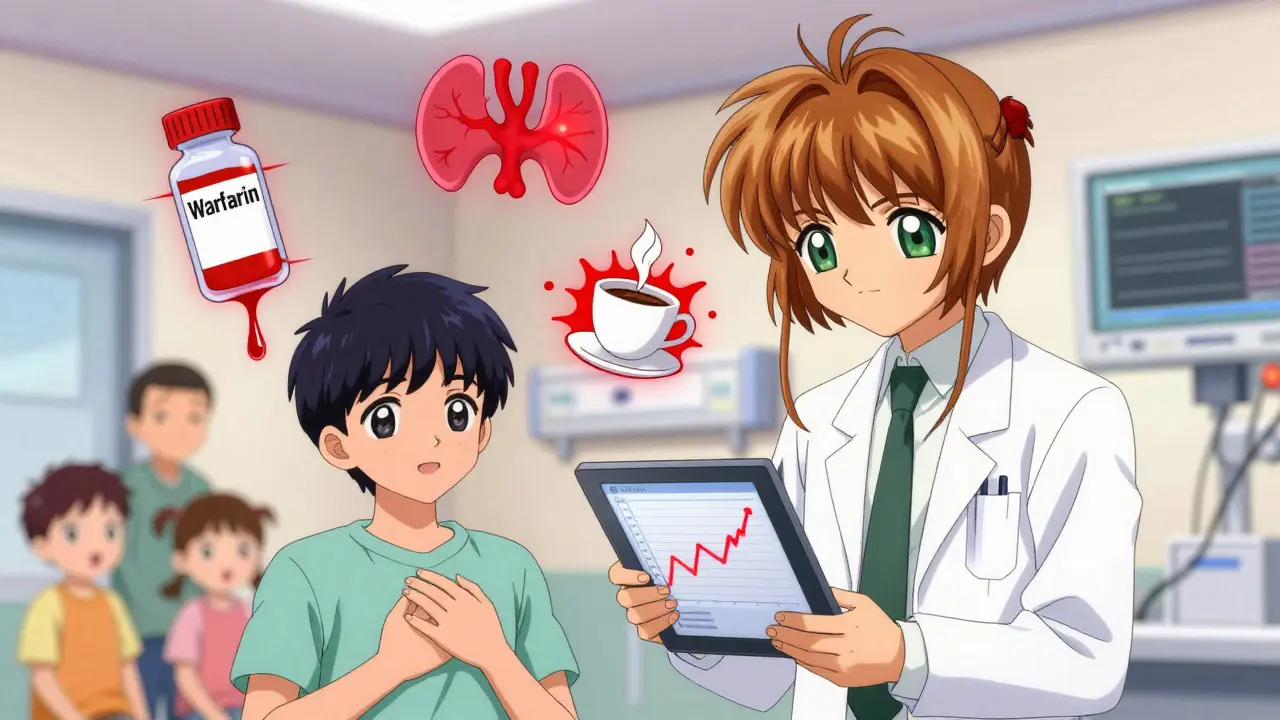
If you’re on warfarin (Coumadin), your caffeine intake could be the reason your blood thinning levels keep jumping. Caffeine inhibits the enzyme that breaks down warfarin. That means more warfarin stays in your blood, raising your INR-sometimes by 15% to 25% within 24 hours. An INR above 4.0 puts you at serious risk of bleeding. A University of Michigan survey found that 41% of warfarin patients with unexplained high INR levels were consuming over 200 mg of caffeine daily. Seventeen percent ended up in the ER because of bleeding.
The FDA’s warfarin prescribing guidelines now say: keep your caffeine intake consistent. Don’t suddenly start drinking four coffees a day if you usually have one. That spike can trigger dangerous instability. Some patients have been told to cut coffee entirely. Others can keep one cup a day-if they take it at the same time every day and get their INR checked every two weeks.
Levothyroxine: Coffee Can Kill Your Thyroid Treatment
Levothyroxine, the most common thyroid medication, is especially vulnerable. A 2025 report from University Hospitals showed that drinking coffee within 30 minutes of taking your pill cuts absorption by up to 55%. That’s not a small drop-it’s enough to send your TSH soaring. One Reddit user, ‘ThyroidWarrior2023,’ reported their TSH jumped from 1.8 to 8.7 after taking levothyroxine with coffee for three weeks. Their endocrinologist confirmed: classic coffee interference.
The American Thyroid Association’s 2023 guidelines are clear: wait at least 60 minutes after taking levothyroxine before drinking coffee. Some experts recommend 90 minutes. Take your pill with water on an empty stomach, then wait. Don’t make the mistake of thinking it’s fine if you drink coffee 10 minutes later. The science says no.
Antidepressants: When Caffeine Makes You More Anxious
Not all antidepressants react the same way to caffeine. Fluoxetine and sertraline (SSRIs) can have their absorption reduced by up to 33% when taken with coffee, according to Harvard Health. That means you’re not getting the full dose-even if you’re taking it exactly as prescribed. On Drugs.com, over 1,200 users reported increased anxiety, jitteriness, or worsening depression after combining caffeine with their antidepressants.
But here’s the twist: bupropion (Wellbutrin) doesn’t interact with caffeine the same way. In fact, some people use caffeine to help counteract the fatigue that comes with bupropion. But even then, too much caffeine can trigger heart palpitations or insomnia. If you’re on an SSRI and suddenly feel more anxious, check your coffee habit before blaming your brain chemistry.
Theophylline: A Dangerous Combo for Asthma Patients
If you’re on theophylline for asthma or COPD, caffeine is a ticking time bomb. Both substances are metabolized by the same enzyme-CYP1A2. When you drink coffee, your body can’t clear theophylline as fast. Blood levels can rise by 15% to 20%. That might sound small, but it’s enough to cause nausea, rapid heartbeat, tremors, or even seizures at therapeutic doses.
University Hospitals’ 2024 study of 317 asthma patients found that 22% developed a heart rate over 100 bpm within hours of drinking coffee while on theophylline. The recommendation? Limit caffeine to under 100 mg per day-that’s one small cup of coffee. Avoid energy drinks entirely. They often contain 200 mg or more, plus other stimulants that make the risk worse.
Heart Medications: Caffeine Can Cancel Out Your Blood Pressure Drugs
Verapamil, diltiazem, and other calcium-channel blockers are meant to lower blood pressure. But coffee can cut their effect by 25% to 30%. Harvard Health found that patients who drank coffee within an hour of taking verapamil had significantly higher blood pressure readings than those who waited two hours.
And then there’s adenosine-the drug used in cardiac stress tests. If you’ve had coffee in the last 24 hours, the test may be useless. Caffeine blocks the receptors adenosine needs to work. Studies show it reduces the drug’s effectiveness by 70% to 90%. That means your doctor might miss a blocked artery because you had a latte the day before.
Decongestants and Stimulants: The Heart Attack Combo
Pseudoephedrine (Sudafed), phenylephrine, and ephedrine are common in cold and allergy meds. They already raise heart rate and blood pressure. Add caffeine, and you get a one-two punch. Dr. John Higgins from UT Southwestern says this combo can spike heart rates by 20 to 30 beats per minute in susceptible people.
The Mayo Clinic’s 2023 data shows ephedrine alone increases systolic blood pressure by an average of 15 mmHg. With caffeine? It jumps over 30 mmHg in 68% of cases. That’s enough to trigger a hypertensive crisis-especially in older adults or those with existing heart disease. If you’re on heart meds or have high blood pressure, skip the cold medicine with pseudoephedrine. Or at least skip the coffee for 12 hours after taking it.
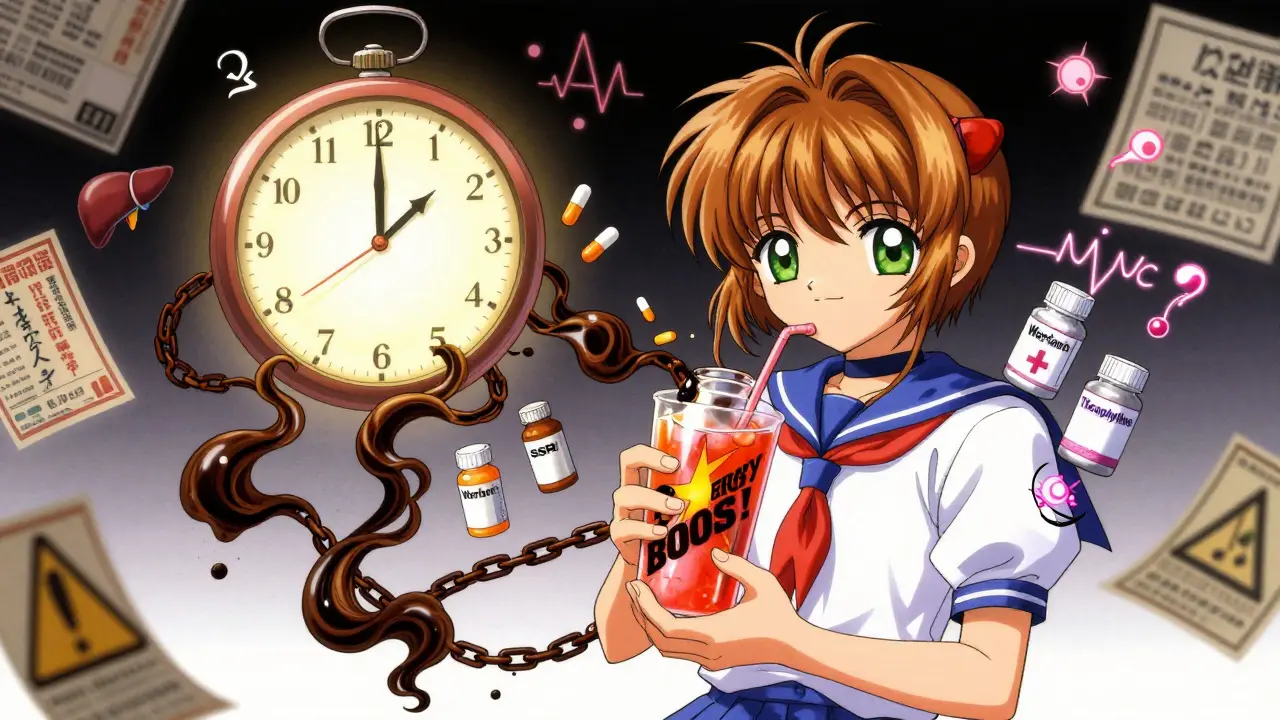
What About Energy Drinks?
Energy drinks are the hidden danger. They pack 80 to 300 mg of caffeine per serving-sometimes more than a whole pot of coffee. But they’re not just caffeine. They often contain taurine, ginseng, guarana, and sugar. These ingredients can independently affect drug metabolism and heart rhythm. A 2024 FDA report found that 68% of serious caffeine-medication interactions involved energy drinks, not coffee.
And here’s the kicker: many people don’t realize energy drinks are a source of caffeine. They think it’s just “vitamins” or “natural energy.” If you’re on any prescription med, treat energy drinks like a drug-not a snack.
What Should You Do?
Here’s the practical guide:
- Know your meds. If you’re on warfarin, levothyroxine, theophylline, verapamil, or any antidepressant, caffeine is a red flag.
- Separate coffee and pills. Wait at least 60 minutes after taking levothyroxine. Wait two hours before or after verapamil. Don’t take anything with coffee unless your doctor says it’s safe.
- Track your intake. One cup of coffee is about 95 mg. A can of energy drink? 160 mg or more. Keep a log for a week. You might be surprised.
- Ask your pharmacist. They’re trained to spot interactions. Don’t assume your doctor knows your coffee habit. Tell them how much you drink, when, and what kind.
- Watch for symptoms. Unexplained anxiety, racing heart, shaky hands, or worsening symptoms on your meds? Cut caffeine for a week and see if things improve.
The Bigger Picture
Eighty-nine percent of American adults consume caffeine daily. But only 38% know it can interfere with medications. That gap is dangerous. The FDA reported a 37% rise in caffeine-medication adverse events between 2020 and 2024. Hospitals are starting to catch on-Epic Systems rolled out caffeine-interaction alerts in 47 hospitals in 2025, cutting adverse events by 29%.
By 2028, pharmacogenomic testing may tell you if your genes make you extra sensitive to caffeine-drug interactions. Until then, the safest move is simple: assume caffeine interacts with your meds unless proven otherwise. Talk to your doctor. Read the medication guide. And don’t let your morning coffee become a silent health risk.