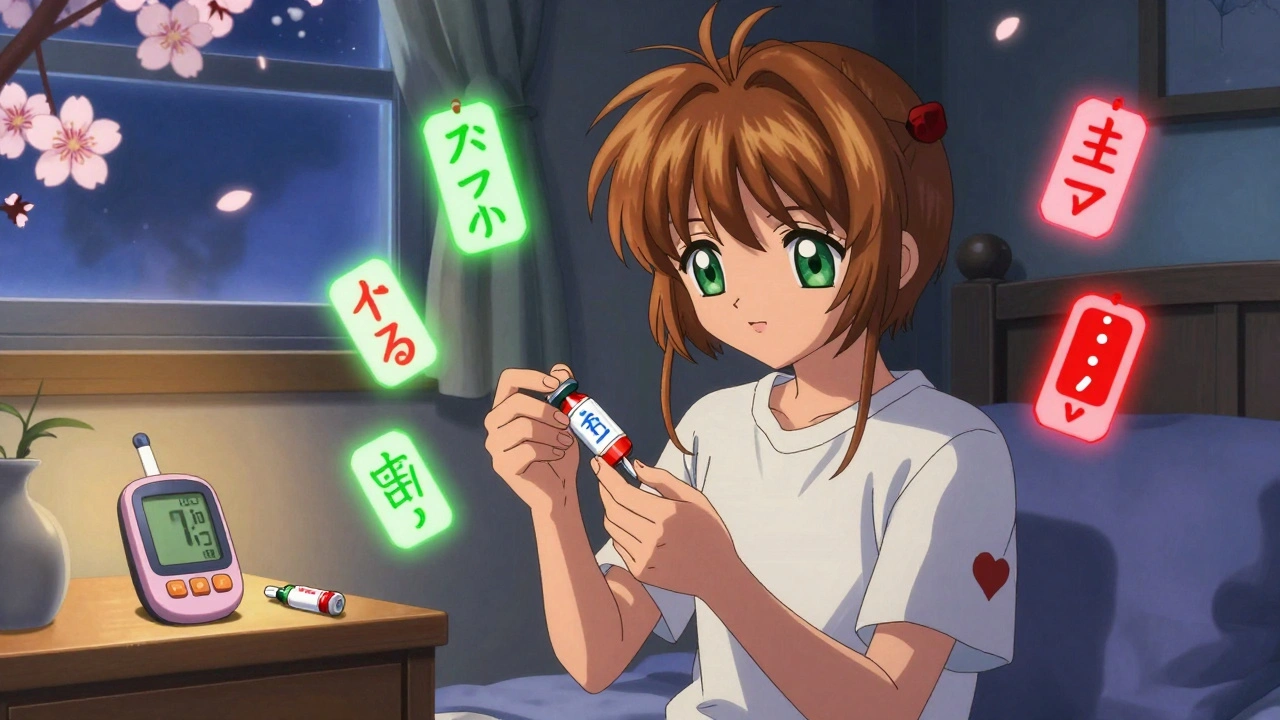
Managing diabetes isn’t just about checking blood sugar-it’s about staying safe while doing it. Every day, millions of people in the U.S. take insulin or oral medications to control their blood glucose. But these drugs aren’t harmless. Even when taken exactly as prescribed, they can cause serious, sometimes life-threatening side effects. The biggest danger? hypoglycemia. Low blood sugar can strike without warning, especially at night, and lead to seizures, falls, or even coma. And it’s not just insulin. Some of the most common oral pills carry the same risk.
How Insulin Works-and Where It Goes Wrong
Insulin is the oldest and most powerful tool for lowering blood sugar. But it’s also the most dangerous if misused. There are five main types: rapid-acting (like lispro), short-acting (regular insulin), intermediate-acting (NPH), long-acting (glargine, degludec), and concentrated forms like Humulin R U-500. Each has a different timing and duration, and mixing them up can be deadly.One common mistake? Confusing U-500 insulin with standard U-100. U-500 is five times stronger. If someone thinks they’re taking a normal dose but actually grabs the concentrated version, they can overdose quickly. YouTube videos from nurses show patients accidentally injecting five times the intended dose because they didn’t realize the difference. The result? Severe hypoglycemia within minutes.
Another issue is injection technique. Injecting into muscle instead of fat-common when people rush or use the wrong needle length-causes insulin to absorb too fast. That leads to unpredictable drops in blood sugar. Experts recommend rotating injection sites (abdomen, thighs, upper arms) and using the correct needle size. Never reuse needles. They dull quickly and can cause tissue damage, leading to uneven absorption.
Oral Medications: Not All Are Created Equal
There are ten classes of oral diabetes drugs, but only a few are used regularly. The most common is metformin, which is usually the first choice. It doesn’t cause low blood sugar on its own and helps with weight loss. But it’s not safe for everyone. If your kidneys aren’t working well-eGFR below 30-you shouldn’t take it. Between 30 and 45, use it with caution. Between 45 and 60, reduce the dose. The FDA updated these guidelines in 2022 after reports of lactic acidosis in people with kidney problems.Then there are sulfonylureas: glyburide, glipizide, glimepiride. These force your pancreas to pump out more insulin. They’re cheap and effective-but they’re also the leading cause of hypoglycemia among oral drugs. Studies show 20-40% of people on these pills have at least one low blood sugar episode a year. About 1-7% need help from someone else because they pass out or can’t treat it themselves. What’s worse? Many don’t feel the warning signs. Continuous glucose monitors show that 30% of people with type 2 diabetes on sulfonylureas have silent nighttime lows-no sweating, no shaking, no warning. They just wake up with a headache or feel exhausted.
Glipizide is the safest sulfonylurea for older adults or those with kidney issues because it’s broken down by the liver, not the kidneys. Glyburide? Avoid it. It builds up in the body and can cause prolonged lows.
Newer Drugs: Benefits, But New Risks
In the last decade, newer drugs like SGLT2 inhibitors (dapagliflozin, empagliflozin) and GLP-1 agonists (semaglutide, liraglutide) have become popular. They don’t cause hypoglycemia when used alone. They also help the heart and kidneys. But they bring their own dangers.SGLT2 inhibitors can trigger diabetic ketoacidosis (DKA)-even when blood sugar isn’t high. This is called euglycemic DKA. It’s rare, but it’s dangerous. The FDA issued a boxed warning in 2020. It can happen during illness, surgery, or extreme stress. That’s why doctors tell patients to stop these pills at least 24 hours before any planned surgery. Some people on these drugs also develop genital yeast infections. About 4-5% of users get them, compared to 1% on placebo. They’re treatable, but annoying.
GLP-1 agonists cause nausea and vomiting in 30-50% of people, especially when starting or increasing the dose. Some quit because they feel sick. But these drugs are also linked to rare cases of pancreatitis and gallbladder disease. If you have a history of these issues, talk to your doctor before starting.

Drug Interactions That Can Kill
Diabetes meds don’t exist in a vacuum. They interact with other drugs you might be taking. Antibiotics like sulfamethoxazole/trimethoprim can boost insulin’s effect and cause dangerous lows. Quinine (used for leg cramps), sunitinib (a cancer drug), and somatostatin analogues (for hormonal disorders) also increase hypoglycemia risk.Alcohol is another hidden danger. Drinking while on insulin or sulfonylureas can block your liver from releasing glucose. That means even if you eat, your blood sugar can crash hours later. People often don’t realize the connection until it’s too late.
And then there’s the ketogenic diet. Some people with diabetes try it to lose weight. But on SGLT2 inhibitors, very low-carb diets can trigger euglycemic DKA. The body starts burning fat, producing ketones-and the drug pushes more ketones into the bloodstream. The result? A medical emergency.
Who’s at Highest Risk?
Older adults are the most vulnerable. One in four medication-related hospitalizations for diabetes involves someone over 65. Why? Their bodies process drugs slower. They’re more likely to have kidney problems. And they often have other conditions-like heart disease or dementia-that make it harder to recognize low blood sugar symptoms.People with kidney disease need special attention. Metformin, SGLT2 inhibitors, and many other drugs are cleared by the kidneys. If those organs aren’t working, the drugs build up. That’s why eGFR testing isn’t optional-it’s required before starting most of these medications.
People who take multiple pills are also at risk. Polypharmacy increases the chance of mistakes, missed doses, or dangerous interactions. That’s why the CDC recommends Collaborative Drug Therapy Management (CDTM)-a team approach where pharmacists, doctors, and nurses work together to review all meds.

What You Can Do to Stay Safe
1. Know your drugs. Write down every medication, dose, and time you take it. Include over-the-counter pills and supplements. Bring this list to every appointment. 2. Monitor your blood sugar. Check more often when starting a new drug, changing doses, or during illness. If you’re on insulin or sulfonylureas, check before bed. Silent lows happen while you sleep. 3. Carry fast-acting sugar. Keep glucose tablets, juice, or candy with you at all times. Tell family or friends how to help if you pass out. A glucagon kit should be in your home if you use insulin. 4. Ask about kidney function. If you’re over 65 or have high blood pressure, ask for an eGFR test. Don’t assume your doctor already checked. 5. Stop SGLT2 inhibitors before surgery. Even minor procedures. Don’t wait for your doctor to tell you-ask. 6. Avoid alcohol and extreme diets. Especially if you’re on SGLT2 inhibitors or insulin. 7. Use tech if you can. Automated insulin delivery systems (AID) have been shown in trials to reduce hypoglycemia by up to 40% compared to traditional pumps. They’re not perfect, but they’re safer.When to Call for Help
Call 911 or go to the ER if you or someone you know has:- Confusion, seizures, or unconsciousness
- Deep, rapid breathing with fruity-smelling breath (sign of DKA)
- Severe nausea, vomiting, or abdominal pain while on an SGLT2 inhibitor
- Signs of low blood sugar that don’t improve after eating sugar
Don’t wait. Hypoglycemia can kill in minutes. DKA can kill in hours.
Final Thoughts
Diabetes medications save lives-but they can also take them if used carelessly. The safest approach isn’t just about taking pills. It’s about understanding them. Knowing your risks. Asking questions. Monitoring closely. And never assuming that because you’ve been on a drug for years, it’s automatically safe.The goal isn’t perfect blood sugar numbers. It’s staying alive, healthy, and independent. That means choosing the right drug for your body-not just the latest one on the market. And it means treating your meds with the respect they deserve.







John Biesecker December 3, 2025
Man, I just realized I’ve been injecting insulin into my thigh like it’s a video game boss fight 🤦♂️. Thanks for the heads-up on muscle vs fat absorption-my CGM’s been throwing wild swings lately. Gonna start rotating sites and maybe get a needle guide. Also, U-500?? I thought that was a Star Wars ship. 😅
Genesis Rubi December 3, 2025
U.S. doctors are just pushing fancy pills because Big Pharma pays them. You think metformin’s safe? Try living in a state where your insulin costs $400 a vial. This whole system is rigged. I don’t need a guide-I need a revolution. 🇺🇸💥
Doug Hawk December 3, 2025
Interesting breakdown on sulfonylureas. The silent nocturnal hypoglycemia stat-30%-is wild. I’ve seen patients with dementia who don’t report symptoms because their brain doesn’t register the adrenaline surge. The real issue isn’t the drug, it’s the lack of biomarker awareness. We need better neuroglycemic feedback loops, not just more glucose tabs. Also, why isn’t glucagon nasal spray standard issue like EpiPens?
Michael Campbell December 5, 2025
They’re lying about DKA. The FDA knows SGLT2 inhibitors cause it. They just don’t care. You think your kidney’s fine? Wait till your pee smells like acetone. Then you’ll know.
Saravanan Sathyanandha December 5, 2025
In India, we call metformin 'the poor man’s insulin'-but here’s the twist: many patients take it with turmeric tea, believing it 'boosts efficacy.' While culturally rooted, this can mask hypoglycemia symptoms due to anti-inflammatory effects. We need community pharmacists to bridge folk wisdom and clinical guidelines. A little respect for tradition, paired with science, goes a long way.
alaa ismail December 6, 2025
Just started on semaglutide. Nausea hit hard week one. Felt like I swallowed a cactus. But after two weeks? My A1C dropped and I lost 12 lbs. Worth it. Still avoiding alcohol though. No regrets.
ruiqing Jane December 7, 2025
If you’re over 65 and on insulin, check your blood sugar before bed. Every. Single. Night. I lost my dad to a silent low. He didn’t even have time to call for help. Don’t wait for symptoms. Don’t assume you’re fine. Monitor. Protect. Survive.
Fern Marder December 7, 2025
U-500? 😳 I thought that was a typo in my script. My pharmacist didn’t even blink when I asked. Y’all need to stop treating diabetes like a spreadsheet. This is LIFE. 🙏
Carolyn Woodard December 7, 2025
There’s a cognitive dissonance here: we’re told to individualize therapy, yet the guidelines are rigid. eGFR thresholds for metformin? Fine. But what about patients with fluctuating renal function? The 30-45 range is a gray zone where clinical judgment is sidelined by algorithmic prescribing. We need dynamic, not static, thresholds.
Allan maniero December 9, 2025
It’s funny how we treat diabetes like a technical problem to be solved with drugs, when really it’s a lifestyle crisis wrapped in medical jargon. I’ve seen people on five different meds, still eating processed carbs, and wondering why they’re crashing. The real intervention isn’t a new SGLT2 inhibitor-it’s teaching people how to cook, how to move, how to rest. Tech helps, sure. But human connection? That’s the real insulin.