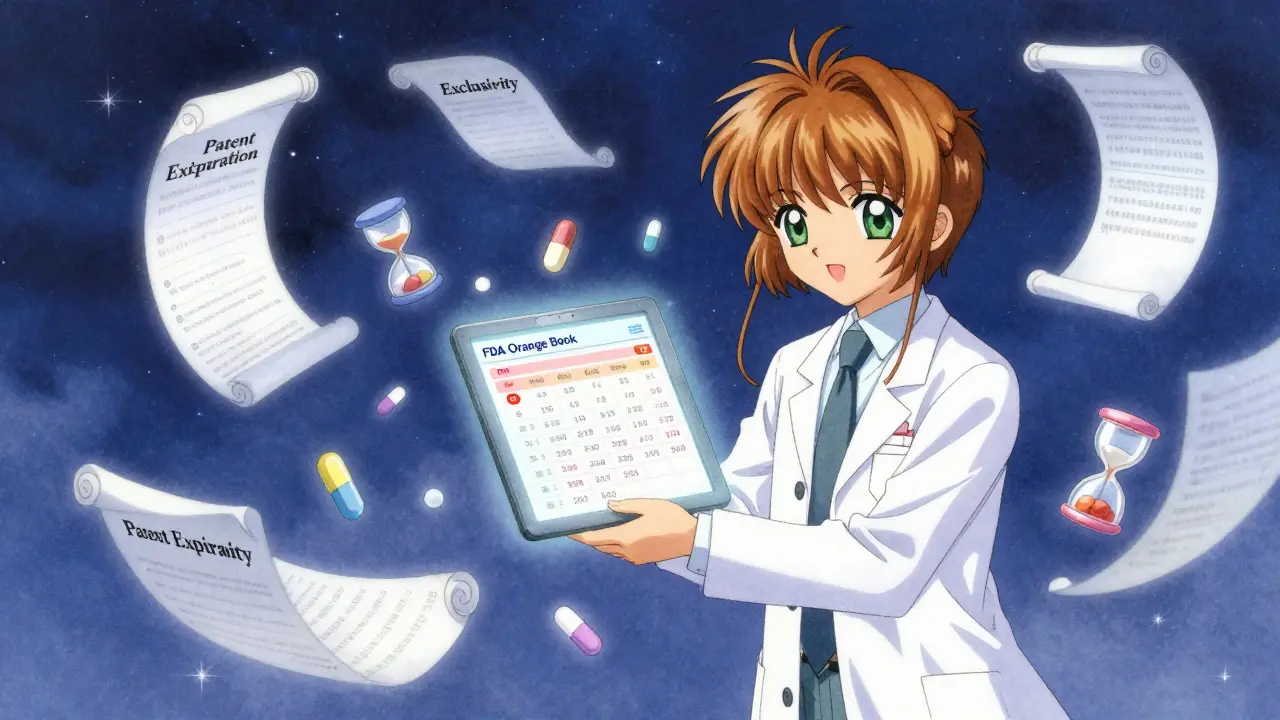
The FDA Orange Book is the single most important tool for anyone trying to figure out when a brand-name drug will lose its patent protection and open the door for generic versions. If you’re a pharmacist, a generic drug manufacturer, a healthcare provider, or even a patient waiting for a cheaper alternative, knowing where to find these expiration dates can save time, money, and confusion. But the Orange Book isn’t simple. It’s packed with legal jargon, multiple layers of protection, and hidden pitfalls that can make even experienced professionals miss key details.
What the FDA Orange Book Actually Is
The official name is FDA Approved Drug Products with Therapeutic Equivalence Evaluations a public registry of all approved small-molecule drugs in the U.S. that includes patent and exclusivity data used to determine when generics can enter the market. It’s been around since 1985, created under the Hatch-Waxman Act to balance innovation and access. It doesn’t list biologics like insulin or Humira - only traditional pills and injections. For every approved drug, it shows which patents cover the drug’s active ingredient, formulation, or use - and when each one expires.What makes the Orange Book different from a regular patent database? It’s the only place that combines FDA-approved drug data with patent expiration dates in one place. The USPTO tells you when a patent was issued. The Orange Book tells you when it stops blocking generics. That’s the difference between legal status and market impact.
Where to Find Patent Expiration Dates
The easiest way to find a patent expiration date is through the Electronic Orange Book. Here’s how to do it step by step:- Go to the Electronic Orange Book website.
- Search by the drug’s brand name (like Brilinta), generic name (ticagrelor), or application number (NDA 022304).
- Click the Application Number link for the drug you’re looking up.
- Scroll down and click View under the Patents section.
- You’ll see a list of patents with their numbers, expiration dates, and use codes.
For example, if you search for Brilinta (ticagrelor), you’ll see multiple patents listed - one for the active ingredient, another for the tablet formulation, and one for a specific use like preventing heart attacks. Each has its own expiration date. The key is to look at the Patent Expiration Date column - it’s formatted as MMM DD, YYYY, like July 9, 2021.
If you need to check dozens of drugs at once - say, you’re a generic drug company planning a launch - download the Orange Book Data Files. These are daily-updated CSV or TXT files available on the FDA’s Orange Book Data Files page. The file includes columns like:
- Product No - identifies the specific drug product
- Patent No - the actual U.S. patent number
- Patent Expiration - the date the patent expires (MM/DD/YYYY format)
- Patent Use Code - like U-876, which tells you what the patent covers (e.g., treatment of high blood pressure)
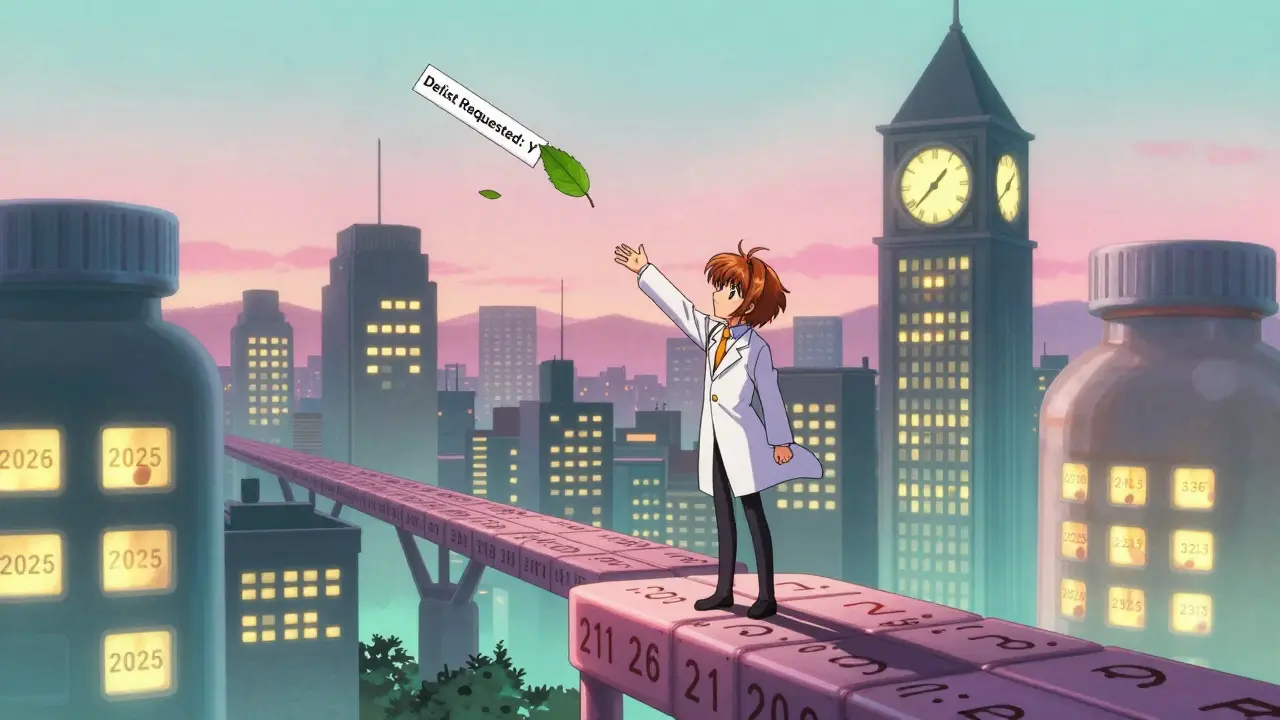
- Delist Requested Flag - if it says "Y", the patent owner asked to remove it, which often means the patent is weak or expired
What the Dates Don’t Tell You
Don’t assume the expiration date in the Orange Book is the final word. There are three big blind spots:1. Patent Term Extensions (PTE) - The FDA grants extra time to patent holders to make up for delays during drug approval. This extension is added to the original expiration date. The Orange Book includes these, but they’re not always obvious. You might see two entries for the same patent: one with the original date, and another with the extended date.
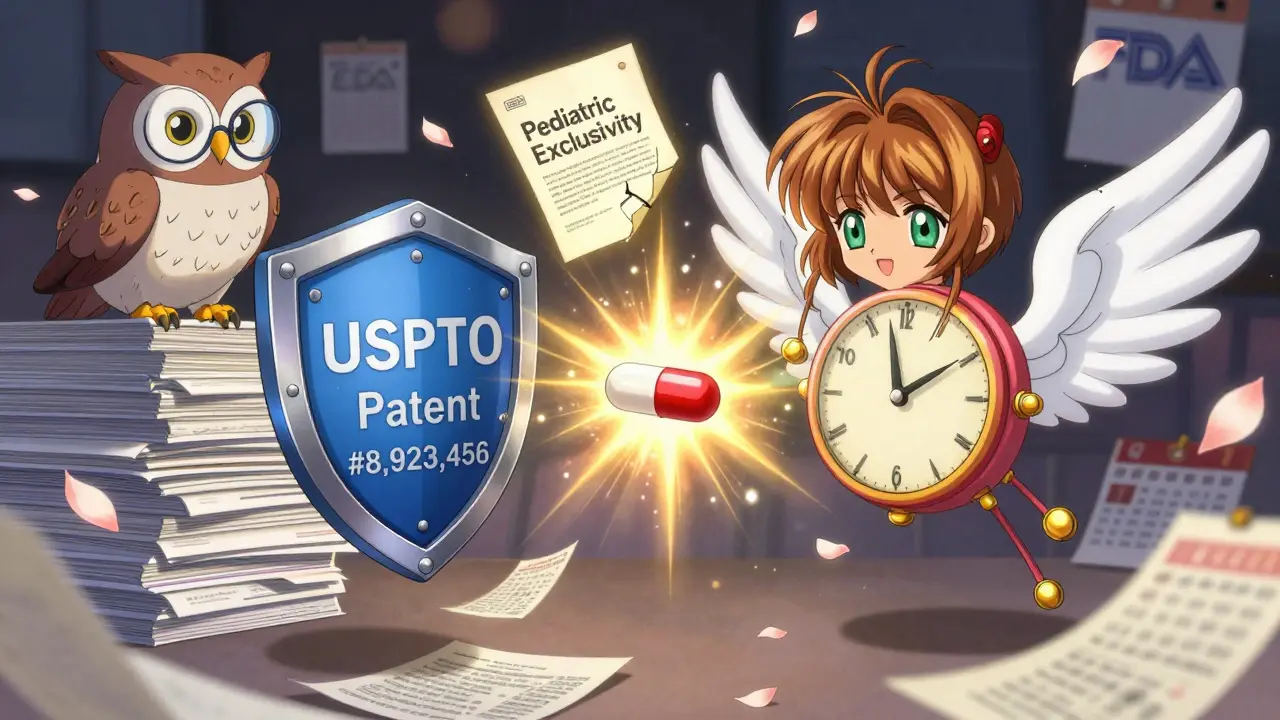
2. Pediatric Exclusivity - If the drug maker did extra studies on children, they get six months of extra market protection. This doesn’t create a new patent - it just adds six months to every existing patent and exclusivity period for that drug. The Orange Book shows this as two separate lines for the same patent: one original, one extended. Many people miss this and think the drug is free to copy when it’s not.
3. Early Expirations - About 46% of patents listed in the Orange Book expire early because the owner didn’t pay maintenance fees. The FDA doesn’t update the Orange Book to reflect these early lapses. So if a patent shows an expiration date of 2030, but the USPTO records show the fee wasn’t paid in 2025, the patent is already dead. You have to cross-check with the USPTO Patent Center to be sure.
How to Use the Patent Use Code
Each patent in the Orange Book has a use code - like U-876 or U-123. These codes tell you what the patent actually covers. Not all patents cover the drug’s active ingredient. Some cover how it’s made, how it’s taken, or what condition it treats.For example, a patent with use code U-487 might cover only the use of metformin for treating PCOS, not diabetes. A generic company could still launch a version for diabetes even if that patent is active. The FDA has a Patent Use Code Search Tool to decode these, but it’s clunky. Many professionals keep a local copy of the codes because the FDA’s site often times out.
Exclusivity vs. Patents - Don’t Mix Them Up
The Orange Book also lists exclusivity periods - these are not patents. They’re legal monopolies granted by the FDA for things like being the first to file a generic application, testing a drug in children, or being an orphan drug.For example, a drug might have a patent expiring in 2027 but a 180-day exclusivity period ending in 2025. That means no other generic can enter until after the exclusivity ends - even if the patent is already gone. You need to check both sections. Exclusivity dates are listed under the Exclusivity tab on the drug’s page.
Why This Matters for Generic Drug Launches
If you’re a generic manufacturer, the Orange Book is your roadmap. Missing a patent expiration or misreading exclusivity can cost millions. A company that launches too early risks a lawsuit. Launch too late, and you miss the first-mover advantage.Industry experts say the most reliable strategy is to:
- Check the Orange Book for all patents and exclusivity dates
- Verify each patent’s status on the USPTO database
- Look for "Delist Requested" flags - these often signal a patent is being challenged or invalidated
- Track pediatric exclusivity - it’s easy to overlook but can delay entry by half a year
According to a 2023 study from the National Bureau of Economic Research, the Orange Book’s patent expiration dates are accurate in 89% of cases when compared to USPTO records. But the 11% that are wrong? They’re the ones that cause lawsuits, delays, and lost revenue.
What’s Changing in 2026
The FDA has been under pressure to make the Orange Book more accurate and transparent. Since the Orange Book Transparency Act of 2020, the agency has improved its interface, added better filters, and started requiring patent owners to update listings faster. In 2023, they began flagging patents that have been delisted or expired but still appear in the database.By 2025, over 78% of brand-name drug sales were expected to face generic competition. That means more people are using the Orange Book than ever. The FDA is working on a new version with automated alerts for patent expirations - but until then, manual checks are still necessary.
Pro Tips for Getting It Right
- Always check the patent expiration date AND the exclusivity date - they’re not the same.
- If you see two rows for the same patent number, one with a later date - that’s pediatric exclusivity.
- Use the Orange Book Data Files for bulk research. The web interface is slow for more than 5 drugs.
- When a patent says "Delist Requested: Y," dig deeper. It often means the patent owner gave up.
- Don’t trust the Orange Book alone. Cross-reference with USPTO records for critical decisions.
- Bookmark the Patent Use Code lookup tool. You’ll use it every time you search.
The Orange Book isn’t perfect. But it’s the only official source that ties patents directly to FDA-approved drugs. If you’re serious about understanding when generics will hit the market, you need to know how to read it - and how to question it.
Where can I find the FDA Orange Book online?
The FDA Orange Book is available at https://www.accessdata.fda.gov/scripts/cder/ob/index.cfm. This is the official Electronic Orange Book website. You can search by drug name, active ingredient, application number, or company. For bulk data, download the daily-updated files from the FDA’s Orange Book Data Files page.
Are patent expiration dates in the Orange Book always accurate?
No. While 89% of patent expiration dates match USPTO records, about 11% have discrepancies. Some patents expire early due to missed maintenance fees, but the Orange Book doesn’t remove them. Also, patent term extensions and pediatric exclusivity can make dates harder to interpret. Always verify with the USPTO Patent Center if you’re making business decisions.
What’s the difference between patent expiration and exclusivity?
A patent is a legal right granted by the USPTO to prevent others from making the drug. Exclusivity is a regulatory period granted by the FDA that blocks other companies from getting approval - even if the patent is gone. For example, a drug might have a patent expiring in 2027, but FDA exclusivity ends in 2025. No generic can launch until after exclusivity ends, regardless of the patent.
Why are there two expiration dates for the same patent in the Orange Book?
That’s usually pediatric exclusivity. When a drug maker completes pediatric studies, the FDA adds six months to all existing patents and exclusivity periods. The Orange Book shows the original expiration date and then a second line with the extended date. It’s not a new patent - just an extension. Missing this can lead to launching a generic too early.
Can I rely on the Orange Book to know when a generic will be available?
You can use it as a starting point, but not as the final answer. The Orange Book tells you when legal barriers fall - but generics still need FDA approval, manufacturing capacity, and market strategy. Also, patent challenges, exclusivity periods, and early patent expirations can change timelines. Always combine Orange Book data with USPTO records and industry reports for accuracy.