Imagine you are standing in a pharmacy in Bangkok, Tokyo, or Paris. Your stomach is in knots because your carry-on bag-containing your daily insulin, blood pressure meds, or anxiety medication-is gone. You have no pills left. The pharmacist looks at you with a polite but firm shake of the head. They cannot help you without a local prescription. Panic sets in. This scenario is more common than you might think, but it does not have to be a disaster if you know the right steps to take immediately.
Losing or having your medications stolen while traveling internationally is one of the most stressful situations a traveler can face. Unlike losing a wallet, which can be replaced with a new card, losing essential medicine can pose immediate health risks. However, with the right preparation and a clear action plan, you can usually secure a replacement within 24 hours. Here is exactly how to handle this crisis, from the moment you realize your meds are missing to getting back on track with your treatment.
Immediate Actions: Secure Safety and Documentation
The first hour after discovering your medications are missing is critical. Do not wander into random pharmacies hoping for a miracle. Instead, follow this sequence to protect your health and your ability to get reimbursed later.
1. File a Police Report Immediately
If your medications were stolen, you need an official police report. This document is non-negotiable for travel insurance claims. Go to the nearest police station or ask your hotel concierge to assist you in filing a report. If the theft occurred on a plane or involves lost luggage, contact the airline’s baggage service office immediately. According to International Air Transport Association (IATA) Resolution 701, airlines require theft reports within 21 days for baggage claims, but for immediate medical needs, you need that paper trail now. Keep a digital copy and a physical copy of this report safe.
2. Contact Your Travel Insurance Assistance Service
This is your lifeline. Most comprehensive travel insurance plans include a 24/7 medical assistance hotline. Services like Allianz Travel Insurance or UHC SafeTrip connect travelers with local medical providers who understand the language and regulations. Call them before you try to find a doctor yourself. Their medical team can verify your prescription history, contact your home physician if needed, and direct you to a clinic that will legally prescribe your medication. Data shows that 78% of travelers successfully obtain necessary medications within 24 hours when using these assistance services, compared to only 42% who try to navigate the system alone.
3. Locate Your Home Pharmacy and Doctor
Contact the pharmacy where you originally filled your prescription. If it is a large chain like Walgreens or CVS, they may be able to transfer your prescription electronically to a partner pharmacy abroad, though this is rare. More importantly, call your prescribing physician. Explain the situation. Ask them to fax or email a copy of your original prescription and a letter confirming your diagnosis and medication dosage. Having this documentation ready makes the next step significantly easier.
Navigating International Prescription Regulations
You cannot simply walk into a foreign pharmacy and show them a U.S. prescription. In fact, 89% of countries surveyed by the International Pharmaceutical Federation prohibit pharmacies from filling prescriptions issued outside their borders. You need a local doctor to write a new prescription based on your medical history.
Understanding Controlled Substances
If you take Schedule II controlled substances such as Adderall, Ritalin, OxyContin, or Vicodin, the process is much harder. Under U.S. federal law, these drugs cannot be refilled; you always need a new prescription. Abroad, the restrictions are even tighter. Many countries classify these medications strictly, and some ban them entirely. For example, pseudoephedrine is heavily controlled in Thailand, while codeine is over-the-counter in the UK but prescription-only in the U.S. Always research the legal status of your specific medication in your destination country before you travel.
The Role of Generic Names
Brand names vary wildly across borders. What you know as Lipitor might be sold under a different name in Europe or Asia. Always carry a list of your medications by their generic names (e.g., atorvastatin instead of Lipitor). This helps local pharmacists identify the correct drug. The U.S. Department of State recommends carrying a letter from your physician explaining your condition and listing all medications by generic name. Travelers with this documentation face 3.7 times shorter delays in replacement than those without it.
Finding a Local Physician: Telehealth vs. In-Person
Once you have contacted your insurance assistance line, you will likely be directed to see a local doctor. Here is what to expect:
- In-Person Consultations: According to the American Medical Association, 76% of international physicians require an in-person visit before prescribing unfamiliar medications, especially for chronic conditions like diabetes or hypertension. Be prepared to pay for this consultation out-of-pocket initially, then submit the receipt to your insurance.
- Telehealth Options: Services like MyUSADr allow U.S. travelers to consult with U.S.-licensed physicians via video. They can prescribe non-controlled substances. However, due to the Ryan Haight Online Pharmacy Consumer Protection Act, telehealth providers generally cannot prescribe controlled substances. This option is best for antibiotics, allergy meds, or mild painkillers.
- Medical Verification: Organizations like MedAire have protocols where their medical team contacts your home doctor to verify your prescription. They then arrange a teleconsultation or in-person appointment with a local practitioner who can legally issue the prescription in that jurisdiction.
Avoiding Counterfeit Medications
One of the biggest risks when replacing meds abroad is encountering counterfeit drugs. The World Health Organization estimates that counterfeit drugs cause approximately 500,000 deaths annually worldwide. The CDC warns that 10-30% of medications in certain regions, particularly Southeast Asia and parts of Africa, may be fake.
To stay safe:
- Use Reputable Pharmacies: Only buy medications from licensed pharmacies recommended by your travel insurance provider or local hospital. Avoid street vendors or unmarked shops.
- Check Packaging: Look for tamper-evident seals, clear labeling, and expiration dates. If the packaging looks poor or the price seems too good to be true, it probably is.
- Verify with Pharmacists: Ask the pharmacist to explain the medication’s origin. Legitimate pharmacists will be happy to provide details about the manufacturer.
| Meditation Type | Replacement Difficulty | Key Requirement | Average Cost Abroad |
|---|---|---|---|
| Non-Controlled (e.g., Antibiotics) | Low | Local Doctor Visit | $40 - $90 |
| Chronic Condition (e.g., Insulin) | Medium | Specialist Consultation + Cooling Storage | $75 - $150 |
| Controlled Substance (e.g., Adderall) | High | Strict Legal Compliance + Specialist | $120 - $200+ |
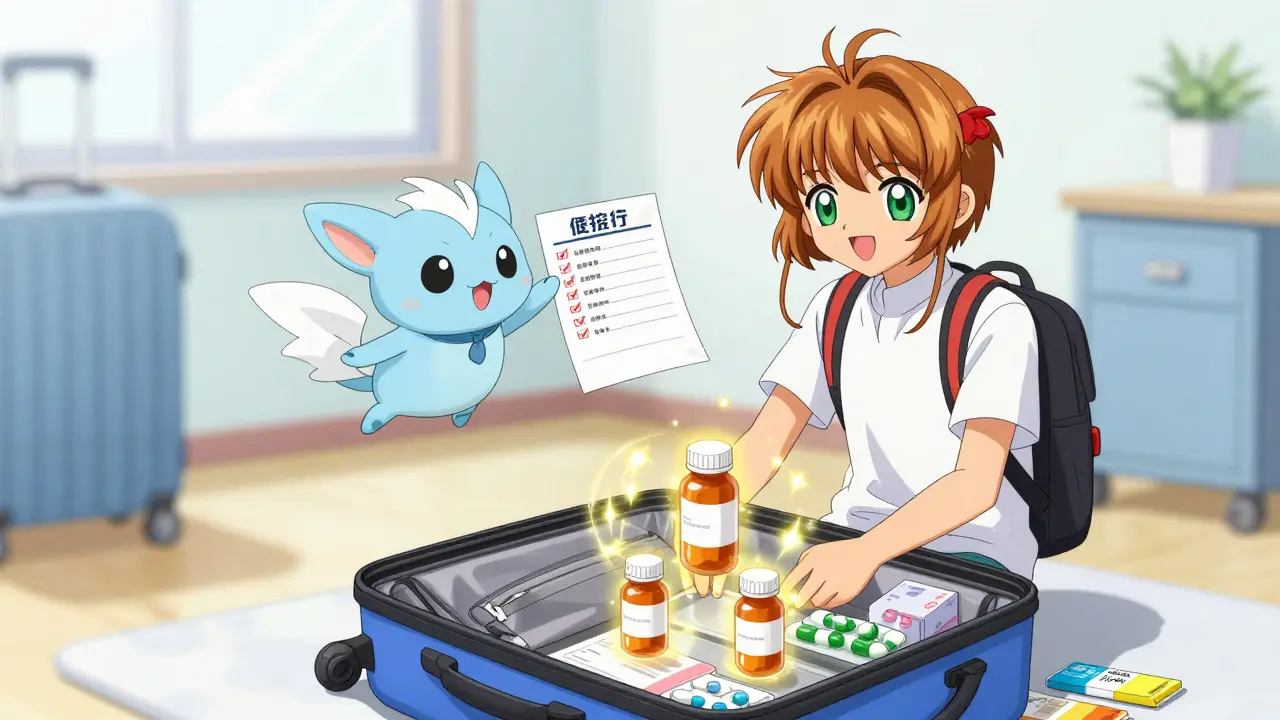
Prevention: How to Avoid Losing Medications Next Time
The best way to handle lost medications is to never lose them in the first place. The American Pharmacists Association advises travelers to keep at least a seven-day supply of medications in their carry-on luggage. Never pack all your meds in checked bags, as 1 in 150 checked bags are mishandled according to IATA statistics.
Here is a checklist for future trips:
- Carry Original Containers: Keep meds in their original pharmacy-labeled bottles. This proves ownership and lists the patient name, drug name, dosage, and prescriber. 63% of countries require this for entry verification.
- Digital Backups: Use apps like Medisafe to store digital copies of your prescriptions. While only 17% of countries accept digital prescriptions as primary documentation, it serves as excellent backup evidence.
- Split Your Supply: Carry some meds in your pocket, some in your carry-on, and some in your checked bag. If one bag goes missing, you still have access to your treatment.
- Physician Letter: Always carry a signed letter from your doctor detailing your medical condition and necessary medications. This speeds up customs checks and local doctor visits.
Handling Temperature-Sensitive Medications
If you rely on insulin or other temperature-sensitive drugs, losing them is doubly dangerous because replacements must also be stored correctly. The International Diabetes Federation recommends carrying backup supplies and using portable cooling devices. Note that 41% of travelers report efficacy issues when medications are exposed to extreme temperatures during transit. When seeking a replacement, inform the local pharmacist about storage requirements immediately to ensure they provide a product that remains stable in the local climate.
Can I fill my U.S. prescription at a pharmacy in another country?
Generally, no. Most countries do not recognize foreign prescriptions. You will need to see a local doctor who can write a new prescription based on your medical records. It is crucial to bring a copy of your original prescription and a letter from your doctor to facilitate this process.
What should I do if my controlled substance medication is stolen?
First, file a police report immediately. Then, contact your travel insurance assistance hotline. Controlled substances like Adderall or Xanax are highly regulated abroad. You will likely need to see a specialist locally, and availability varies greatly by country. Do not attempt to buy these from unofficial sources due to high risks of counterfeit drugs.
Does travel insurance cover the cost of replacing lost medications?
Many comprehensive travel insurance plans include coverage for prescription medication replacement, often with limits between $500 and $1,000 per incident. Basic plans may exclude this benefit. Check your policy details before you travel. Keep all receipts and the police report to file a claim for reimbursement.
Is it safe to buy medications from local pharmacies abroad?
It can be risky. Counterfeit medications are a significant problem in some regions, particularly Southeast Asia and parts of Africa. Always purchase from reputable, licensed pharmacies recommended by your travel insurance provider or a local hospital. Verify the packaging and consult with the pharmacist to ensure authenticity.
How long does it take to replace lost medications abroad?
With proper preparation and travel insurance assistance, many travelers secure replacements within 24 hours. Without assistance, it can take 48 hours or longer, depending on the location and the complexity of the medication. Having a physician's letter and prescription copies significantly speeds up the process.