When you or a loved one is receiving chemotherapy at home, the focus is often on treatment, side effects, and recovery. But one critical part of care gets overlooked: how to dispose of chemotherapy medication safely. Unlike regular pills or creams, these drugs are designed to kill fast-growing cells - including healthy ones. Even small amounts left in the trash, flushed down the toilet, or handled carelessly can harm children, pets, waste workers, and the environment. This isn’t a guess. It’s science. And the rules are strict.
Why Chemotherapy Waste Is Different
Most medications can be mixed with coffee grounds or cat litter, sealed in a bag, and tossed in the trash. Not chemotherapy drugs. These are cytotoxic - meaning they damage DNA. That’s how they kill cancer cells. But they don’t know the difference between cancer and healthy tissue. A single pill, a drop of liquid, or even sweat from someone who just took chemo can still be dangerous for days. The American Cancer Society says active chemotherapy compounds can stay in urine, vomit, or sweat for up to 72 hours after treatment. The EPA found detectable levels of cyclophosphamide - a common chemo drug - in two-thirds of U.S. waterways. That’s not from hospitals. That’s from homes. The FDA explicitly says: never flush chemotherapy drugs. That’s different from some painkillers or antidepressants that are on the flush list. Chemo is not on that list. Ever. Flushing it doesn’t make it disappear - it just moves it into rivers, lakes, and drinking water supplies.What You Need to Dispose of Chemotherapy Safely
You don’t need fancy gear. But you do need the right materials. Most oncology clinics provide these at the start of home treatment. If they didn’t, ask for them. Here’s what you need:- Disposable nitrile gloves - at least 0.07mm thick. Latex won’t cut it. They break too easily.
- Two leak-proof plastic bags - each at least 1.5 mil thick. Grocery bags? No. These are specially made for hazardous waste.
- A dedicated yellow container - often provided by your provider. This is for solid waste like used syringes, empty vials, or contaminated wipes.
- Disposable cloths and cleaning supplies - never use your kitchen sponges or towels. Keep these separate.
Step-by-Step Disposal Process
Follow this exactly. Skip a step, and you’re risking exposure.- Wear gloves every time you handle chemo meds, empty bottles, or anything that touched the drug - even if it looks clean.
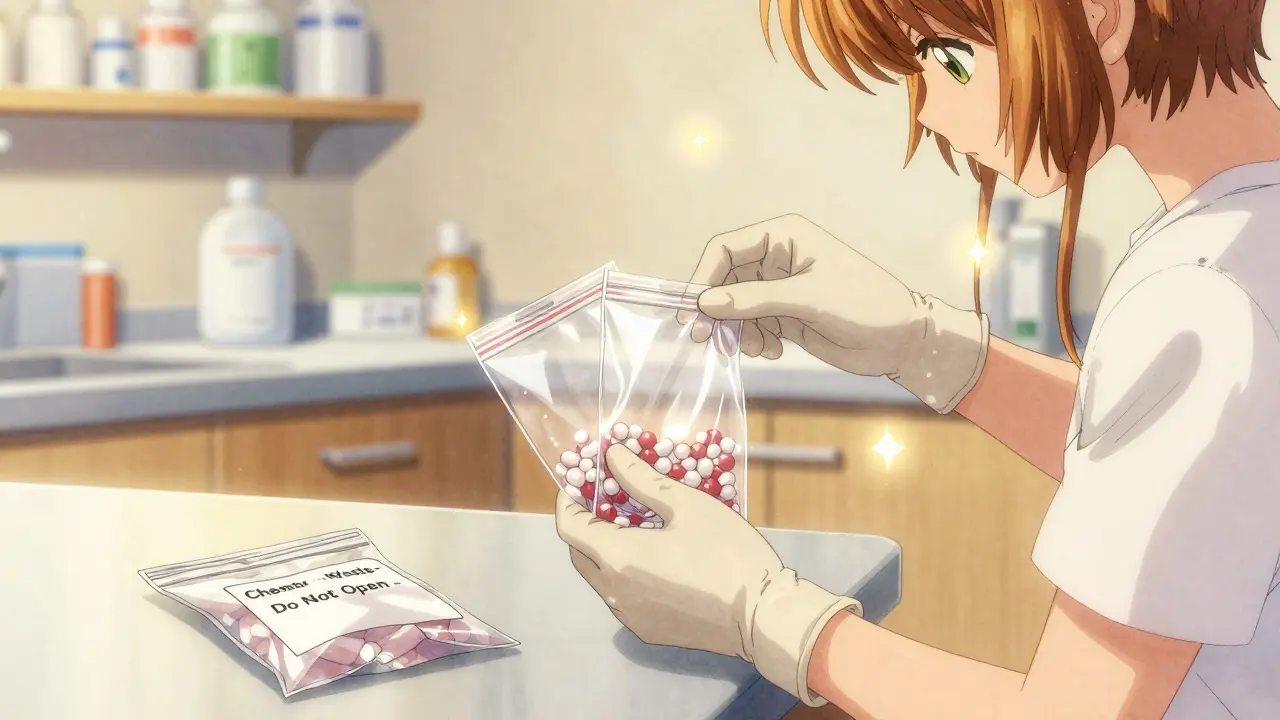
- For pills: Never crush, break, or dissolve them. Put the whole pill into the inner bag. Even dust from a crushed tablet can be harmful.
- For liquid chemo: If you spill it, clean it up immediately with disposable cloths. Don’t wipe with a regular towel. After cleanup, put the cloths, gloves, and wipes into the inner bag.
- For patches: Fold the patch so the sticky side sticks to itself. Then put it in the inner bag. Don’t throw it loose.
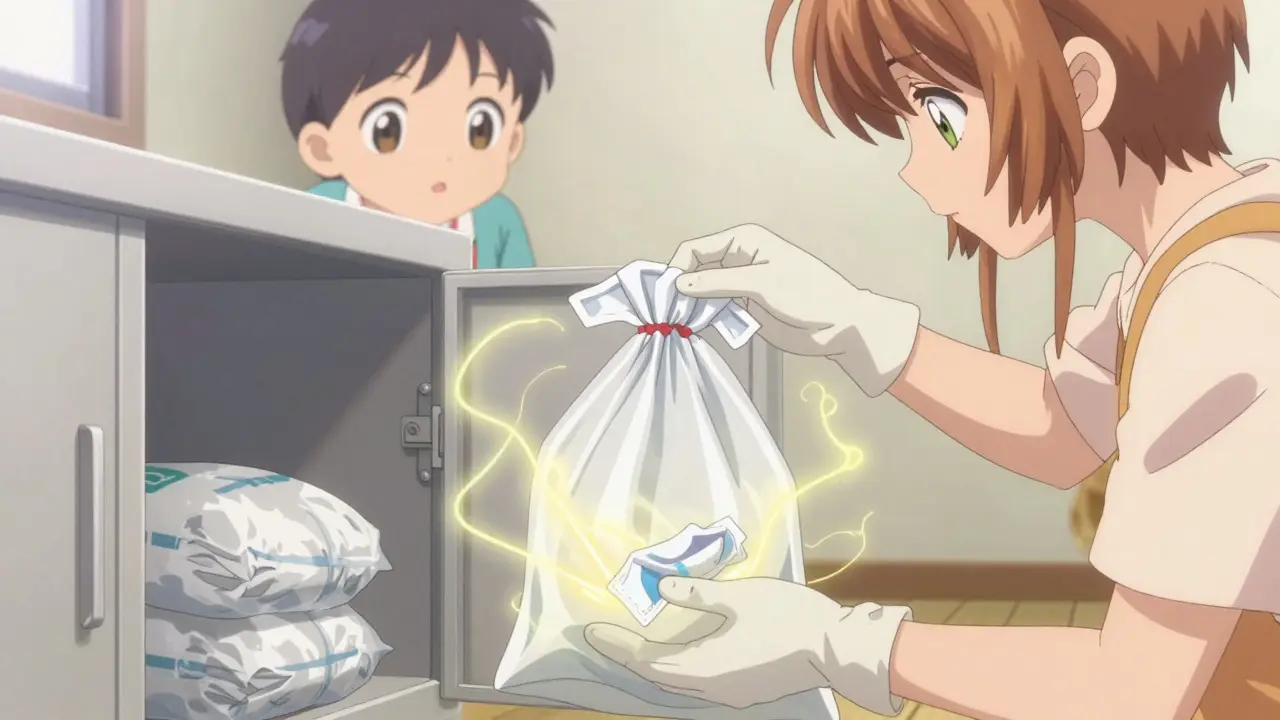
- Double-bag everything: Seal the first bag tightly. Then place it inside the second bag. Seal that one too. This is non-negotiable. Mayo Clinic testing shows this reduces exposure risk by 92%.
- Label the outer bag: Write “Chemotherapy Waste - Do Not Open” in large letters. This tells waste handlers what they’re dealing with.
- Wait 48-72 hours after treatment before disposing of anything contaminated with bodily fluids. That includes used toilet paper, pads, or clothing. Keep those items in a sealed container until then.
- Store the double-bagged waste in a cool, dry place away from children and pets. A locked cabinet or high shelf works.
- Dispose of it properly: Contact your oncology clinic. They’ll tell you where to drop it off - often a hospital, pharmacy, or designated hazardous waste site. Some places offer mail-back envelopes. Don’t just put it in your regular trash.
What Doesn’t Work
There are a lot of products out there claiming to make drug disposal easy. But most don’t work for chemo.- Deterra® Drug Deactivation System: It’s great for opioids and antidepressants. But the company says clearly on their site: “Not approved for hazardous chemotherapy agents.”
- MedDrop kiosks: These are in pharmacies across the country. But only about 63% of chemotherapy drugs are accepted. If you’re not sure, call ahead.
- Community take-back events: Most don’t accept chemo. The DEA requires law enforcement to be present, and few events have the training or equipment to handle it.
- Flushing: Again - never. Even if the bottle says “flush if no take-back is available.” That warning doesn’t apply to chemo.
What About Body Waste?
You don’t need to wear gloves to use the toilet. But you do need to flush twice after each use. Wash your hands thoroughly. If you’re incontinent or using diapers, treat them like contaminated waste. Put them in the inner bag, then the outer bag. Don’t reuse containers. Don’t wash them out. Just seal and dispose. The same goes for laundry. If clothes or bedding get stained with vomit, urine, or sweat from someone who had chemo in the last 72 hours, wash them separately. Use hot water and regular detergent. Don’t mix them with other people’s clothes.What Happens If You Mess Up?
If you accidentally touch a pill with bare hands? Wash your hands immediately with soap and water. If you spill liquid chemo? Don’t panic. Follow the 15-step cleanup procedure from the Cancer Institute of New Jersey: wear gloves, a gown, a mask, and a face shield. Use disposable cloths. Don’t vacuum or sweep - that spreads particles into the air. Seal everything in the double bag. Call your oncology team. They’ve seen this before. They’ll guide you. The real danger isn’t just one mistake. It’s the pattern. A 2022 survey by CancerCare found that 68% of patients needed multiple training sessions to get disposal right. That’s not because they’re careless. It’s because the rules are complex, and no one explains them clearly enough.
Why This Matters Beyond Your Home
You might think, “It’s just one pill. How bad can it be?” But consider this: over 24 million people in the U.S. are living with cancer. Nearly 40% of them get at least some treatment at home. That’s millions of chemo doses being handled in kitchens, bathrooms, and bedrooms. Stericycle’s 2022 report found that 41% of patients improperly dispose of chemo - compared to 29% for regular meds. That’s a 40% higher rate of risk. And it’s not just about your family. It’s about the person who empties your trash. The worker at the wastewater plant. The fish in the river. The EPA is now spending $4.7 million to find better ways to stop pharmaceutical pollution from homes. That’s because this problem is growing. The home chemotherapy market jumped from $18.7 billion in 2019 to $24.3 billion in 2023. More people are getting treated at home. More waste is being created. And most of it isn’t being handled right.What’s Being Done to Fix This?
The FDA just updated labeling rules in March 2023. Now, every oral chemo drug must include clear disposal instructions on the bottle. That’s a big step. But it’s not enough. Only 19 states have specific rules for chemo disposal. The rest rely on patchwork guidance. The Cancer Drug Disposal Act of 2021 is still in committee. If it passes, it would create a national standard - like how we handle hazardous household chemicals. Until then, you’re on your own. Some clinics are getting better. Memorial Sloan Kettering scores 9.2 out of 10 for clear disposal instructions. The national average? 6.8. That gap is life-or-death.What You Can Do Right Now
1. Call your oncology team and ask: “What’s the exact disposal process for my medication?” Write it down.Chemotherapy saves lives. But if it’s not handled right, it can put lives at risk - including your own. This isn’t about being perfect. It’s about being careful. One small step - double-bagging - can cut your risk in half.
Can I flush chemotherapy drugs down the toilet?
No. Never flush chemotherapy drugs. The FDA explicitly prohibits this, even though some other medications are on the flush list. Flushing chemo sends toxic chemicals into water systems, contaminating rivers, lakes, and drinking water. The EPA has detected chemotherapy drugs like cyclophosphamide in 67% of U.S. waterways - largely due to improper home disposal.
What should I do if I spill chemotherapy liquid?
Put on disposable gloves, a gown, a mask, and a face shield. Use only disposable cloths to clean the spill - never paper towels or sponges. Place all cleanup materials into an inner leak-proof bag, then seal it inside a second bag. Label it clearly as chemotherapy waste. Contact your oncology team immediately for further instructions. Do not vacuum or sweep - this spreads particles into the air.
Can I use Deterra® or similar drug disposal systems for chemo?
No. Deterra® and similar deactivation systems are designed for common medications like opioids and antidepressants, but they are not approved for hazardous chemotherapy agents. The manufacturer clearly states on their website that these systems should not be used for chemo drugs. Using them could leave active toxins in the waste, creating exposure risks.
How long should I wait before disposing of contaminated items like gloves or toilet paper?
Wait 48 to 72 hours after the last dose. Active chemotherapy compounds can remain in bodily fluids like urine, vomit, and sweat for up to three days. Even if the item looks clean, it may still carry toxins. Store these items in a sealed container until the waiting period is over, then double-bag them before disposal.
Do I need special gloves for handling chemo?
Yes. Use disposable nitrile gloves that are at least 0.07mm (7 mil) thick. Latex gloves are not safe - they break too easily when exposed to chemotherapy drugs. These gloves are often provided by your oncology clinic. If not, ask where to buy them. Always change gloves if they tear or become contaminated.
Can I throw chemo waste in my regular trash?
Only if it’s double-bagged and labeled. Never put chemo waste in the regular trash without using two leak-proof plastic bags. The inner bag should be sealed tightly, then placed inside a second sealed bag. Label the outer bag clearly with “Chemotherapy Waste - Do Not Open.” Even then, it’s better to use a hospital, pharmacy, or hazardous waste drop-off if available.
Are there mail-back programs for chemotherapy waste?
Yes, but they’re rare. Only about 28% of U.S. pharmacies offer chemotherapy-specific mail-back envelopes, according to the American Society of Health-System Pharmacists. Your oncology clinic may provide one. If not, call your local hospital or cancer center - they often have partnerships with waste disposal companies. Never use a regular mailer or envelope - it must be specially designed for hazardous drugs.
Why can’t I just take chemo waste to a pharmacy take-back bin?
Most pharmacy take-back bins (like MedDrop kiosks) are not equipped to handle hazardous chemotherapy agents. While they accept 98% of regular medications, they only accept about 63% of chemo drugs. Some agents are too dangerous, require special containment, or trigger regulatory restrictions. Always call ahead before dropping off chemo waste - don’t assume it’s accepted.
What if I don’t have access to double bags or gloves?
Contact your oncology team immediately. They are required to provide you with proper disposal supplies. If they refuse or don’t offer them, ask for a referral to a cancer support organization like the American Cancer Society or CancerCare. These groups often have emergency supply programs. Never attempt disposal without proper protection - the risks to you and others are too high.
Is it safe to wash clothes that have chemo on them?
Yes, but wash them separately in hot water with regular detergent. Do not wash them with other people’s laundry. Wear gloves when handling soiled clothes. After washing, clean the washer with a damp cloth and run an empty cycle. Avoid using the same towel or sponge you use for cleaning the bathroom.





Jane Ryan Ryder March 4, 2026
So let me get this straight - we’re asking people on chemo to become hazmat technicians while they’re puking and exhausted? And if they mess up? The EPA gets mad. Meanwhile, the pharma companies make billions and don’t send gloves. Classic.
Matt Alexander March 4, 2026
Double bagging is the bare minimum. If you don’t have nitrile gloves, use two pairs of latex. Not ideal, but better than nothing. And if your clinic won’t give you supplies, call CancerCare. They’ll mail you a kit free.
Gretchen Rivas March 4, 2026
I’ve done this for my mom. The hardest part? Not the bags. It’s the guilt. You feel like you’re failing if you touch a pill. But you’re not. You’re doing the right thing by learning.
Mike Dubes March 5, 2026
i didnt know about the 48-72 hour wait for pee stuff. my wife did chemo last year and we just tossed everything. hope we didnt poison the neighborhood. thanks for the heads up
Helen Brown March 7, 2026
This is all a government scam. The FDA doesn’t care about you. They just want you to pay for special bags so they can track you. I’ve been flushing my meds for years. No one’s died. Yet.
John Cyrus March 9, 2026
People who flush chemo are selfish idiots who think rules don’t apply to them. I’ve been a nurse for 22 years and I’ve seen kids get sick from contaminated trash. Don’t be that person
John Smith March 9, 2026
Man I just threw a whole bottle of capecitabine in the trash last week. Felt like I was dumping a bomb. Now I’m paranoid every time I take out the garbage. Like my trash can is a radioactive tomb. Thanks for that
Sharon Lammas March 9, 2026
There’s something deeply human in how we hide this. We don’t talk about the bags. The gloves. The fear of touching a pill. We talk about survival. But the real work - the quiet, dirty work - is what keeps everyone else safe.
marjorie arsenault March 9, 2026
If you’re reading this and you’re scared - you’re not alone. I’ve walked this path. The supplies matter. The steps matter. But what matters more is that you’re trying. That’s enough.
Callum Duffy March 10, 2026
I appreciate the clarity of this guidance. In the UK, we have regulated pharmaceutical take-back schemes, but even here, home chemotherapy disposal remains inconsistently supported. A standardized national protocol would save lives - and reduce environmental burden. Thank you for raising awareness.