
Why Generic Alternatives Get Stuck in Insurance Paperwork
You walk into the pharmacy with a prescription for a brand-name medication. The pharmacist checks the system and says, "We can’t fill this yet. Your insurance needs prior authorization for the generic first." It’s not a mistake. It’s policy. And it’s happening more than ever.
In 2024, nearly all commercial insurers and every Medicaid managed care plan in the U.S. require patients to try cheaper generic versions before approving more expensive brand-name drugs-even when the brand is clearly the better fit. This isn’t about saving money for fun. It’s a system designed to cut costs, but it’s creating real delays in care. A 2024 JAMA study found providers waste $13.4 billion a year just filling out forms for these requests. And 63% of those forms are for generic alternatives.
For pharmacists, this isn’t just paperwork. It’s a daily bottleneck. You’re caught between a patient who needs their medication today and a system that takes days, sometimes weeks, to respond. The good news? There are ways to cut through the noise-and get patients their drugs faster.
How Prior Authorization for Generics Actually Works
It’s not as complicated as it seems, if you know the steps. Here’s how it flows in real time:
- A doctor writes a prescription for a brand-name drug, like Onglyza for diabetes.
- The pharmacy’s system flags it: "Generic available. Prior auth required."
- The pharmacist or office staff pulls up the insurer’s formulary and finds the step therapy rules: "Try two generics first-metformin, then sitagliptin."
- They check the patient’s history. Did they try those? Did they fail? Was there a side effect? Documentation matters.
- The request gets submitted electronically-via CoverMyMeds, Surescripts, or the insurer’s portal.
- Within 5 to 14 days (depending on the insurer), the payer reviews: Is the medical record clear? Did the patient truly fail the alternatives?
- They approve, deny, or ask for more info.
- If denied, the provider can appeal. But that adds another 7-10 days.
That’s the official process. But in practice? It’s messy. One patient might have tried metformin for 3 weeks and had nausea. That’s not always enough. Insurers often want documented lab results-HbA1c levels, blood pressure readings, symptom logs-before they’ll move forward.
What Insurers Really Want in the Documentation
Most prior auth denials happen for one reason: bad documentation. Not because the patient doesn’t qualify. Because the paperwork doesn’t prove it.
Here’s what works:
- Instead of writing "patient failed metformin," say: "Patient took metformin 1000 mg BID for 8 weeks. HbA1c dropped from 8.7% to 7.9%-still above target of 7.0%. Symptoms of polyuria and fatigue persisted."
- Use the exact terms from the insurer’s policy. Some require "inadequate response defined as <30% symptom reduction after 4 weeks." Use those words. Don’t paraphrase.
- Include ICD-10 codes that match the condition and CPT codes for any lab tests or visits tied to the failure.
- Attach copies of pharmacy records showing when the generic was filled and for how long.
Studies show requests with this level of detail get approved 87% of the time. Vague ones? Around 42%. It’s not about being extra thorough. It’s about speaking the payer’s language.

Electronic vs. Fax: Why One Method Wins Every Time
Faxing prior auth requests is like sending a letter by horse. It’s slow, unreliable, and often gets lost.
Electronic prior authorization (ePA) is now used in 89% of cases. And the difference is stark:
- Electronic submissions: 78% get approved within the same week.
- Fax submissions: Only 34% get a response in a week. Many never get one.
Platforms like CoverMyMeds, Surescripts, and Epic’s built-in tools auto-populate forms, pull in patient history, and send directly to the insurer’s system. No typing. No scanning. No waiting for a fax machine to jam.
Even better? Some systems now flag when a patient has already tried the required generics in the past. That cuts the submission time from 20 minutes to 2.
If your pharmacy still uses fax, you’re not just being traditional-you’re costing patients time and risking treatment abandonment.
Gold Carding: The Secret Weapon Most Pharmacists Don’t Know About
There’s a hidden perk for providers who get it right-again and again.
"Gold carding" means your practice has a 95%+ approval rate for a certain drug class-like GLP-1 agonists or antihypertensives. If you hit that mark, the insurer gives you automatic approval. No forms. No waiting. Just fill the script.
Seventy-six percent of major insurers offer it. But only 29% of eligible providers even know they qualify.
How do you get gold carded?
- Submit clean, complete requests consistently for 6-12 months.
- Keep denials below 5% for a specific drug category.
- Ask your insurer’s provider relations team: "Do we have gold carding status for diabetes medications?"
Once you have it, you can save hours a week. And patients? They get their meds the same day.
What’s Changing in 2025 and 2026
The rules are shifting fast-and pharmacists need to stay ahead.
Starting January 1, 2026, Medicaid managed care plans must respond to prior auth requests for generic alternatives in:
- 7 calendar days for standard requests
- 72 hours for urgent cases (like insulin or seizure meds)
They also must give a written reason for every denial. No more "insufficient information." They have to say exactly what’s missing.
On the tech side, real-time benefit tools (RTBT) will soon show prior auth requirements right on the prescriber’s screen. Imagine typing in a brand-name drug and seeing: "Try generic A, then B. Prior auth required. Approved if HbA1c >7.5% after 8 weeks." That cuts disputes before they start.
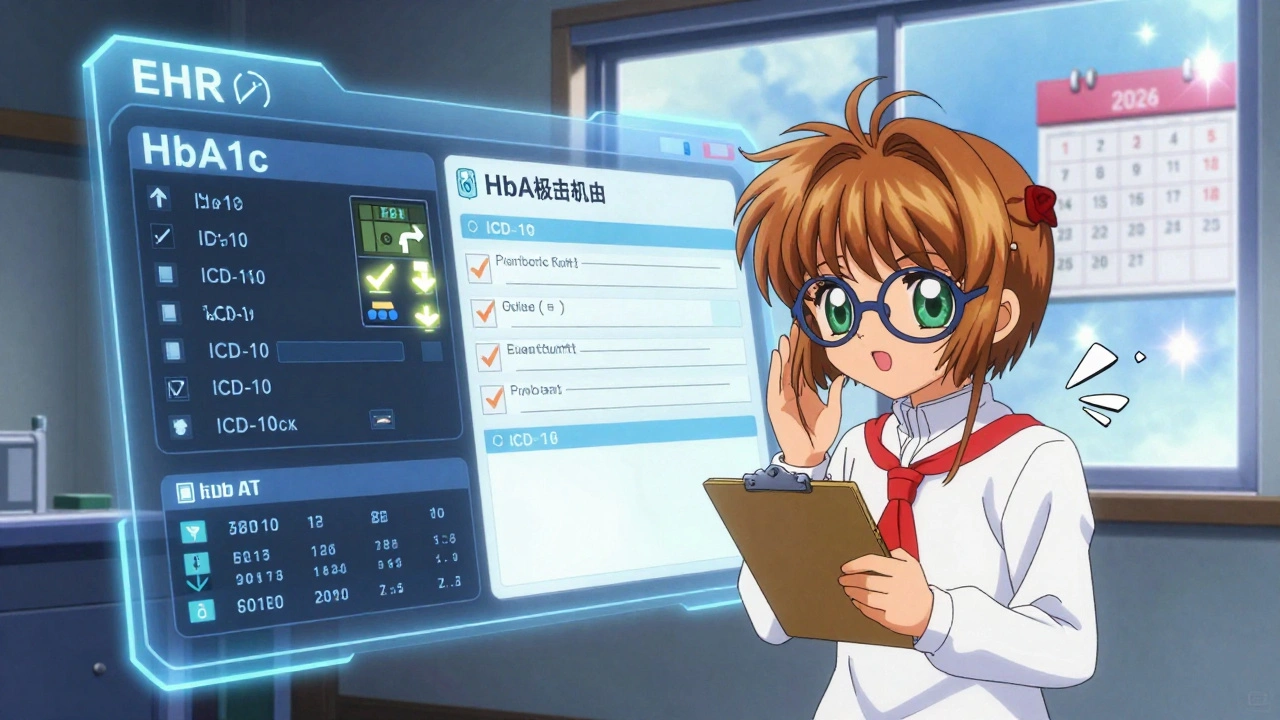
And AI tools? They’re already being tested. One system at the University of Pittsburgh Medical Center auto-filled 90% of prior auth forms using patient data from the EHR. Approval time dropped from 9 days to 2.
What Patients Lose When This System Fails
Behind every denied prior auth is a person who may stop taking their medicine.
Patients Rising found that 67% of people abandon treatment when prior auth delays last longer than 2 weeks. That’s not just a statistic. That’s someone skipping insulin because they can’t wait. Someone not filling their antidepressant because they’re too tired to fight the system.
And it’s not just about money. A 2023 CMS report found 17.3% of prior auth denials for brand-name drugs were medically inappropriate. That means patients were denied the right drug-not because they didn’t try the generic, but because the system got it wrong.
For pharmacists, this isn’t just a workflow issue. It’s a patient safety issue.
How to Win the Prior Auth Game
You can’t control the insurer. But you can control your process.
Here’s what works in real clinics and pharmacies:
- Submit requests 14 days before the script is due. Don’t wait until the last minute.
- Use payer-specific templates. They reduce denials by 37%.
- Assign one staff member to handle all prior auths. Cut processing time by over half.
- Track every request in a simple spreadsheet or tool. Lost requests drop by 89%.
- Check for gold carding status every 6 months.
- Always document failure with numbers: HbA1c, blood pressure, pain scores, days of symptoms.
- Use ePA. Always.
At UPMC, they added a pharmacist to the prior auth team. Approval rates jumped from 58% to 89%. That’s not magic. That’s expertise.
Final Thought: It’s Not Broken. It’s Just Misused.
Prior authorization for generics isn’t the enemy. The goal-using cost-effective meds-is smart. But when the system demands 7 pages of documentation for a patient who clearly tried two generics and still had symptoms? That’s not efficiency. That’s bureaucracy.
Pharmacists are on the front lines. You see the delays. You hear the frustration. You know when a patient needs the brand-name drug-because you’ve seen what happens when they don’t get it.
Use the tools. Know the rules. Fight for the right documentation. And don’t accept "it’s just policy" as an answer. Because policy should serve patients-not block them.







Patrick Smyth December 2, 2025
This system is a nightmare. I watched my mother skip her insulin for three weeks because of this. She ended up in the ER. They didn't care. They just said 'policy.' I'm done pretending this is about healthcare.
patrick sui December 2, 2025
The real issue isn't prior auth-it's the lack of interoperability between EHRs and payer portals. 🤔 We're still using fax machines in 2024? Prior auth should be auto-triggered via FHIR APIs. UPMC’s AI solution? That's the baseline, not the exception. We need systemic integration, not band-aids.
Declan O Reilly December 2, 2025
You know what's wild? We spend billions on AI to recommend cat videos but can't automate a form that just asks if someone tried metformin? The system isn't broken-it's bored. We're treating human health like a spreadsheet game. And the worst part? The people who designed it never had to wait for their own meds.
Conor Forde December 3, 2025
Prior auth? More like prior *annoyance*. I’ve seen pharmacists cry over denied scripts. And the insurers? They’re probably sipping lattes in a cubicle in Omaha, scrolling through TikTok while they deny a diabetic’s insulin because the HbA1c was 7.1% instead of 6.9%. This isn’t healthcare. It’s corporate cruelty dressed up in PDFs.
Linda Migdal December 5, 2025
This is why America needs to stop letting bureaucrats run medicine. In China, they just give you the drug. No forms. No delays. We’re losing ground because we’re too soft on paperwork. If you can’t follow the rules, you don’t deserve the meds.
Tommy Walton December 6, 2025
Prior auth is just capitalism’s way of saying 'you’re not worthy' 😒💊
James Steele December 6, 2025
The real tragedy isn’t the paperwork-it’s the normalization of inefficiency. We’ve built a healthcare industrial complex where compliance is fetishized over clinical judgment. The pharmacists? They’re the last moral actors in a system that’s been hollowed out by actuarial science. It’s not broken. It’s been engineered this way.
Louise Girvan December 8, 2025
This is all part of the Great Pharma Conspiracy. They want you dependent on generics so they can control the market. Then they’ll raise prices on the 'approved' brand-name drugs after you’ve been traumatized by waiting. Mark my words: the same people who designed this are on the board of a drug company. They’re watching you suffer. And laughing.
soorya Raju December 9, 2025
In India we just pay cash and get the drug. Why? Because no one has time for this nonsense. You think this is about cost? Nah. It’s about control. The system wants you weak. Dependent. Quiet. Don’t fight it. Just go to the black market. They don’t ask for HbA1c logs.
Dennis Jesuyon Balogun December 10, 2025
This isn't just about paperwork-it's about dignity. I’ve sat with patients in Nigeria who waited 17 days for a simple prior auth. One man died waiting. We don’t need more AI. We need more humanity. The pharmacist isn’t a clerk. They’re a guardian. And this system treats them like a typist. We must center the human, not the algorithm.
Grant Hurley December 12, 2025
Honestly? I just print out the form, scribble 'patient failed' with a big checkmark, and send it. 90% get approved anyway. The system’s rigged to be broken so we can pretend we’re fixing it. I’m not mad. I’m just tired. Let’s all just do the bare minimum and go home.
Lucinda Bresnehan December 13, 2025
I’m a pharmacist in rural Ohio. We started using UPMC’s template last year. Approval time dropped from 12 days to 3. Patients cried when they got their meds. I’ve saved lives with a well-written HbA1c note. It’s not glamorous. But it’s real. And if you’re reading this? Thank you. We see you. Keep fighting.