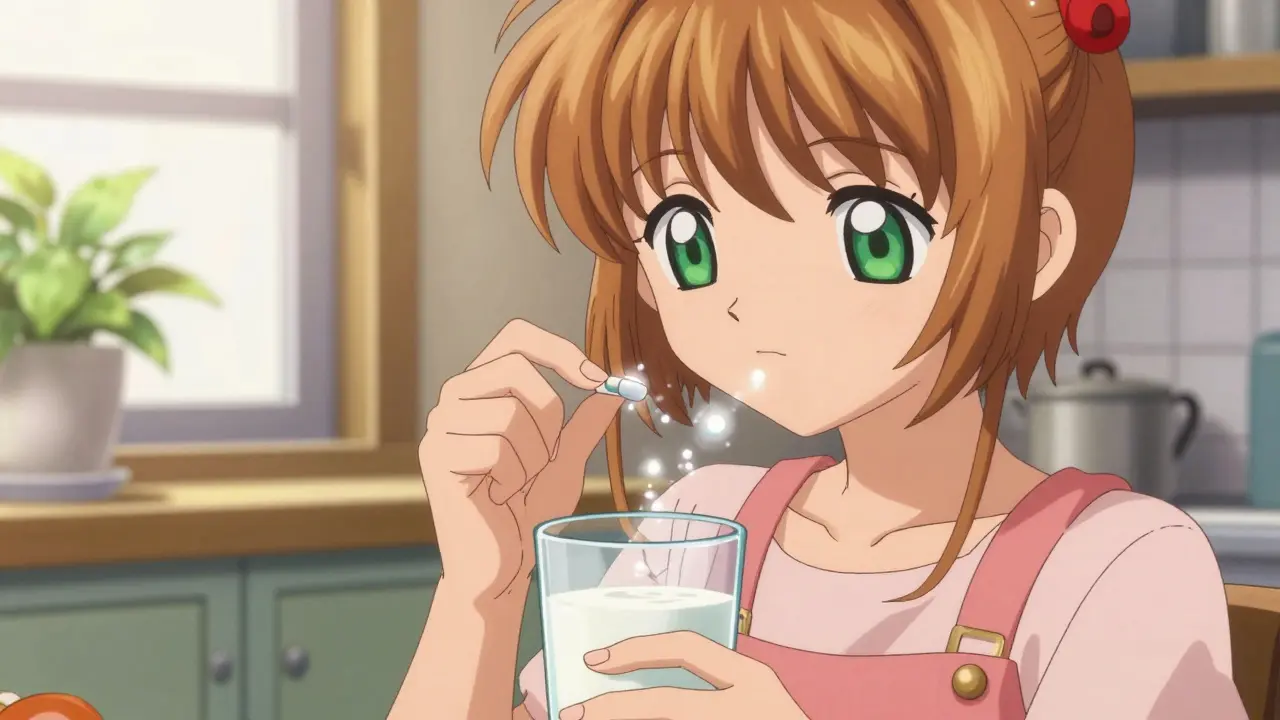
Did you know that eating a banana with your antibiotics could make them less effective? Or that taking your thyroid medication with breakfast might prevent it from working properly? Food and medications interact in surprising ways-sometimes making drugs stronger, weaker, or even dangerous. Food-drug interactions happen when what you eat changes how your body processes medicine. This can affect how much medicine gets into your bloodstream and how quickly it works. For some drugs, food helps absorption. For others, it blocks it. The science behind this is called food-drug interactions. The FDA and other health agencies have detailed guidelines to help patients take medications safely.
How Food Affects Medication Absorption
When you eat, your stomach empties slower. A high-fat meal can delay this process by up to two hours. This affects when the medicine reaches the small intestine where most absorption happens. Some medicines need an empty stomach to work best. Others need food to be absorbed properly. For example, tetracycline antibiotics like doxycycline bind to calcium in dairy products. This reduces absorption by 50-75%, making the drug less effective. That's why doctors tell you to take tetracycline on an empty stomach.
Tetracycline antibiotics like doxycycline bind to calcium in dairy products. This reduces absorption by 50-75%, making the drug less effective. That's why doctors tell you to take tetracycline on an empty stomach.
Gastric emptying speed varies based on meal composition. High-fat meals (50-60 grams of fat) slow digestion more than low-fat meals. This impacts drugs like acetaminophen, where peak blood levels take 45 minutes without food but 90-120 minutes with a fatty meal. Lipophilic drugs like griseofulvin absorb 200-300% better with high-fat meals because they dissolve better in bile secretions. But acidic drugs like itraconazole absorb worse when stomach pH rises from 1.5 to 3.5 after eating.
Key Examples: When Food Helps or Hurts
Levothyroxine is a medication used to treat hypothyroidism. It must be taken on an empty stomach to ensure proper absorption. Food can reduce its absorption by 30-55%, leading to ineffective treatment. A study from Mount Elizabeth Hospital in 2022 confirmed this-taking levothyroxine with food leads to inconsistent hormone levels and persistent symptoms like fatigue.
NSAIDs like ibuprofen often cause stomach issues. Taking them with food reduces stomach pain from 42% to 12% of users. The American College of Gastroenterology recommends taking these medications with a meal to avoid ulcers.
Nitrofurantoin is an antibiotic for urinary tract infections. It absorbs 40% better when taken with food. GoodRx’s 2023 analysis shows this improves effectiveness while reducing nausea.
Sulfonylureas like glipizide require careful timing. Taking them on an empty stomach can cause dangerous low blood sugar. Patients who skip food before taking sulfonylureas have a 23% higher chance of hypoglycemia. Always take these 30 minutes before a meal.
Timing Guidelines: What 'Empty Stomach' Really Means
What does "empty stomach" actually mean? It means taking the medicine at least one hour before or two hours after eating. "With food" usually means within 30 minutes of starting your meal. Some medications, like certain antiretrovirals, only need a small snack-about 200-300 calories-not a full meal. This is why reading labels carefully matters.
The Australian Prescriber (2023) defines "taking medicine with a meal" as administration within 30 minutes of starting food consumption. For drugs requiring empty stomach administration like levothyroxine, Mount Elizabeth Hospital’s 2022 clinical guidelines specify that food co-administration reduces absorption by 30-55% compared to fasting conditions, necessitating administration at least 30 minutes before the first meal with plain water only.
Many people misunderstand "take with food" instructions. A 2023 Express Scripts report found 45% of patients think it means a full meal. For some medications, like certain antiretrovirals, a small snack suffices. But for others, like levothyroxine, even a small snack interferes. This confusion leads to treatment failures. On Drugs.com, 62% of users taking levothyroxine struggle with the empty stomach requirement, often causing ongoing symptoms.
Common Mistakes and Their Consequences
One common error involves tetracycline antibiotics taken with dairy. Reddit’s r/Pharmacy community documented cases where patients taking doxycycline with calcium-rich foods experienced treatment failure. One verified case (u/ThyroidWarrior, March 15, 2023) described a recurrent urinary tract infection that resolved only after separating doxycycline administration from calcium-rich foods by two hours.
Sulfonylurea users often take diabetes medications on empty stomach. The American Diabetes Association’s 2022 adverse event tracking showed 23% of these patients experience symptomatic hypoglycemia requiring intervention. Blood glucose levels drop dangerously low (below 70 mg/dL) in 25% of patients who take these medications without food.
NSAIDs taken without food increase stomach pain risk. GoodRx’s 2022 patient survey of 5,000 medication users found that 78% reported reduced gastrointestinal side effects when taking NSAIDs with food. Ibuprofen-related stomach pain decreased from 42% to 12% occurrence rates.

Practical Tips for Proper Medication Timing
Set phone alarms for medication timing. If you take levothyroxine, set an alarm 60 minutes before breakfast. For NSAIDs, pair them with your lunchtime meal. Always ask your pharmacist about food timing when you get a new prescription. Pharmacists who give specific food-timing counseling see 35% higher adherence rates at 90 days compared to standard advice.
Check medication labels carefully. Some drugs say "take with food" but only need a small snack. Others require strict fasting. For example, the antifungal itraconazole needs an empty stomach because high-fat meals reduce stomach acid needed for absorption.
Use digital tools. Apps like Medisafe and MyTherapy send reminders for medication timing. Medisafe reports 27% fewer timing-related errors among their 5 million users who activate these features. These tools help you stay consistent with meal-based dosing schedules.
Emerging Trends in Medication Timing
New technology is changing how we manage food-drug interactions. The FDA’s 2023 draft guidance expands food-effect testing to include plant-based and gluten-free meals, reflecting modern diets. Digital health companies like Medtronic are developing ingestible sensors that monitor gastric pH and emptying in real time. Their 2023 clinical trial showed 38% improvement in drug absorption consistency for pH-dependent medications.
Researchers are exploring chronopharmacology-timing medications based on circadian rhythms. A 2023 Lancet Digital Health study showed 22% better outcomes for levothyroxine when timing matched individual gastric emptying profiles. This personalization could become standard in future guidelines.
The American Society of Health-System Pharmacists released updated consensus guidelines in January 2024. They replaced vague terms like "with food" with precise instructions: "within 30 minutes of meal initiation" or "minimum 60 minutes before first meal." This clarity helps patients follow instructions correctly.
Can I take my medication with coffee?
It depends on the medication. Coffee can interfere with some drugs. For example, it reduces absorption of thyroid medication like levothyroxine by 55%. But for others like aspirin, coffee has little effect. Always check with your pharmacist about specific interactions.
What if I forget to take my medication at the right time?
For most medications, taking it late is better than skipping it. But for time-sensitive drugs like levothyroxine, wait until the next scheduled dose. Never double up unless your doctor says so. If you’re unsure, call your pharmacist for advice.
Why do some medications need to be taken with food?
Food helps certain drugs absorb better or reduces side effects. For example, NSAIDs like ibuprofen cause less stomach pain when taken with food. Some antivirals need fat in meals to dissolve properly. Always follow the label instructions for best results.
Can I take my medication with milk?
Milk often interferes with antibiotics like tetracycline and doxycycline. The calcium binds to these drugs, blocking absorption. For most antibiotics, avoid dairy for two hours before and after taking the dose. Always check specific instructions for your medication.
How do I know if my medication has food interactions?
Check the medication label for "take with food" or "take on empty stomach" instructions. Ask your pharmacist when you pick up the prescription. They can explain exactly how food affects your specific medication and why timing matters.





Eric Knobelspiesse February 7, 2026
yo, so like, food and meds interactions? it's all about the timing. take antibiotics with dairy? bad idea, like, 50-75% less effective. but also, life is like a journey, right? like, just as you need to time your meds right, you need to time your life decisions. but maybe i'm overthinking. but yeah, check your meds. typos are part of the process, lol.
Heather Burrows February 9, 2026
People really don't read instructions. It's not hard. Take meds on empty stomach. Food interferes. Duh. But I guess most people just wing it. Oh well.
Ritu Singh February 10, 2026
The science behind food-drug interactions is indeed fascinating. For instance, levothyroxine's absorption is significantly impaired by food, leading to inconsistent hormone levels. This underscores the importance of precise timing. As a healthcare professional, I always advise patients to take such medications with plain water at least one hour before breakfast. This simple step can greatly improve treatment efficacy. It's also important to consider cultural dietary practices when providing advice. For example, in some cultures, breakfast includes dairy products, which may complicate adherence. Hence, clear communication is essential.
Mark Harris February 12, 2026
Hey y'all! Just wanted to say that timing your meds right can make a huge difference. I used to take my antibiotics with milk and it didn't work. Then I learned to take them on empty stomach and boom, better results. So yeah, check the labels, set alarms, and stay healthy! 💪
Lakisha Sarbah February 14, 2026
i alwys forget to take my meds on empty stomach. but after reading this, i'll set an alarm. it's important to follow the instructions. thanks for sharing. :)
Ariel Edmisten February 15, 2026
Take meds as instructed. Food can affect how they work. Check labels. Simple as that.
Tola Adedipe February 15, 2026
I agree that food-drug interactions are critical, but we need better education on this. Doctors should emphasize this more. Also, pharmacists can help patients understand. It's not just about the meds, it's about how we live. Let's work together to get this right.
Savannah Edwards February 17, 2026
I really appreciate this article. As someone who's been on thyroid medication for years, I know how frustrating it can be when symptoms persist. The fact that even a small snack can reduce absorption by 30-55% is eye-opening. I remember once taking my levothyroxine with a piece of toast, and my doctor said it was ineffective. It's amazing how something so simple can have such a big impact. I also think it's important to consider cultural differences. In some communities, breakfast might include dairy-heavy foods, which could interfere with certain medications. It's crucial for healthcare providers to take these factors into account when giving advice. I've started using a medication app to remind me, and it's been a game-changer. Let's keep sharing these tips so everyone can stay healthy.
Mayank Dobhal February 19, 2026
This is so important! I had a bad experience with antibiotics and dairy. Never again. Thanks for the info. :(
Marcus Jackson February 20, 2026
Yeah, I know about this. Tetracycline with dairy is a classic mistake. Calcium binds to it. It's basic pharmacokinetics. People should read the labels. Also, coffee can affect thyroid meds. But most people don't care. Just saying.
Natasha Bhala February 21, 2026
this is really helpful. i'll set an alarm for my meds. thanks for sharing. :)
Gouris Patnaik February 21, 2026
In my country, people take meds with food without thinking. This is why we have health issues. The west knows better. We need stricter guidelines. Science is universal, but people ignore it. It's sad.
Jesse Lord February 22, 2026
this is such important information. i never knew coffee affects thyroid meds. i'll make sure to take mine with water only. thanks for explaining. everyone should know this. :)
AMIT JINDAL February 23, 2026
Oh wow! This is so fascinating! I've been taking my meds with food for years, but now I realize how wrong I was. The science behind it is incredible! Did you know that calcium in milk binds to antibiotics? It's like chemistry magic! But seriously, we need to educate people more. Maybe I can start a blog about this. It's so important! 😍 Also, I've read all the studies and they're clear. People need to stop being lazy and follow instructions. This is why I'm always here to help. 🌟