MAOI Tyramine Food Safety Checker
How it works: Tap a food below to see its tyramine level. The 6 mg per serving line marks the boundary doctors use — above it, tyramine can slip past your gut's blocked enzyme and trigger a hypertensive crisis.
Imagine being told that a single slice of aged cheddar or a cold beer could send your blood pressure soaring to dangerous levels. For people taking Monoamine Oxidase Inhibitors is a class of older antidepressants that block the enzyme responsible for breaking down mood-regulating chemicals like serotonin and dopamine., this isn't just a warning; it's daily reality. These medications were the first line of defense against depression in the 1950s, but they largely fell out of favor due to strict lifestyle rules. Today, fewer than 1% of U.S. antidepressant prescriptions are for MAOIs, yet they remain a vital tool for patients who haven't responded to newer drugs.
If you or a loved one are considering an MAOI, understanding the unique risks is crucial. This isn't about fear-mongering; it's about empowerment. With proper education, these drugs can be life-saving. Here is what you need to know about the side effects, the diet, and how to stay safe.
How MAOIs Work Differently From Other Antidepressants
To understand why the restrictions exist, you have to look at the mechanism. Most modern antidepressants, like SSRIs, work by blocking the reuptake of serotonin, essentially keeping more of it in the brain. MAOIs take a different approach. They inhibit an enzyme called monoamine oxidase, which normally breaks down neurotransmitters like serotonin, norepinephrine, and dopamine. By stopping this breakdown, MAOIs increase the availability of all three chemicals simultaneously.
This broad action is both their strength and their weakness. It makes them highly effective for complex cases of depression, particularly atypical depression where patients feel heavy, eat too much, and sleep too much. However, because they affect multiple systems, they interact with more things in your body-and on your plate-than other meds. There are two types of the enzyme: MAO-A and MAO-B. MAO-A handles serotonin and norepinephrine, while MAO-B targets dopamine and phenethylamine. Traditional oral MAOIs like phenelzine and tranylcypromine inhibit both irreversibly, meaning your body has to build new enzymes from scratch, a process that takes about two weeks.
The Tyramine Trap: Why Food Matters
The most famous restriction involves tyramine. Tyramine is a naturally occurring substance found in many foods, especially those that are aged, fermented, cured, or spoiled. Under normal conditions, an enzyme in your gut wall (MAO-A) breaks down tyramine before it enters your bloodstream. When you take an MAOI, that gut enzyme is blocked. If you eat high-tyramine food, the tyramine slips into your blood, displaces norepinephrine from storage vesicles, and causes a sudden, massive release of adrenaline-like chemicals.
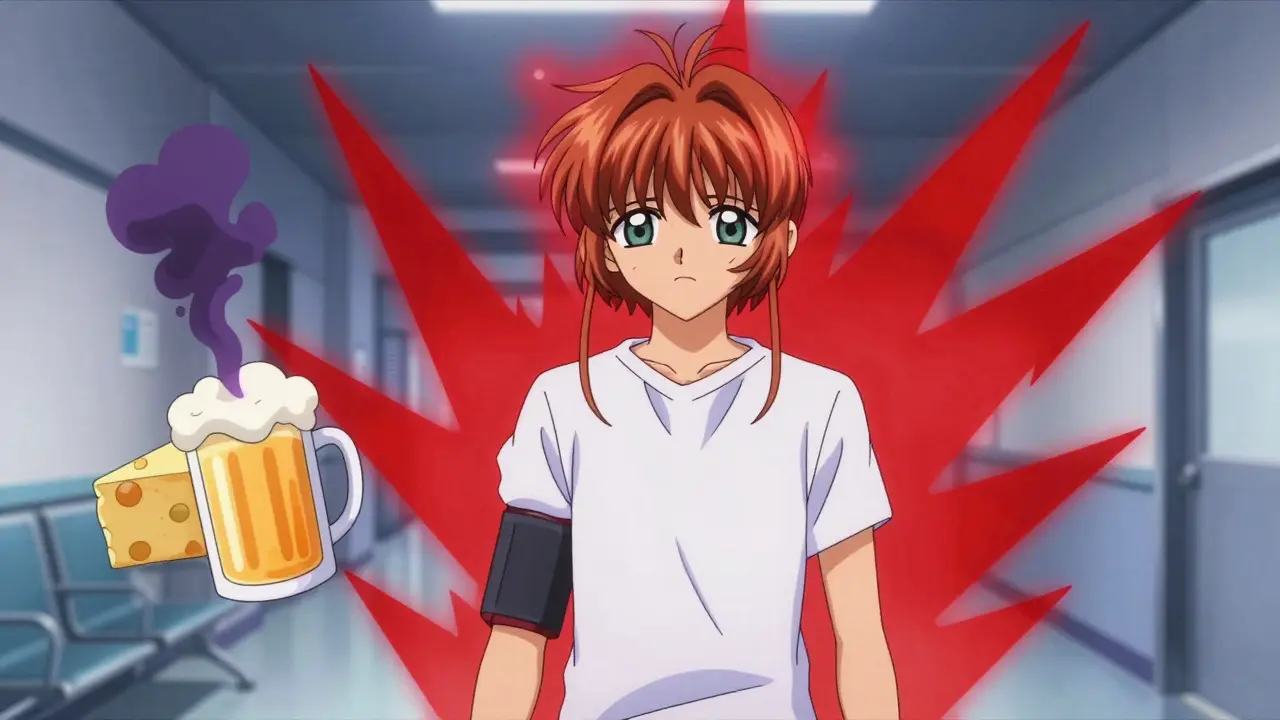
This leads to a hypertensive crisis-a rapid spike in blood pressure that can exceed 200 mmHg systolic. Symptoms include a severe headache, stiff neck, sweating, and palpitations. While rare with careful management, it is the primary reason doctors hesitate to prescribe these drugs. You don't need to avoid all food, but you do need to avoid specific categories. Generally, if a food contains more than 6 mg of tyramine per serving, it’s off-limits.
| Food Category | Avoid (High Tyramine) | Generally Safe (Low Tyramine) |
|---|---|---|
| Cheese | Aged cheeses (Cheddar, Swiss, Blue), Parmesan | Fresh cheeses (Cottage, Mozzarella, Cream cheese) |
| Meat | Cured meats (Salami, Pepperoni, Hot dogs), Liver | Fresh meat, Poultry, Fish (eaten same day) |
| Beverages | Tap beer, Wine (especially red), Leftover juice | Bottled beer, Water, Freshly squeezed juice |
| Soy Products | Soy sauce, Fermented tofu, Tempeh | Edamame, Tofu (fresh, not fermented) |
Drug Interactions That Can Be Dangerous
Food isn't the only concern. MAOIs have extensive drug interaction profiles. The most critical risk is combining them with other serotonergic drugs, such as SSRIs, SNRIs, or even certain painkillers like tramadol. Doing so without a sufficient washout period can trigger serotonin syndrome, a potentially life-threatening condition characterized by agitation, confusion, rapid heart rate, and high fever. Studies suggest that inadequate washout periods lead to serotonin syndrome in 15-20% of cases.
You also need to be careful with over-the-counter medications. Decongestants like pseudoephedrine, found in many cold and sinus medicines, can cause a hypertensive emergency when combined with MAOIs. Always check labels for "sympathomimetics" or ask your pharmacist. The standard rule is a 2-week washout period when switching between an MAOI and another antidepressant, though some guidelines recommend up to 5 weeks depending on the specific drugs involved.
Side Effects Beyond Blood Pressure
While hypertensive crises get the headlines, MAOIs come with other common side effects that impact daily life. Weight gain is a frequent complaint, often exceeding what is seen with SSRIs. Patients may also experience dry mouth, constipation, dizziness, and sexual dysfunction. Because MAOIs affect norepinephrine, they can sometimes cause insomnia or vivid dreams, particularly in the first few weeks of treatment.
Oral hypotension (low blood pressure when standing up) is another issue. This orthostatic hypotension can make you feel lightheaded when you stand quickly. To manage this, doctors often recommend rising slowly and staying hydrated. Unlike SSRIs, which are often associated with emotional blunting, MAOIs are praised by users for restoring natural emotional responsiveness, though this comes at the cost of the aforementioned physical side effects.

Management Strategies for Safety
Living with an MAOI requires a shift in mindset. It’s not about deprivation; it’s about awareness. Many patients find success by cooking most meals at home, where they control ingredients. Dining out becomes a negotiation: asking for fresh preparations rather than cured or aged items helps. Carrying a food diary can help identify accidental exposures and track triggers.
For those who struggle with the strict diet, there is an alternative: the transdermal selegiline patch (Emsam). At lower doses (6 mg/24hr), this patch primarily inhibits MAO-B in the brain with minimal effect on gut MAO-A, significantly reducing dietary restrictions. While more expensive ($850-$1,200/month compared to $30-$50 for generics), it offers a safer margin for social situations and travel. Approximately 8% of Emsam users require full dietary modification, compared to nearly all oral MAOI users.
Support groups, such as the MAOI Information Project, provide invaluable community resources. Sharing tips on reading labels and navigating restaurants can ease the anxiety of constant monitoring. Remember, the goal is safety, not perfection. Accidental exposure is possible, but knowing the signs and having an emergency plan (like carrying phentolamine if prescribed) mitigates the risk.
Frequently Asked Questions
Can I drink alcohol while on MAOIs?
It depends on the type. Bottled beer and hard liquor are generally considered low in tyramine and may be consumed in moderation after consulting your doctor. However, tap beer, wine (especially red), and fermented alcoholic beverages should be avoided due to higher tyramine content. Always check with your psychiatrist before drinking.
How long does it take for MAOIs to work?
Like other antidepressants, MAOIs typically take 4 to 6 weeks to show full therapeutic effects. Some patients notice initial improvements in sleep or appetite within the first two weeks, but consistent mood stabilization usually requires several weeks of consistent dosing.
What should I do if my blood pressure spikes?
If you experience a severe headache, stiff neck, or chest pain along with high blood pressure, seek medical attention immediately. Keep a log of what you ate in the last 24 hours. Your doctor may prescribe sublingual phentolamine for emergency use, but professional evaluation is essential to rule out other causes.
Are MAOIs better than SSRIs for everyone?
No. SSRIs are first-line treatments for most people due to their safety profile and lack of dietary restrictions. MAOIs are reserved for treatment-resistant depression or atypical depression where other options have failed. They are not superior for every patient, but they are uniquely effective for specific subtypes of depression.
Can I eat soy sauce occasionally?
Most traditional soy sauces are high in tyramine due to fermentation and should be avoided. However, low-sodium or specifically labeled 'MAOI-safe' soy sauces exist. Always check the label for tyramine content or consult a dietitian specializing in MAOI therapy to determine if a small amount is safe for your specific tolerance level.