
Every year, nearly 25 million Americans struggle with allergies that turn their homes into trigger zones. Dust mites crawl in your bedding. Pet dander clings to your couch. Mold grows silently behind the bathroom tiles. Cockroach debris lingers in kitchen corners. And no matter how much you clean, your nose keeps running, your eyes itch, and your chest feels tight. The truth is, cleaning alone won’t fix this. You need allergen avoidance-a smart, science-backed system to reduce exposure at the source.
Why Your Home Is the Problem (And How to Fix It)
Your home isn’t just where you relax-it’s where you spend 90% of your time. And if you’re allergic, that’s also where your immune system is under constant attack. The most common indoor allergens? Dust mites, pet dander, mold, and cockroach particles. Together, they affect over 80% of people with allergies in the U.S. The good news? You don’t need to move out. You just need to change how you manage your space.Dust Mites: The Silent Invaders
Dust mites aren’t visible, but their waste is. Each mite produces 20 droppings a day. These tiny particles become airborne when you make your bed, sit on the couch, or vacuum. They’re the #1 trigger for asthma and allergic rhinitis in the U.S. Start with your bedroom. It’s the most important room. Mattresses, pillows, and box springs are breeding grounds. Cover them with allergen-proof encasements made of tightly woven fabric (look for a pore size under 10 microns). These aren’t regular pillowcases-they’re sealed barriers. Studies show they reduce mite allergen exposure by 73-90%. Wash your sheets, pillowcases, and blankets every week in water at least 130°F (54.4°C). Cold water doesn’t kill mites. Hot water does. If you can’t wash everything in hot water, freeze pillows and stuffed animals for 24 hours-this kills mites too. Keep your bedroom humidity below 50%. Mites can’t survive in dry air. Use a hygrometer to track levels. If your home is humid (common in Pittsburgh summers), run a dehumidifier. A $120 unit can cut mite populations by over 80% in a month.Pet Dander: Can You Keep Your Pet?
If you’re allergic to cats or dogs, the worst thing you can do is assume you can’t live with them. You can-but you need a plan. Cats are worse than dogs. Their allergen, Fel d 1, sticks to everything: clothes, carpets, even walls. Removing the pet entirely cuts allergen levels by 100 to 1,000 times over six months. But if you won’t give up your cat, here’s what works: - Keep pets out of the bedroom. This is non-negotiable. The bedroom should be a pet-free sanctuary. - Bathe your cat weekly. Studies show this reduces airborne Fel d 1 by 41%. - Use a vacuum with a true HEPA filter. Regular vacuums blow allergens back into the air. HEPA vacuums trap them. Vacuum at least twice a week, especially on carpets and upholstered furniture. - Install a HEPA air purifier in your bedroom. Look for one that moves 4-6 air changes per hour. A unit rated for 300 sq. ft. is enough for most bedrooms. Don’t waste money on air ionizers, ozone generators, or “hypoallergenic” pet shampoos. They don’t work. Stick to the proven methods.Mold: Hidden in Plain Sight
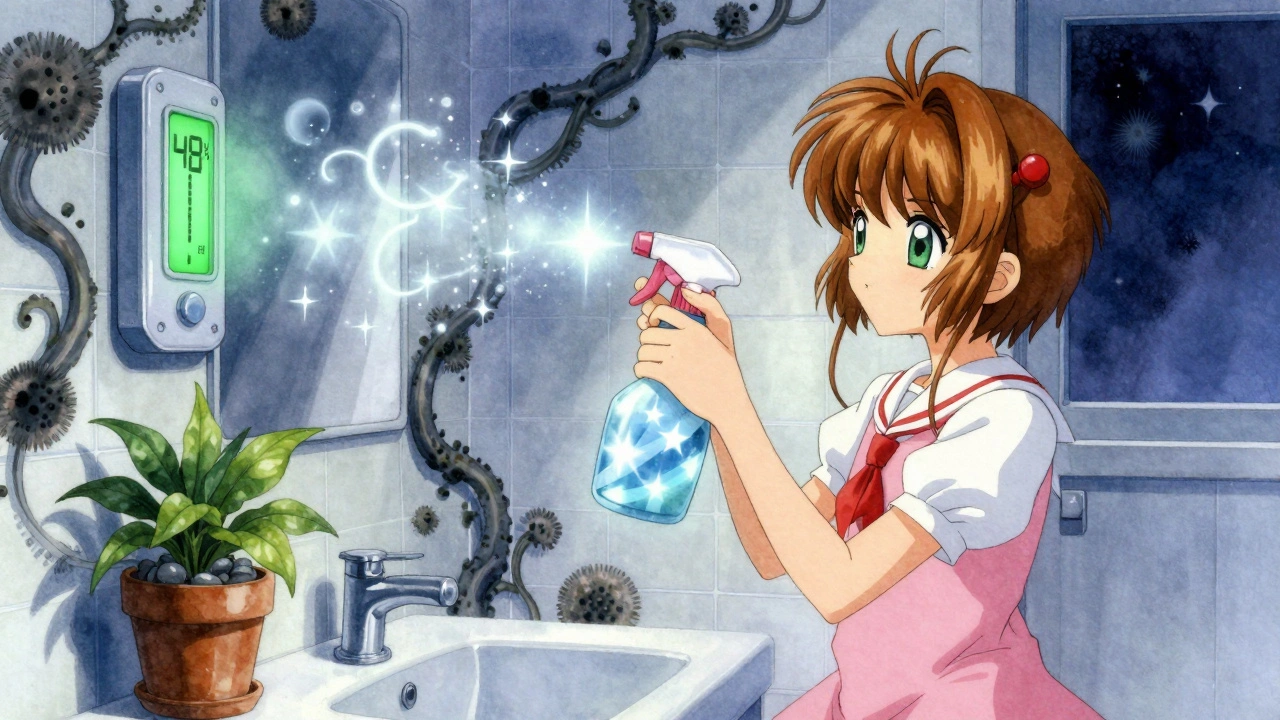
Mold doesn’t just grow in basements. It hides in bathrooms, under sinks, behind wallpaper, and even in your humidifier. Mold spores trigger asthma attacks and chronic sinus infections. Fix leaks within 24-48 hours. Water sitting for longer than two days invites mold. Check under sinks, around windows, and near the washing machine. Keep indoor humidity between 30-50%. Use a dehumidifier in damp areas. In Pittsburgh’s humid summers, run it daily. Clean bathroom surfaces weekly with a bleach solution or EPA-approved mold killer. Don’t just wipe-scrub. Mold roots grow deep. Avoid indoor plants if you’re mold-sensitive. Soil is a mold factory. Use pebbles instead of soil in decorative pots.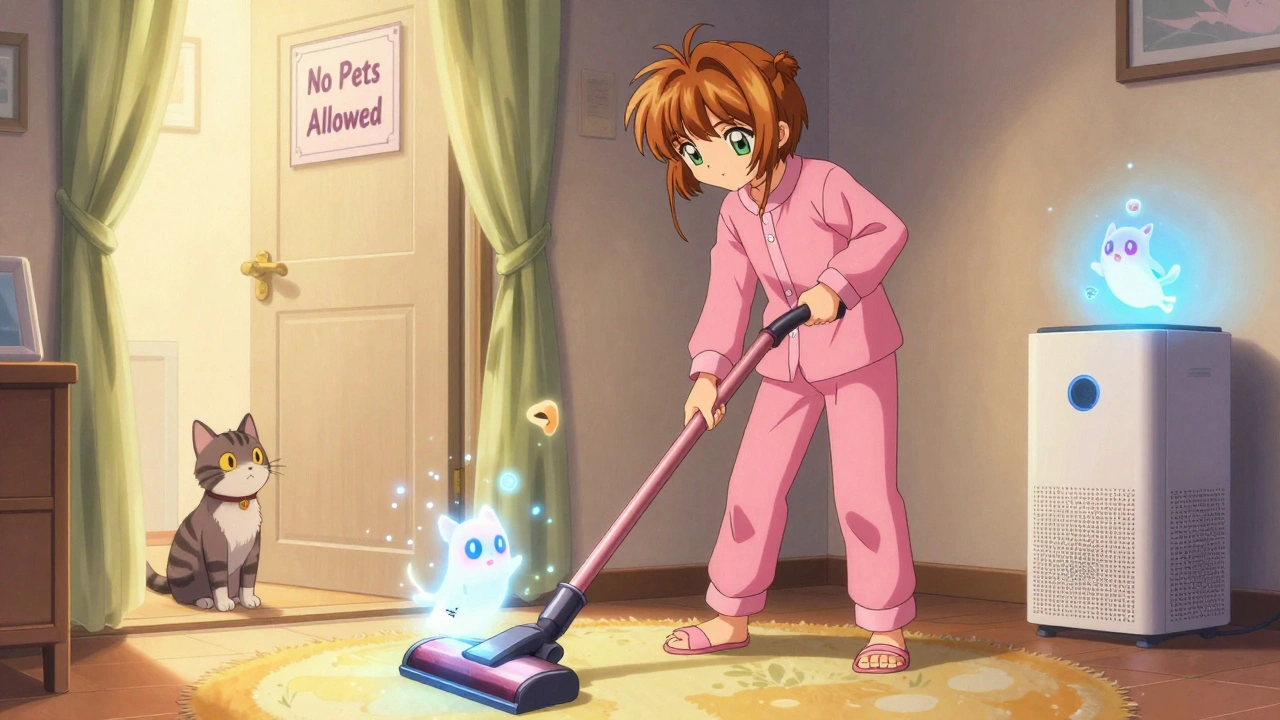
Cockroaches: More Than a Nuisance
Cockroach allergens are powerful. Even a few roaches can trigger severe asthma in children. You might not see them, but their droppings, saliva, and shed skins are everywhere-in kitchens, pantries, and behind appliances. Store all food in airtight containers. Don’t leave crumbs out overnight. Empty the trash daily. Use bait stations or boric acid powder in corners and behind appliances. Avoid spray pesticides-they scatter allergens into the air. Professional extermination works. A 1999 study in urban dorms showed an 86% drop in cockroach allergen after professional treatment and consistent cleaning. Don’t wait until you see roaches. If you live in an older building or apartment complex, ask your landlord to treat for them annually.Why Single Fixes Don’t Work
Buying a HEPA filter and calling it a day? That’s not enough. A 2023 review of 15 studies found that single interventions-like just using mattress covers-reduced allergens by 40-65%, but didn’t improve symptoms in 78% of cases. The real wins come from combining 3-5 strategies. For example:- HEPA air purifier in the bedroom
- Allergen-proof bedding
- Dehumidifier keeping humidity at 45%
- Pets banned from the bedroom
- Weekly hot water laundry
Cost vs. Benefit: What’s Worth It
You don’t need to spend thousands. Start with low-cost, high-impact steps:- Allergen-proof mattress and pillow covers: $30-$100 (lasts 5+ years)
- Dehumidifier: $120-$180 (pays for itself in reduced medication use)
- HEPA vacuum: $200-$400 (one-time buy)
- HEPA air purifier: $150-$300
How to Start: A Simple 3-Phase Plan
You don’t have to overhaul your home overnight. Follow this timeline: Phase 1: Weeks 1-2- Buy and install allergen-proof covers on your mattress, box spring, and pillows
- Place a HEPA air purifier in your bedroom
- Set a rule: no pets in the bedroom
- Buy a hygrometer and monitor humidity
- Start washing bedding weekly in hot water
- Get a HEPA vacuum and use it twice a week
- Fix any leaks and clean bathrooms weekly
- Replace HEPA filters every 6-12 months
- Recheck humidity levels monthly
- Consider professional pest control if you suspect roaches
What Doesn’t Work (And Why You Should Skip It)
There’s a lot of noise out there. Here’s what science says doesn’t help:- “Hypoallergenic” pet breeds-there’s no such thing. All cats and dogs produce allergens.
- Air ionizers and ozone generators-they don’t remove allergens and can irritate lungs.
- Essential oils and air fresheners-they mask smells but add chemicals that worsen asthma.
- Washing pets with “allergy-reducing” shampoos-temporary effect, not a solution.
When You Need More Help
If you’ve tried all this and still feel bad, it’s time to get tested. Not all allergies are from your home. Pollen, outdoor mold, or even workplace allergens could be the issue. Allergy skin or blood tests can tell you exactly what you’re reacting to. Once you know your triggers, you can focus your efforts. There’s no point spending money on pet dander control if your real problem is ragweed pollen. Tailor your plan to your test results.Final Thought: It’s Not About Perfection
You don’t need a sterile lab. You need a smarter home. Small, consistent changes add up. A clean bedroom. A dehumidifier running at night. Washing sheets weekly. These aren’t big sacrifices-they’re smart habits. Allergies don’t disappear. But with the right environmental control, you can take back your breathing, your sleep, and your life.Can I still have pets if I’m allergic?
Yes, but you must limit exposure. Keep pets out of the bedroom, bathe them weekly, use a HEPA vacuum and air purifier, and wash your hands after touching them. Removing the pet entirely is the only way to eliminate allergens completely, but many people manage well with strict boundaries.
Do air purifiers really help with allergies?
Yes-if they have a true HEPA filter and are sized correctly for the room. HEPA filters capture 99.97% of particles at 0.3 microns, which includes dust mites, pet dander, and mold spores. Place one in your bedroom and run it on high while you sleep. Avoid ionizers or ozone-producing models-they don’t help and can make breathing worse.
How often should I wash bedding to control dust mites?
Wash all bedding-including sheets, pillowcases, and blankets-once a week in water at least 130°F (54.4°C). This temperature kills dust mites and removes their allergenic waste. If you can’t wash everything in hot water, freeze pillows and stuffed animals for 24 hours to kill mites.
Is a dehumidifier necessary for allergy control?
If you live in a humid climate like Pittsburgh, yes. Dust mites and mold thrive above 50% humidity. Keeping indoor humidity between 30-50% with a dehumidifier reduces both allergens by 70-85%. Use a hygrometer to monitor levels and run the dehumidifier daily during spring and summer.
Are expensive whole-house air filtration systems worth it?
Not for most people. A single HEPA air purifier in the bedroom provides 80-90% of the benefit at 1/5 the cost. Whole-house systems cost $800-$2,500 and require professional installation. Only consider them if you have severe asthma and have already tried all other measures without success.
Can allergen avoidance replace allergy medication?
It can reduce your need for medication, but not replace it entirely. Allergen avoidance lowers your exposure so your body reacts less, meaning you may need fewer antihistamines or inhalers. But for moderate to severe allergies, medication is still necessary. The best approach combines both-environmental control to reduce triggers and medication to manage symptoms.








Pavan Kankala December 5, 2025
Yeah right, like cleaning your room is gonna stop Big Pharma from pumping allergens into the air through 5G towers and smart thermostats. They want you to buy dehumidifiers so you don’t notice the microchips in your pillowcases tracking your sneezes. I’ve been living off raw garlic and moonwater since 2018 - no meds, no HEPA filters, just vibes. Your ‘science’ is a lie.
Martyn Stuart December 6, 2025
Thank you for this incredibly thorough, evidence-based guide. I particularly appreciate the emphasis on humidity control and the clear distinction between effective interventions (HEPA, hot-water washing) and pseudoscientific noise (ionizers, hypoallergenic breeds). Many people overlook the cumulative effect of layered strategies-this is exactly the kind of practical, nuanced advice that saves lives. Please keep sharing this.
Jessica Baydowicz December 7, 2025
OMG YES. I used to be a mess-sniffling like a broken faucet, eyes swollen shut every morning. Then I did the mattress covers, the weekly hot wash, and the $120 dehumidifier from Target? Game. Changer. My cat still sleeps on the couch (bless her), but my bedroom? Sanctuary. I even started singing to my air purifier. It’s weird, but it works. You’re not broken-you just need a smarter home.
Shofner Lehto December 8, 2025
The data here is solid. The key insight isn’t the tools-it’s the mindset shift from cleaning to controlling. Most people think ‘clean’ means ‘spotless.’ But allergen avoidance is about creating barriers, managing airflow, and reducing reservoirs. It’s engineering your environment, not scrubbing it. This approach works because it’s systemic, not superficial.
Rachel Bonaparte December 10, 2025
Let’s be real-this whole ‘allergen avoidance’ thing is just a distraction. The real problem? Glyphosate in your organic kale, fluoride in your water, and the fact that your ‘HEPA filter’ is probably made in a factory owned by the same corporation that makes your antihistamines. They want you to believe you can ‘control’ your environment, so you never question why your body is falling apart in the first place. The mold? It’s not in your bathroom-it’s in your mind. And the dust mites? They’re just tiny spies for the HVAC conglomerate. You’re being manipulated into buying gadgets while the real toxins go unchallenged.
Michael Feldstein December 11, 2025
What’s the most surprising thing you’ve learned from trying these strategies? I tried the pet-free bedroom rule and thought I’d lose my mind-but honestly, sleeping without fur on my face has been life-changing. I didn’t realize how much I’d been tolerating until it was gone. What’s one small change that made the biggest difference for you?
Libby Rees December 12, 2025
Simple, clear, and accurate. I’ve lived with seasonal allergies for 30 years. This is the first guide that didn’t overwhelm me with jargon or sell me a miracle cure. The phase plan is perfect. I started with the mattress covers and the dehumidifier. Two weeks later, I slept through the night. No pills. No drama. Just science.
Rudy Van den Boogaert December 14, 2025
My sister tried all this last year and said it cut her inhaler use by 70%. She’s still skeptical about the pet thing-she loves her dog-but she’s keeping him out of the bedroom and washing her hands after cuddling. Small steps, right? I’m gonna start with the bedding this weekend.
Gillian Watson December 16, 2025
Dehumidifier. Bedding covers. No pets in the bedroom. Done. I did all three. Breathing better. No drama. No magic. Just basic stuff people ignore because they think it’s too simple.
Jordan Wall December 16, 2025
LOL at the ‘HEPA vacuum’ recommendation. As if your $300 Dyson is gonna outperform the 1200-year-old Chinese wisdom of sweeping with bamboo brooms and chanting mantras to the Dust Deity. Also, ‘allergen-proof covers’? Sounds like corporate propaganda. I use a 100% cotton sheet from my grandma’s attic-no chemicals, no plastic, just ancestral vibes. My cat purrs on it. I sneeze less. Coincidence? I think not. 🌿🐱⚡
Gareth Storer December 17, 2025
So let me get this straight. You’re telling me the solution to allergies is… buying more stuff? A dehumidifier, a HEPA vacuum, a purifier, special covers… and you’re not even allowed to have your cat in the same room? Sounds less like ‘allergen avoidance’ and more like ‘buying your way out of basic human existence.’ Next you’ll tell me to sleep in a Faraday cage to avoid WiFi pollen.
Karl Barrett December 18, 2025
There’s a deeper layer here that doesn’t get talked about. Allergies aren’t just biological-they’re existential. We live in environments engineered for efficiency, not harmony. Our homes are sealed, climate-controlled, sterile boxes. We’ve removed the very microbes that trained our immune systems. The dust mites? They’re not the enemy. They’re the symptom. The real question isn’t how to kill them-it’s how to rewild our living spaces. Maybe we don’t need fewer allergens… maybe we need more biodiversity. Maybe the answer isn’t HEPA filters… but houseplants, open windows, and dirt under our nails. The science says one thing. The soul whispers another.