Shingles isn’t just a rash. For many people, it’s months of burning pain, sleepless nights, and a condition called postherpetic neuralgia that can last years. If you’re over 50, or even younger and immunocompromised, the recombinant zoster vaccine-better known as Shingrix-isn’t just a good idea. It’s the best protection you’ve got.
Why Shingrix Is the Only Shingles Vaccine You Need
Back in 2017, everything changed. The old shingles vaccine, Zostavax, was pulled off the U.S. market because it simply didn’t work well enough. It cut shingles risk by about half-okay, but not great. Shingrix, the new recombinant zoster vaccine, changed the game. It’s not a live virus. It doesn’t contain any part of the actual virus. Instead, it uses a single protein from the virus (glycoprotein E) plus a powerful immune booster called AS01B. The result? Over 90% effectiveness at preventing shingles, no matter your age.That’s not a typo. For people aged 50 to 59, Shingrix is 97.2% effective. For those 70 and older, it’s still 91.3%. And for the worst part of shingles-long-term nerve pain-it’s 91% effective in younger adults and 89% in older ones. Zostavax? It only managed 67% against that pain. Shingrix doesn’t just prevent shingles. It prevents the pain that lingers after.
And here’s the kicker: Zostavax is gone. Since November 2020, it’s no longer available in the U.S. If you got it years ago, you still need Shingrix. The CDC says so. Doctors say so. There’s no exception.
Who Exactly Should Get Shingrix?
The CDC’s recommendation is simple: Everyone 50 and older. No exceptions. No “if you’re healthy” or “if you had shingles before.” Even if you’ve had shingles, even if you’re 85, even if you think you’re too old for it-get Shingrix. The virus that causes shingles (varicella-zoster) never leaves your body. It just hides. And it can wake up again.But it doesn’t stop at 50. If you’re 19 or older and your immune system is weakened-whether by cancer treatment, HIV, organ transplant, or even long-term steroids-you’re at higher risk. And you need Shingrix even more. The CDC updated its guidelines in 2018 to include this group. For them, the second dose can be given as early as one month after the first, instead of waiting six months. Speed matters when your body can’t fight back.
There are only two reasons not to get it: you’ve had a severe allergic reaction to Shingrix before, or you’re allergic to any ingredient in it. If you’re sick with a fever right now, wait until you’re better. But if you’re on antibiotics, have a cold, or take blood pressure meds? Go ahead. Those don’t matter.
What to Expect When You Get the Shot
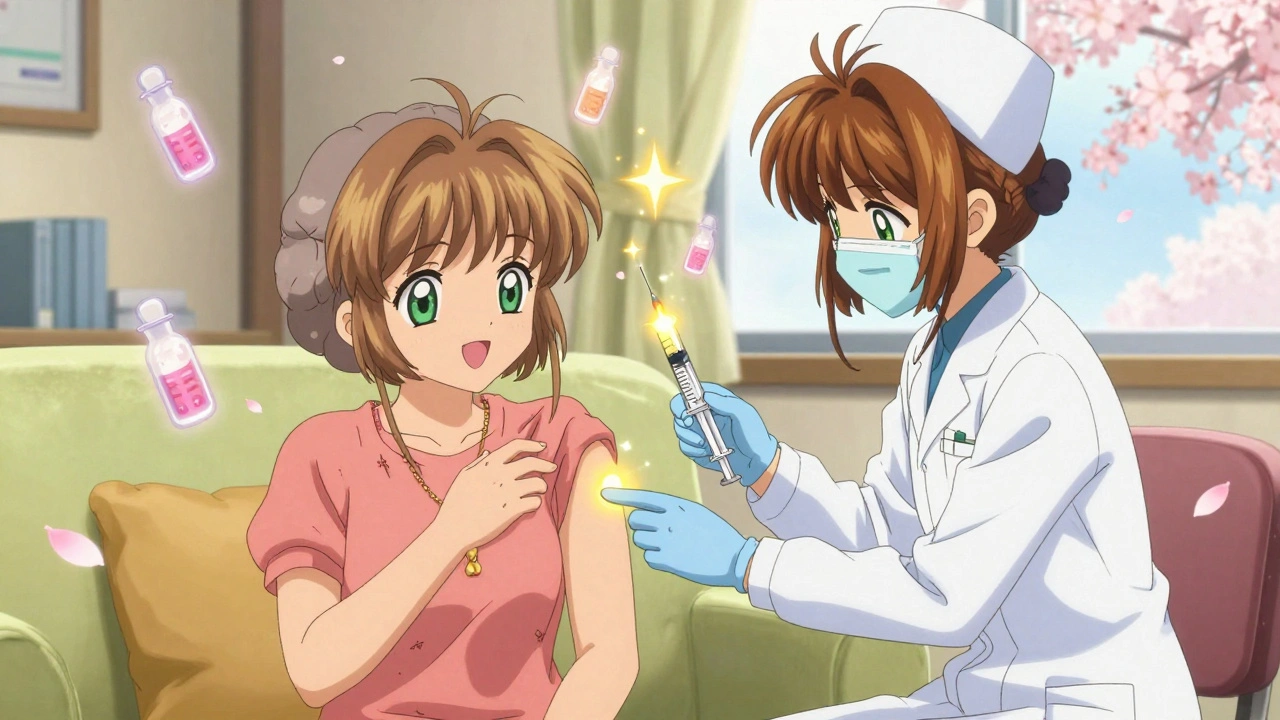
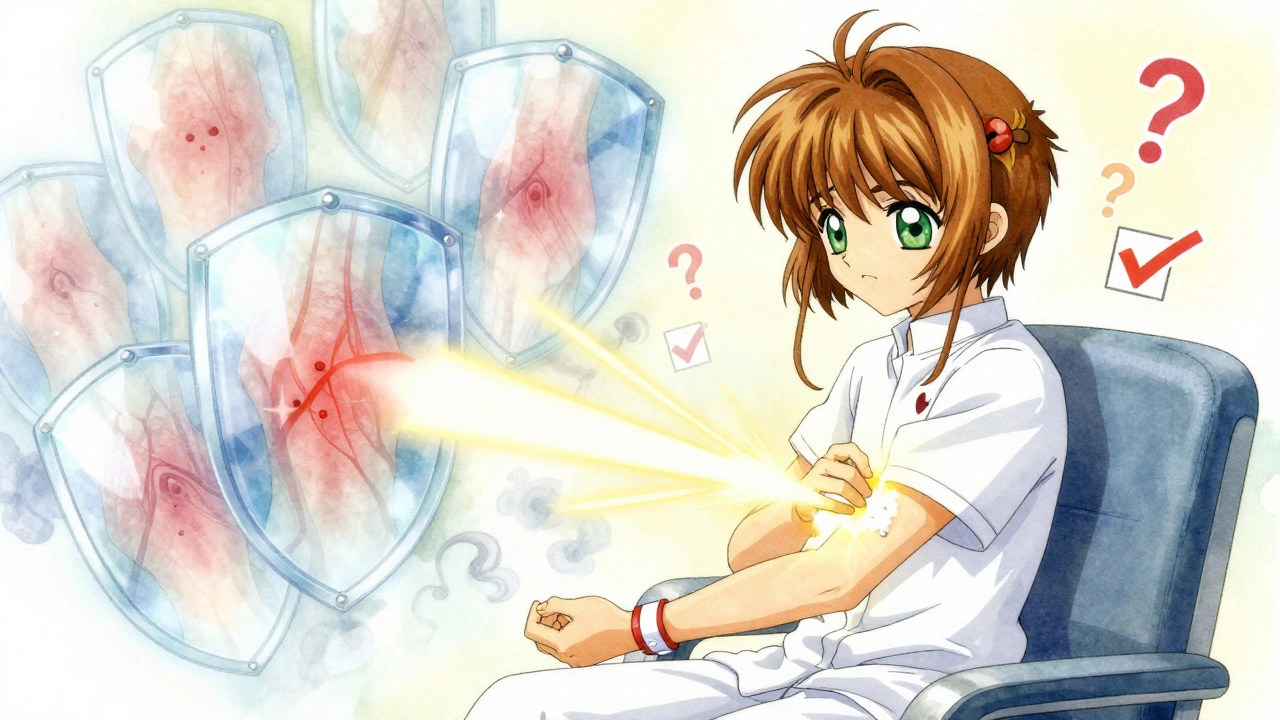
Shingrix isn’t gentle. It’s not supposed to be. About 80% of people get pain, redness, or swelling at the injection site. Nearly half feel muscle aches. Forty percent get tired. One in three gets a headache. One in five feels feverish. One in four shivers.It’s not the vaccine being dangerous. It’s the vaccine working. That AS01B adjuvant is turning your immune system on full blast. That’s why it’s so effective. Most people feel like they’ve been hit by a truck for two or three days. Some can’t work. Some can’t cook dinner. But then it’s over.
Compare that to shingles. One out of every three people over 60 gets shingles. One in five gets long-term nerve pain. That pain can last years. It can make you cry, can’t sleep, can’t wear clothes. The temporary discomfort of the shot? That’s nothing compared to living with that.
How the Vaccine Is Given
Shingrix isn’t a one-and-done. You need two shots. The first one starts the process. The second one makes it stick. The standard gap is 2 to 6 months. That’s the sweet spot for maximum protection.But if you’re immunocompromised, you don’t have to wait. You can get the second shot as soon as one month after the first. Your doctor will adjust it based on your health. Each shot is 0.5 mL, injected into your upper arm muscle. The needle size depends on your weight-shorter needle if you’re under 130 pounds, longer if you’re heavier. Your nurse will know.
And here’s something many people don’t realize: if you got Zostavax before, you still need two doses of Shingrix. The CDC says so. Even if you got Zostavax last year. Even if you thought you were covered. Shingrix is better. Much better. Get it within five years of your last Zostavax shot, if you can.
Cost and Insurance Coverage
Shingrix costs about $175 for both doses. That’s not cheap. But if you’re on Medicare Part D, you pay nothing. Most private insurance plans cover it too. You might pay a copay, but it’s rare to pay full price.Pharmacies like CVS, Walgreens, and Rite Aid can give you the shot. So can your doctor’s office. Some clinics even offer walk-in appointments. If you’re unsure if your plan covers it, call your insurer. Ask: “Does my plan cover Shingrix under the preventive services benefit?” If they say no, ask them to check again. It’s required by law for most plans to cover it fully.
And if you’re uninsured? The Vaccines for Children program doesn’t cover adults, but some state health departments or community clinics offer free or low-cost vaccines. Ask your local health department. Don’t let cost stop you.

What About Long-Term Protection?
Right now, we know Shingrix works for at least seven years. Studies are still tracking people who got it in 2017. Early data suggests protection could last 15 to 20 years. That’s longer than most vaccines. No booster is recommended yet. No one is saying you’ll need a third shot.That’s different from the flu shot. This isn’t something you get every year. This is a one-time, two-dose shield. Once you’re done, you’re protected for a long time.
Why So Many People Still Skip It
Despite all this, only about 35% of adults over 60 have gotten both doses. That’s way below the Healthy People 2030 goal of 70%. Why?One reason: side effects. People hear “pain,” “fatigue,” “fever,” and they think, “I’ll pass.” They don’t realize how much worse shingles is.
Another reason: confusion. Some think if they had chickenpox as a kid, they’re already protected. Nope. Chickenpox and shingles are the same virus. Having chickenpox means you’re at risk for shingles later.
And some just forget the second shot. That’s the biggest problem. You get the first one, feel fine, and never go back. But without the second dose, your protection drops to around 70%-not 90%. You’re leaving yourself vulnerable.
Set a reminder. Put it on your phone. Tell a family member. Make it a habit. Two shots. Six months apart. That’s it.
Final Thought: It’s Not About Age. It’s About Risk.
You don’t have to be old to get shingles. You just have to have had chickenpox. And almost everyone has. The virus lives in your nerves. It’s waiting. The older you get, the more likely it is to wake up. But so do other things-cancer, diabetes, autoimmune disease, even stress. All of those can trigger it.Shingrix is the most effective tool we have. It’s safe. It’s covered. It’s the only option left. And if you’re over 50-or under 50 and immunocompromised-there’s no reason not to get it. The pain of the shot? Temporary. The pain of shingles? Not worth the risk.
Do I need Shingrix if I already had shingles?
Yes. Even if you’ve had shingles, you can get it again. Shingrix reduces your risk of a second outbreak by over 90%. The CDC recommends two doses regardless of your history with shingles or previous vaccination with Zostavax.
Can I get Shingrix if I’m on immunosuppressants?
Yes-and you should. Shingrix is not a live vaccine, so it’s safe for people with weakened immune systems due to cancer treatment, HIV, organ transplants, or long-term steroids. The CDC recommends two doses for adults 19 and older with these conditions. The second dose can be given as early as one month after the first.
How long after Zostavax should I get Shingrix?
Wait at least eight weeks, but ideally get it within five years. Even though Zostavax is no longer available, if you received it before, your protection has likely worn off. Shingrix offers far better and longer-lasting protection, so get both doses even if you had the old vaccine.
Is Shingrix safe for people with allergies?
Shingrix is safe for most people with allergies, including egg, latex, or food allergies. The only contraindication is a severe allergic reaction (anaphylaxis) to a previous dose of Shingrix or any ingredient in it, such as polysorbate 80. If you’re unsure, talk to your doctor before getting vaccinated.
What if I miss the second dose?
If you miss the second dose, get it as soon as you can. You don’t need to restart the series. Even if it’s been over six months, the second shot still works. Delaying reduces your protection, but it doesn’t ruin it. Get it when you can.
Does Medicare cover Shingrix?
Yes. Medicare Part D covers the full cost of Shingrix with no out-of-pocket expense for most beneficiaries. If you’re unsure, call your Part D plan or check your formulary. Pharmacies and clinics that accept Medicare will bill directly.






Mark Curry December 6, 2025
I got Shingrix last year after my dad got shingles and spent three months in pain. I was nervous about the side effects, but honestly? Two days of feeling like I’d been run over by a bus was nothing compared to what he went through. Worth every second.
Katie Allan December 6, 2025
It’s wild how many people still think chickenpox = immunity to shingles. The virus doesn’t leave. It just waits. And it doesn’t care if you’re healthy, active, or ‘too young.’ It’s not a choice-it’s a biological inevitability. Get the shot. Your future self will thank you.
Mellissa Landrum December 6, 2025
they say shingrix is 90% effective but have you seen the list of ingredients? as01b? polysorbate 80? i think theyre testing something on us. why do we need a booster that makes you feel like you got hit by a truck? i got the old one and im fine.
Ali Bradshaw December 7, 2025
My mom got both doses last year. She’s 72. Said the second shot was worse, but she didn’t miss a beat. She’s still gardening, still cooking, still teasing us. That’s the point, right? Not to avoid a little sore arm-but to keep living.
an mo December 7, 2025
The CDC’s data is cherry-picked. They don’t disclose the full adverse event reports. My cousin got shingrix and developed Guillain-Barré six weeks later. Coincidence? The system won’t tell you. You’re being sold a false sense of security.
Juliet Morgan December 8, 2025
got my first shot last month. felt like i had the flu for 48 hours. totally worth it. just got the reminder for my second. dont forget it. even if you feel fine. its the second one that makes it stick.
Mark Ziegenbein December 8, 2025
It is truly astonishing that the medical establishment has succeeded in convincing an entire generation that the temporary discomfort of a vaccine is preferable to the statistically rare possibility of a viral reactivation-especially when the alternative is a natural immune response honed over millennia. The pharmaceutical industry profits from fear, not science.
aditya dixit December 10, 2025
In India, many older people still rely on home remedies for shingles. But the science here is clear: Shingrix is not just better-it’s life-changing. I’ve seen patients who lost mobility from nerve pain. After vaccination, they walk again. It’s not magic. It’s medicine.
Norene Fulwiler December 10, 2025
My grandma got Shingrix at 86. She said, ‘If it helps me keep my dignity, I’ll take the sore arm.’ She’s still dancing at family weddings. That’s the real win-not avoiding a rash, but avoiding the silence that comes after pain steals your joy.
Lucy Kavanagh December 11, 2025
Why do we trust American vaccines so much? In the UK, they use different standards. I read somewhere that the AS01B adjuvant was tested on prisoners. Are we really okay with this? I’m not getting it until the WHO does an independent review.
Harry Nguyen December 11, 2025
Oh great, another vaccine that makes you feel like you lost a fight with a garbage disposal. Next they’ll make us take a shot before breathing. Maybe we should just accept that aging comes with pain. It’s natural. It’s human.
Chris Brown December 13, 2025
It’s irresponsible to suggest that everyone over 50 must get this vaccine. What about personal autonomy? What about the right to refuse medical intervention? This is coercion disguised as public health. I am not a statistic.
Ada Maklagina December 13, 2025
got the first shot. arm hurt for two days. felt weird. skipped the second because i thought i was fine. now i feel dumb. going back next week. dont be like me.
Kylee Gregory December 15, 2025
I used to think vaccines were overhyped. Then my sister got shingles at 48. She couldn’t wear a bra for six months. That’s not normal. That’s not aging. That’s a virus that got away. Shingrix isn’t perfect-but it’s the best thing we’ve got. And sometimes, that’s enough.
William Chin December 15, 2025
It is imperative to underscore the importance of adherence to the two-dose regimen. Failure to complete the series constitutes a significant lapse in preventive care, thereby exposing the individual to an elevated risk of morbidity. I urge all individuals to consult with their primary care provider to ensure compliance with the CDC-recommended schedule.