When you pick up a generic pill at the pharmacy, you expect it to work just like the brand-name version. That’s not luck. It’s because of GMP for generics - the FDA’s strict rules that make sure every batch, no matter where it’s made, meets the same quality standards. These aren’t suggestions. They’re legal requirements written into federal law. If a company skips even one step, the FDA can shut down production, recall millions of pills, or block the drug from ever hitting shelves.
What Exactly Is CGMP?
CGMP stands for Current Good Manufacturing Practices. The "current" part matters. It means manufacturers can’t rely on old methods from 20 years ago. They have to use modern tools, updated procedures, and real-time controls. The FDA enforces CGMP under 21 CFR Parts 210 and 211. These rules cover everything from the cleanliness of the factory floor to how records are kept. There’s no wiggle room. Every step in making a generic drug - from raw ingredients to the final pill in the bottle - must be documented, tested, and verified.
Why does this exist? Because bad drugs kill. In 2022, contaminated metformin led to recalls after toxic byproducts like NDMA were found. That wasn’t an accident. It was a failure of process controls. CGMP exists to prevent those failures before they happen.
Core Requirements: The 11 Subparts of 21 CFR Part 211
The FDA doesn’t just say "be careful." It spells out exact rules. Here’s what generic drug makers must do:
- Organization and Personnel (Subpart B): Every worker who touches the product must be trained. Not just once - annually. And there must be a dedicated Quality Unit with real power. This team can stop production if something’s off. No manager can overrule them.
- Buildings and Facilities (Subpart C): Air quality, humidity, and temperature must be controlled. Dust, mold, and bacteria are enemies. Clean rooms aren’t optional. They’re required for certain products.
- Equipment (Subpart D): Machines must be cleaned, calibrated, and maintained. If a tablet press isn’t calibrated correctly, pills could be too weak or too strong. That’s dangerous. Logs of every maintenance check must be kept for at least a year after the drug expires.
- Control of Components (Subpart E): Every single batch of active ingredient must be tested before use. No exceptions. In 2023, the FDA added new rules requiring testing of high-risk ingredients like glycerin and sorbitol for toxic contaminants like diethylene glycol - after deaths linked to contaminated medicine in Pakistan.
- Production and Process Controls (Subpart F): Every step of manufacturing must be validated. That means proving the process works the same way every time. Most companies use three consecutive batches to prove this. But the FDA doesn’t require a number - it requires proof. And it must be documented.
- Packaging and Labeling (Subpart G): Labels must match the prescription exactly. A mislabeled bottle of blood pressure medicine could kill someone. Systems must catch errors before the product leaves the facility.
- Laboratory Controls (Subpart I): Stability testing is mandatory. Drugs must be stored under real-world conditions for months or years to prove they don’t break down. If a pill loses potency after six months, it’s not safe to sell.
- Records and Reports (Subpart J): Every batch record must be kept for one year past the expiration date. That’s often five to seven years. Electronic records must follow 21 CFR Part 11 - meaning audit trails, secure logins, and no deleted files.
Why Generic Drugs Are Just as Safe as Brand-Name
Many people think generics are cheaper because they’re lower quality. That’s false. The FDA requires generics to meet the same CGMP standards as brand-name drugs. Pfizer, Johnson & Johnson, and Teva all follow the exact same rules. The only difference? Generics don’t have to repeat expensive clinical trials. They prove they’re bioequivalent - meaning they release the same amount of drug into the body at the same rate.
That’s why 90% of all prescriptions in the U.S. are filled with generics. They’re not second-rate. They’re the backbone of affordable healthcare. Without CGMP, that trust wouldn’t exist.
How FDA Inspections Work - And Why They’re Tough
The FDA doesn’t wait for problems to happen. They show up unannounced. Domestic facilities get inspected about 1.3 times per year on average. Foreign facilities? Less. And that’s been a problem. From 2020 to 2022, foreign plants received 43% fewer warning letters than U.S. ones - even when violations were similar.
Inspections focus on the most common failures: lab controls and production process controls. These two areas made up 41% of all violations in 2022. One big red flag? Data integrity. If a lab deletes a failed test or doesn’t log who made changes to a system, the FDA will flag it. That’s why so many companies are switching to electronic systems - even though it costs over $1 million and takes more than a year to implement.
One company on Reddit described spending 14 months and $1.2 million just to get their batch records digital and compliant. That’s not unusual.
Challenges Facing Generic Manufacturers
Small companies struggle the most. A 2022 survey of 317 generic drug makers found 68% had trouble with documentation. Compliance costs an average of $2.3 million per year for mid-sized firms. For a small business, that’s a huge chunk of profit.
Another issue? Inconsistent inspectors. One FDA officer might accept a certain cleaning procedure. Another might reject it. A 2023 survey found 57% of manufacturers felt enforcement was unpredictable. That creates uncertainty - and delays.
Supply chain problems are growing. In 2022, 43% of generic makers had at least one batch of active ingredient rejected because it didn’t meet purity specs. Many rely on suppliers in India or China. If one fails an inspection, hundreds of generic drugs can disappear from shelves.
Success Stories and Failures
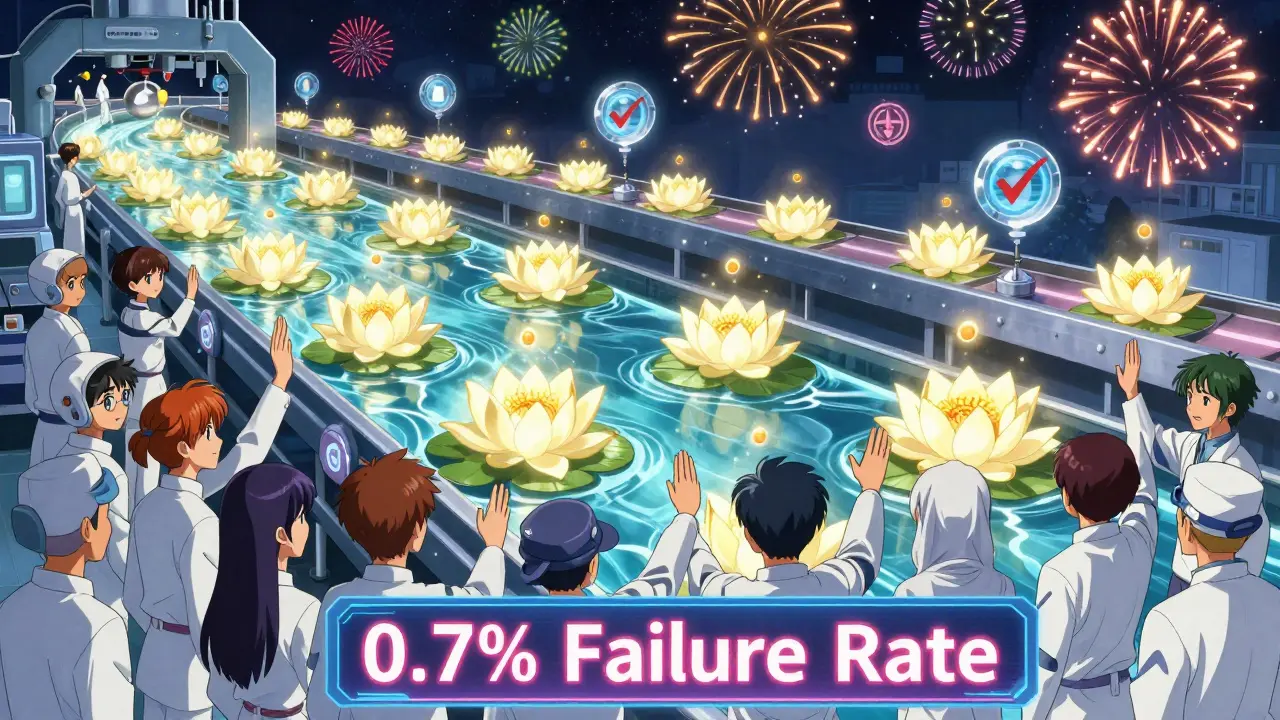
Not all stories are grim. Teva, one of the world’s largest generic makers, switched to continuous manufacturing for a heart drug in 2021. Instead of making pills in batches, they made them in a steady flow. Batch failures dropped from 4.2% to 0.7%. And it was fully CGMP-compliant.
But failures still happen. In 2022, 12 generic metformin products were pulled because of NDMA contamination. The FDA’s warning letter blamed "inadequate process controls" and "failure to validate cleaning procedures." That’s a direct CGMP violation.
What’s Next for CGMP?
The FDA isn’t standing still. Their 2023-2027 plan says they’ll increase foreign inspections by 25%. They’re also working on new guidance for continuous manufacturing - a big shift from traditional batch processing.
Expect tighter rules on data integrity. 73% of industry leaders think Part 11 enforcement will get stricter in 2024. Supply chain security is next. The Drug Supply Chain Security Act is pushing for full traceability of ingredients - from raw chemical to final pill.
Long-term, AI and predictive analytics will play a bigger role. Imagine a system that flags a potential quality issue before it happens - based on real-time sensor data. That’s the goal. By 2028, 65% of manufacturers are expected to use these systems.
How to Get Started With CGMP Compliance
If you’re starting a generic drug operation, here’s the reality:
- Build a Quality Management System (QMS) with written procedures for every step.
- Qualify your facility: Installation Qualification (IQ), Operational Qualification (OQ), Performance Qualification (PQ).
- Validate your processes. Don’t skip this. It’s not optional.
- Train everyone - and document it.
- Invest in electronic systems. Paper records are a liability.
- Expect 18 to 24 months before your first commercial batch.
People who know this stuff - certified quality engineers or regulatory affairs specialists - earn 22% more than those without credentials. It’s worth the investment.
Final Thoughts
CGMP isn’t about bureaucracy. It’s about trust. When you swallow a generic pill, you’re trusting that the FDA made sure it’s safe. That trust comes from thousands of detailed rules, thousands of inspections, and millions of dollars spent on compliance.
It’s expensive. It’s complex. But it works. The U.S. has the safest generic drug supply in the world - not by accident, but by design. And as long as the FDA keeps enforcing these standards, that won’t change.
Are generic drugs held to the same manufacturing standards as brand-name drugs?
Yes. The FDA requires generic drugs to be made under the exact same Current Good Manufacturing Practices (CGMP) as brand-name drugs. There is no lower standard for generics. The only difference is that generics don’t repeat expensive clinical trials - they prove they’re bioequivalent to the original drug. The manufacturing process, equipment, testing, and documentation rules are identical.
What happens if a generic drug manufacturer violates CGMP?
Violations can lead to warning letters, import alerts, production shutdowns, or product recalls. The FDA can block the drug from entering the U.S. market. In serious cases, companies face civil penalties or criminal charges. For example, in 2022, several generic metformin products were recalled after the FDA found inadequate cleaning procedures that allowed toxic NDMA contamination. Foreign facilities that repeatedly violate CGMP may be barred from exporting to the U.S. altogether.
How often does the FDA inspect generic drug facilities?
Domestic facilities are inspected about 1.3 times per year on average. Foreign facilities are inspected less frequently - but the FDA is increasing foreign inspections by 25% between 2023 and 2027. Inspections are unannounced and focus on high-risk areas like lab controls, production processes, and data integrity. Facilities with past violations may be inspected more often.
What are the most common CGMP violations in generic drug manufacturing?
The two most common violations are related to laboratory controls and production process controls, which together made up 41% of all FDA citations in 2022. Specific issues include failing to validate cleaning procedures, missing or altered lab data, inadequate stability testing, and poor documentation. Data integrity problems - like deleting test results or not having audit trails - are especially serious and often lead to warning letters.
Do CGMP requirements differ between countries?
The FDA’s CGMP and the European Medicines Agency’s (EMA) GMP are about 85% aligned, thanks to international harmonization efforts. But differences remain. The FDA requires a stronger, independent Quality Unit with veto power over production. Documentation rules are stricter in the U.S., and inspections are more frequent. The FDA also requires testing for specific contaminants - like diethylene glycol in glycerin - that aren’t always mandated elsewhere. While many global manufacturers follow both sets of rules, U.S. compliance is often the highest bar.
Is electronic recordkeeping required for CGMP compliance?
Yes. Under 21 CFR Part 11, electronic records and signatures must be secure, traceable, and tamper-proof. That means systems must have audit trails, user authentication, and controls to prevent deletion or alteration of data. While paper records are still allowed, most manufacturers now use electronic quality management systems (eQMS) because they reduce errors, speed up inspections, and improve compliance. A 2023 survey found 78% of companies struggled with implementing proper audit trails - showing how complex this requirement is.
How much does CGMP compliance cost for a generic drug company?
Compliance costs vary by company size. Mid-sized generic manufacturers spend an average of $2.3 million per year on CGMP compliance, according to a 2022 ISPE survey. For small companies, this can be 12-15% of total manufacturing costs. Major expenses include facility upgrades, staff training, electronic systems, validation studies, and hiring quality assurance staff. A single transition to electronic batch records can cost over $1 million and take 14 months to complete.




Harry Henderson January 28, 2026
This is why america still leads the world in pharma. No other country has this level of rigor. If you think generics are sketchy, you're the reason we have to spend millions on compliance. Shut up and take your pills.
Kegan Powell January 28, 2026
Honestly i just think about how many lives this saves without anyone noticing 🤯 Like the guy who takes his blood pressure med and doesn't drop dead because the pill didn't have some toxic sludge in it. We don't celebrate this enough. The real heroes are the QC techs in factories nobody sees. 🙌
April Williams January 29, 2026
I don't trust any of this. The FDA is bought off. Remember the opioid crisis? They looked the other way for years. Now they're playing hero with generics? Please. If you think this system is clean you're naive. Someone's getting rich off this and it ain't you.
Desaundrea Morton-Pusey January 29, 2026
Why do we even let foreign companies make our meds? India and China are dumping crap. This whole system is a joke. We should ban all imports and make everything in the USA. End of story.
Murphy Game January 31, 2026
Ever wonder why the FDA only inspects foreign plants once every 5 years? Coincidence? Or is this just another way to control the population? They want you dependent on their approved drugs. The real danger isn't bad pills. It's the system that lets them exist at all.
John O'Brien February 1, 2026
Bro the fact that you can get a $4 prescription that works just as good as the $400 brand name is insane. My grandma takes 7 meds a day and we save $2k a year thanks to CGMP. Stop complaining and be grateful someone actually gives a damn about safety.
Andrew Clausen February 2, 2026
The term 'Current Good Manufacturing Practices' is misleading. 'Current' implies obsolescence of prior standards, yet the core principles have remained unchanged since the 1960s. The regulatory language has evolved, but the technical substance has not. This is semantic inflation, not progress.
Anjula Jyala February 2, 2026
CGMP is baseline. Real pharma follows ICH Q7. FDA is reactive not proactive. You need risk based approach not checklist compliance. Batch record audit trails are table stakes. What about PAT? Real time release? You still stuck in 2005 if you think paper logs are sufficient
Kathy McDaniel February 3, 2026
I used to think generics were sketchy til my doc switched me and i saved $300 a month. Now i take them without a second thought. Honestly? I'm just glad they exist. 🙏
Paul Taylor February 3, 2026
You know what's wild is how many people don't realize that every single generic pill they take is made under the same exact rules as the brand name. It's not magic. It's not luck. It's thousands of people showing up every day doing boring, meticulous work so you don't die from a bad batch. And most of them make minimum wage. We owe them more than just a thank you. We owe them respect.
suhail ahmed February 5, 2026
In India we call this 'pharma ka jadoo' - the magic of pills. But here? It's science. Pure science. I worked in a lab that made generics for the US market. We had to meet FDA standards or get slapped with an import alert. No drama. No excuses. Just clean labs, clean data, clean conscience. That's the real story behind your $4 pill.
Candice Hartley February 6, 2026
My dad had a heart attack last year and the generic he takes saved his life. I used to think they were cheap knockoffs. Now i know they're the reason millions can afford to live. ❤️
astrid cook February 6, 2026
I saw a video of a FDA inspector in a foreign plant and they just smiled and took pictures. No one was fired. No one was punished. This whole thing is a circus. They're just pretending to care.
Kirstin Santiago February 7, 2026
I think what's missing from this conversation is how much this impacts real people. My cousin works in a QC lab in Ohio. She spends 10 hours a day checking tablet weights and logbooks. She doesn't get bonuses. She doesn't get headlines. But she's the reason your insulin doesn't kill you. We should treat her like the hero she is.