Every day, millions of Americans take generic drugs. They’re cheaper, widely available, and just as effective as brand-name medications. But how do we know they’re safe? The answer lies in one of the most rigorous, behind-the-scenes systems in U.S. healthcare: the FDA’s manufacturing oversight for generic drugs.
It’s Not Just About the Active Ingredient
Many people think generic drugs are just copies of brand-name drugs with different labels. That’s only half true. The active ingredient? Yes, it’s identical. But what matters just as much - and what the FDA checks obsessively - is how that ingredient is made, handled, and packaged. A generic drug must meet the same standards for purity, strength, stability, and performance as its brand-name counterpart. The FDA doesn’t accept "close enough." It demands exact equivalence. The legal foundation for this is the Hatch-Waxman Act of 1984. It created the Abbreviated New Drug Application (ANDA) pathway. Unlike brand-name drugs, which require years of clinical trials to prove safety and effectiveness, generics don’t need to repeat those studies. Instead, they prove bioequivalence: that the body absorbs the drug at the same rate and to the same extent. That’s the key. But proving bioequivalence isn’t just running a lab test. It’s tied directly to how the drug is manufactured.The Three Pillars of Quality Control
Generic drug manufacturers must follow Current Good Manufacturing Practices (cGMP). These aren’t suggestions. They’re federal law. The FDA breaks cGMP into three non-negotiable systems:- Material control: Every raw material - from active pharmaceutical ingredients (APIs) to packaging seals - must be tracked from receipt to final product. Contamination isn’t an accident; it’s a failure of process. The FDA checks that manufacturers have systems to prevent cross-contamination, mix-ups, and degradation.
- Process controls: Every step in production has a written procedure. Temperature, mixing time, pressure, humidity - all are monitored and recorded. If a batch doesn’t meet the exact parameters, it’s rejected. No exceptions.
- Quality testing: Finished products are tested in labs using validated methods. The FDA doesn’t trust a manufacturer’s word. They send inspectors to review raw data, check equipment calibration, and verify that testing protocols are followed correctly.
Pre-Approval: The Gatekeeper Process
Before a generic drug hits shelves, it goes through a multi-phase review. First, the ANDA application is submitted. If it’s missing key data - like incomplete bioequivalence studies or unclear manufacturing details - the FDA issues a "refuse to receive" notice. No review begins. The applicant must fix everything and resubmit. Then comes the scientific review. Teams of chemists, pharmacologists, and clinicians examine every piece of data. Is the drug’s dissolution profile consistent? Are impurities within safe limits? Is the labeling exactly the same as the brand-name drug? Even a small difference in wording can lead to confusion or misuse. And then - the inspection. The FDA doesn’t approve a drug until it’s seen the facility where it’s made. In 2013, pre-approval inspections of generic manufacturers jumped 60% compared to just two years earlier. Today, the goal is to inspect every facility at least once every two years. That includes plants in India, China, and other countries where most APIs are produced.
Foreign Facilities: The Biggest Challenge
About 80% of the active ingredients in U.S. generic drugs come from overseas. That’s a massive logistical and regulatory challenge. In 2019, FDA inspections found quality issues in 15% of foreign facilities - compared to just 8% domestically. That gap isn’t about intent. It’s about oversight. That’s why GDUFA (Generic Drug User Fee Amendments) was created. First passed in 2012 and renewed in 2018 and 2022, GDUFA gives the FDA the funding and authority to hire more inspectors, use advanced data tools, and prioritize high-risk facilities. GDUFA III, launched in 2022, commits $1.1 billion through 2027 to expand foreign inspections. By 2025, the FDA plans to conduct 1,500 foreign inspections annually - up from 1,082 in 2021. It’s not just about numbers. The FDA now uses risk-based scheduling. A facility with past violations, poor compliance history, or complex manufacturing processes gets flagged for earlier and more frequent inspections. It’s smart oversight - not random checks.Post-Market Surveillance: The Safety Net
Approval isn’t the end. It’s the beginning. Once a generic drug is on the market, the FDA keeps watching. The agency collects over 1.3 million adverse event reports each year through MedWatch - from doctors, pharmacists, and patients. If a pattern emerges - say, a sudden spike in reports of dizziness linked to a specific generic version - the Division of Clinical Safety and Surveillance digs in. They cross-reference sales data, manufacturing records, and lab results. If they find a problem, they don’t wait. They can require a label update, issue a public warning, or even initiate a voluntary recall. In 2021, the FDA took regulatory action on over 200 generic drug safety issues - from contamination to labeling errors. The Drug Supply Chain Security Act (DSCSA), fully implemented by 2023, adds another layer. Every prescription drug must now be traceable from manufacturer to pharmacy. If a batch is recalled, the FDA can pinpoint exactly where it went - and stop it from reaching patients.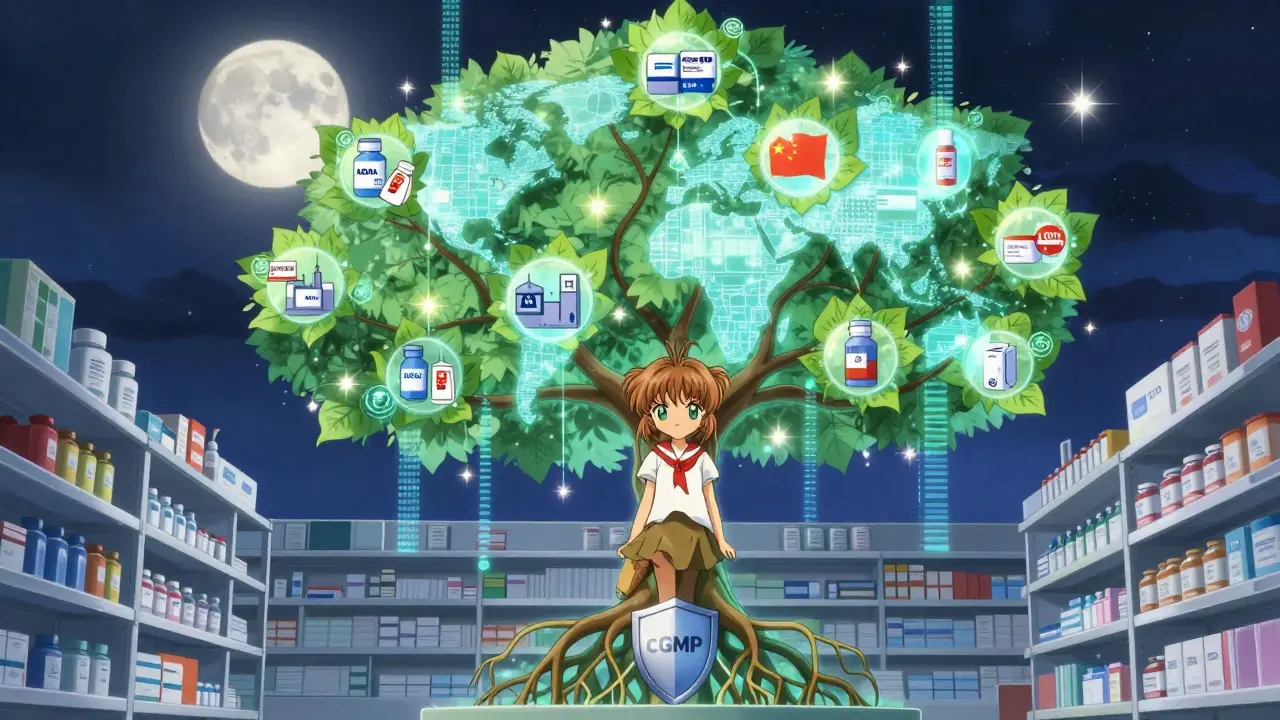
Why This Matters: Real Numbers, Real Impact
Generic drugs make up 90% of prescriptions filled in the U.S. But they cost only 23% of what brand-name drugs do. In 2022 alone, generics saved the healthcare system $313 billion. That’s money in patients’ pockets, in insurance premiums, in hospital budgets. But that value only exists if the drugs are safe. A single contaminated batch, a mislabeled pill, or a bioequivalence failure can have real consequences. The FDA’s oversight system exists because history has shown what happens when quality slips. In the 2000s, tainted heparin and contaminated valsartan led to hospitalizations and deaths. Those events changed everything. Today, the FDA’s approach is proactive, data-driven, and relentless. They don’t wait for disasters. They look for patterns before they become crises.What’s Next? More Tech, More Transparency
The FDA is moving beyond paper reports. New tools are being rolled out to monitor manufacturing data in real time. Some companies are now sharing continuous process data directly with the agency. Think of it like a live dashboard showing temperature, pressure, and humidity across a production line - updated every minute. The Complex Generic Drug Products Initiative is tackling harder-to-copy drugs like inhalers, injectables, and topical creams. These aren’t simple pills. They require advanced manufacturing. The FDA has published over 2,800 scientific guidance documents to help manufacturers meet those standards - a 40% increase since 2018. The message is clear: The FDA doesn’t just approve generic drugs. It continuously verifies them. Every step, every batch, every facility. Because when someone takes a generic pill, they shouldn’t have to wonder if it’s safe. They should know it is.Are generic drugs really as safe as brand-name drugs?
Yes. The FDA requires generic drugs to be identical to their brand-name counterparts in active ingredient, dose, strength, safety, quality, performance, and intended use. They must prove bioequivalence - meaning the body absorbs them at the same rate and extent. The FDA inspects manufacturing facilities and reviews data before approval, then continues monitoring after the drug is on the market.
Does the FDA inspect generic drug factories overseas?
Yes. About 80% of active ingredients in U.S. generics come from abroad. The FDA inspects foreign facilities just like domestic ones. In 2021, they completed over 1,000 inspections globally. Under GDUFA III, the goal is 1,500 foreign inspections annually by 2025. Facilities with poor compliance histories are prioritized for more frequent checks.
How long does it take to get a generic drug approved?
The FDA has a legal deadline of 180 days for ANDA reviews, but historically it took over 30 months. Thanks to GDUFA user fees, review times have dropped dramatically. As of 2022, 95% of standard ANDAs are reviewed within 10 months. Complex drugs or those with data issues may take longer, but the system is much faster than it was 10 years ago.
What happens if a generic drug causes side effects after approval?
The FDA monitors all approved drugs through MedWatch, which collects over 1.3 million adverse event reports each year. If a pattern emerges - like increased reports of liver damage linked to a specific generic - the agency investigates. Actions can include updating the drug’s label, issuing a safety alert to doctors, or recalling the product. The FDA doesn’t wait for widespread harm to act.
Can a generic drug be pulled from the market?
Yes. The FDA can require a voluntary recall if a drug fails to meet quality standards - for example, if it contains impurities above safe limits, is contaminated, or doesn’t dissolve properly. In 2021, the FDA took regulatory action on over 200 generic drug safety issues. Recalls are rare but happen when the risk to patients is clear.
How does the FDA ensure consistency between batches of a generic drug?
Manufacturers must follow strict cGMP rules that require written procedures for every step of production. Each batch is tested for potency, purity, and dissolution. The FDA reviews these test results during inspections and can demand additional data if results vary. Consistency isn’t optional - it’s legally required and continuously verified.



Jerry Peterson December 22, 2025
Been taking generics for years - my blood pressure med, my cholesterol pill, you name it. Never had an issue. Saves me hundreds a year. Why complicate it?
Stacey Smith December 23, 2025
Let’s be real - if the FDA didn’t crack down on foreign plants, we’d be swallowing Chinese dust and calling it medicine. This system isn’t perfect, but it’s the only thing standing between us and pharmaceutical chaos.
Meina Taiwo December 24, 2025
India produces 40% of global generics. The FDA’s inspections there are critical. Quality control isn’t optional - it’s survival.
Theo Newbold December 25, 2025
The 15% failure rate on foreign inspections is a red flag. But the real problem? The FDA still approves drugs based on data submitted by the manufacturers. They don’t independently replicate the bioequivalence studies. That’s not oversight - that’s trust, and trust is a vulnerability.
Peggy Adams December 26, 2025
So you’re telling me the FDA inspects factories in India but doesn’t check if the inspectors are being paid off? Come on. There’s a whole shadow network behind those approvals. You think they really care about your blood pressure or just keeping the paperwork clean?
Ben Warren December 27, 2025
It is imperative to underscore that the regulatory architecture governing generic pharmaceuticals in the United States constitutes one of the most rigorous and scientifically grounded frameworks in the world. The cGMP protocols, coupled with the bioequivalence mandates under Hatch-Waxman, ensure that therapeutic equivalence is not merely an aspirational goal but a quantitatively verifiable standard. The FDA’s pre-approval scrutiny, post-market surveillance via MedWatch, and the implementation of DSCSA traceability protocols collectively represent a paradigm of evidence-based pharmacovigilance. To suggest otherwise is not merely inaccurate - it is a disservice to public health.
Sarah Williams December 29, 2025
People worry about generics being unsafe, but the truth is, they’re saving lives every day. I’ve seen patients who couldn’t afford brand-name meds get back on their feet because of these. The FDA’s work is quiet, but it’s everything.
mukesh matav December 29, 2025
Interesting to see how the system evolved. I remember when generics were treated like cheap knockoffs. Now they’re held to the same standard. Progress, even if slow.
Teya Derksen Friesen December 29, 2025
The transition from paper-based inspections to real-time manufacturing data streams is a monumental leap. This isn’t just bureaucracy - it’s the future of pharmaceutical integrity. The FDA is quietly leading a revolution in regulatory science.
Jay lawch December 30, 2025
Let’s not pretend this is about safety. It’s about control. The FDA, Big Pharma, and the government have an unspoken alliance: keep the public dependent on pills, make sure only approved manufacturers can produce them, and never let the truth about how much of this is outsourced to countries with weaker labor laws reach the masses. GDUFA? More like Gated Drug Under Foreign Authority. The real scandal isn’t contamination - it’s that we’ve outsourced our medicine to global supply chains we can’t even fully audit.
Christina Weber January 1, 2026
It is grammatically and factually incorrect to state that the FDA "doesn’t trust a manufacturer’s word." The agency does not operate on trust - it operates on validated analytical data, documented evidence, and legally binding compliance records. The term "trust" is misleading and undermines the rigorous, evidence-based methodology that underpins every inspection and approval. Precision in language is not pedantry - it is the foundation of public health accountability.