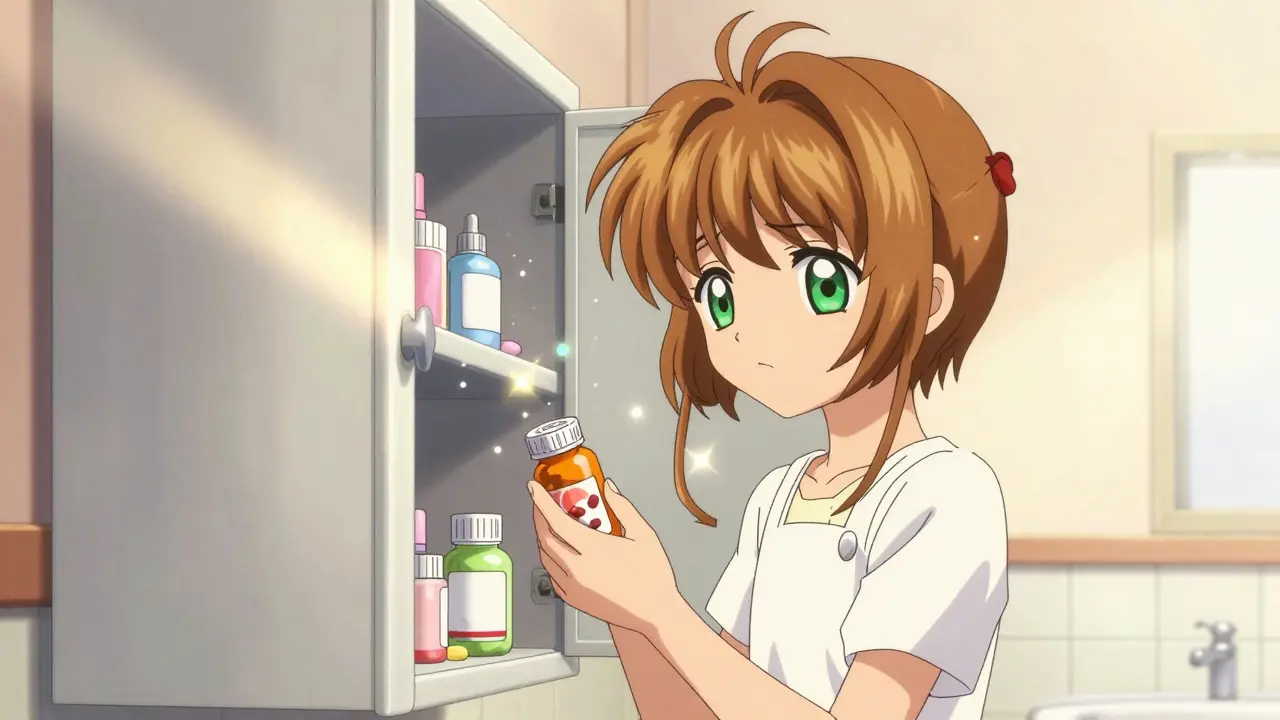
Check your medicine cabinet right now. Do you see that bottle of antibiotics from last winter? What about the painkillers left over from a surgery two years ago? Keeping these expired or unused drugs might seem harmless, but it’s actually a ticking time bomb for your family and the environment. Improperly stored medications are the leading cause of accidental poisonings in children under six, accounting for roughly 60,000 emergency room visits every year. Plus, when we flush them or throw them in the trash without preparation, they leak into our water systems, contaminating streams and groundwater.
You don’t need to be a scientist to handle this safely. The U.S. Food and Drug Administration (FDA) and the Drug Enforcement Administration (DEA) have clear, simple rules for getting rid of old pills. Whether you can make it to a pharmacy drop-off box or need to toss them in your kitchen bin tonight, there is a safe way to do it. Let’s walk through exactly how to protect your home and the planet.
The Gold Standard: Drug Take-Back Programs
If you have the option, using a designated collection site is always the best choice. These programs ensure that medications are incinerated professionally, leaving zero risk of misuse or environmental contamination. The DEA runs National Prescription Drug Take Back Day, which happens twice a year-typically on the last Saturday of April and October. On these days, thousands of law enforcement agencies across the U.S. set up temporary drop boxes.
But you don’t have to wait for a specific day. Thanks to the Secure and Responsible Drug Disposal Act of 2021, many police stations and fire departments now have permanent collection kiosks open 24/7. You can find the nearest one by using the DEA’s online collection site locator. Major pharmacy chains like CVS and Walgreens also offer year-round drop boxes in thousands of locations. Just remember, most of these boxes only accept solid medications like pills and capsules. They usually won’t take liquids, inhalers, or needles.
How to Dispose of Medications at Home
Sometimes, a take-back box isn’t nearby, or you just need to get rid of something immediately. In those cases, the FDA and EPA recommend a specific mixing method for home disposal. This isn’t just about throwing pills in the garbage; it’s about making sure no one can use them again and that they don’t leak out during trash compaction.
Here is the step-by-step process to do it right:
- Remove from original containers. Take the pills out of their prescription bottles. This prevents anyone from identifying what the medication was.
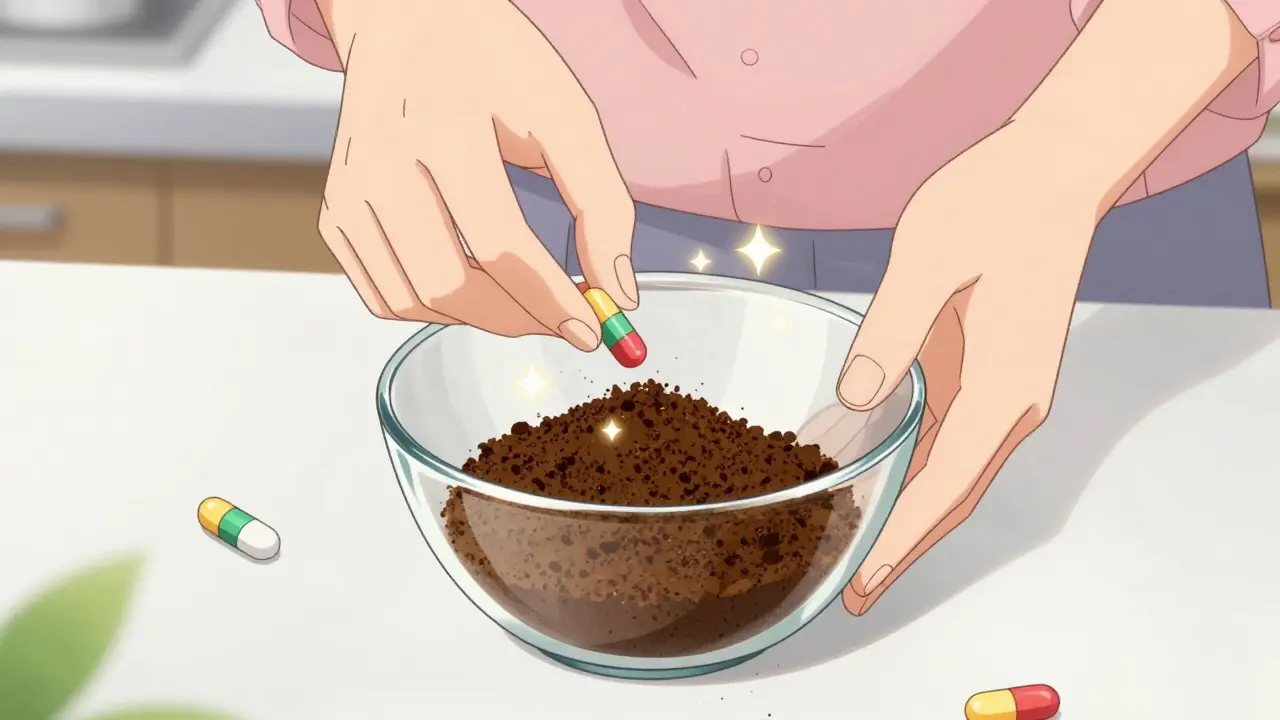
- Mix with an unappealing substance. Combine the medications with something gross, like used coffee grounds, cat litter, or dirt. Use a 1:1 ratio-for example, if you have a small handful of pills, mix them with an equal amount of coffee grounds. This makes the meds look unrecognizable and discourages animals or kids from digging through the trash.
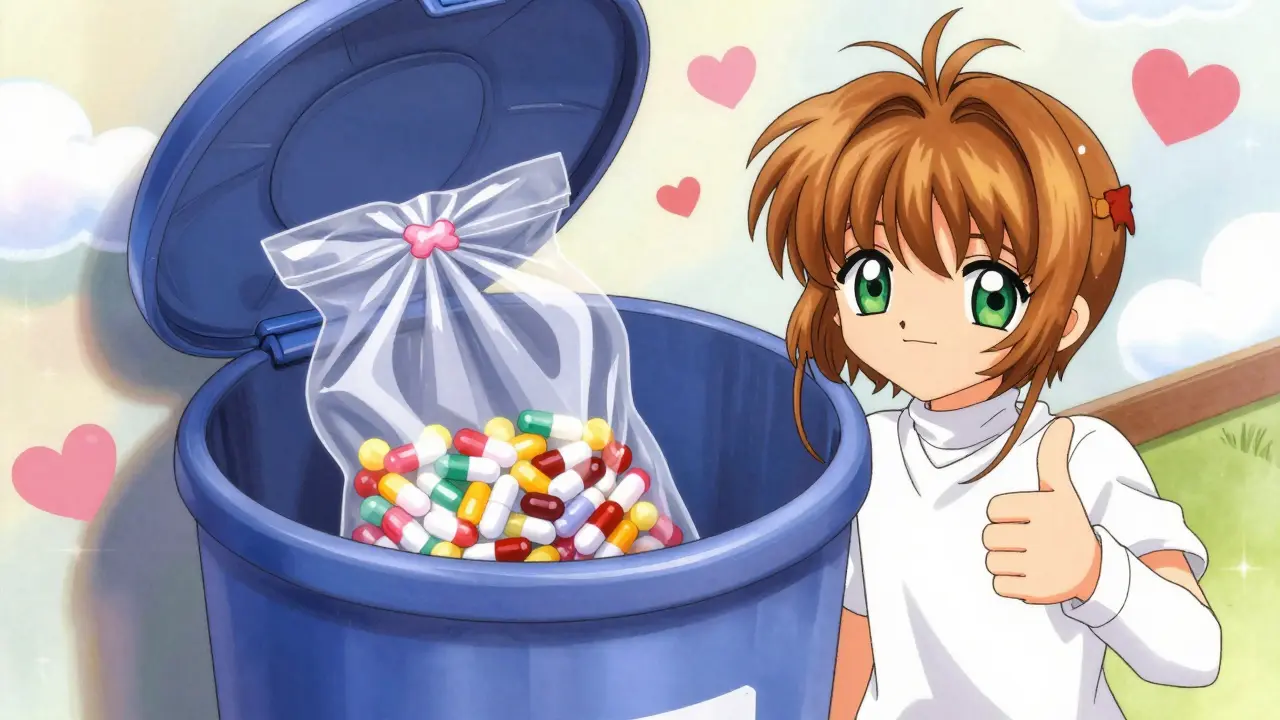
- Seal tightly. Put the mixture into a leak-proof container. A resealable plastic bag works well, as does an empty margarine tub or yogurt container. Make sure it’s sealed tight so nothing spills out.
- Hide your information. Before you toss the empty prescription bottle, scratch off or black out all personal details on the label. This includes your name, address, and the pharmacy info. Privacy matters even after the pill is gone.
- Throw in household trash. Place the sealed container and the defaced bottle in your regular garbage bin. Do not put them in recycling bins.
A quick note on crushing: The FDA advises against crushing pills unless you are using a specialized disposal packet. Crushing can create airborne particles that you breathe in, which is dangerous for certain potent drugs. Stick to mixing whole pills with the absorbent material.
When Should You Flush?
For most medicines, flushing is a bad idea because it pollutes water supplies. However, some drugs are so dangerous that the risk of someone finding them in your trash outweighs the environmental cost. The FDA maintains a short "flush list" of about 15 medications that should be flushed down the toilet if a take-back option isn’t available.
This list primarily includes high-potency opioids like fentanyl patches, oxycodone, and hydromorphone. If you have these specific drugs, check the FDA’s current flush list online. If your medication is on that list, flush it immediately. For everything else-antibiotics, blood pressure meds, antidepressants-do not flush. Use the home disposal method or a take-back box instead.
Special Cases: Needles, Inhalers, and Liquids
Not all medications come in pill form, and those require different handling.
Needles and Sharps: Never throw loose needles in the trash. They can injure sanitation workers. Place used needles in an FDA-cleared sharps container. If you don’t have one, a sturdy plastic container like a laundry detergent bottle works. It must have a tight-fitting lid and be puncture-resistant. Label it clearly as "Sharps" before sealing and tossing it in the regular trash, or check if your local health department has a specific drop-off point.
Inhalers: Asthma inhalers contain pressurized gases. If crushed in a landfill compactor, they can explode. Most pharmacies do not accept them in standard drop boxes. Check with your local medical waste facility or hazardous waste center for proper disposal instructions. Some areas allow you to dispose of them in household trash once the canister is completely empty, but verify local rules first.
Liquids: Liquid medications are trickier because they can leak. Mix them with coffee grounds or cat litter until the mixture is thick and paste-like. Then seal it in a plastic bag before putting it in the trash. This prevents leaks from staining your garbage bags or leaking into the ground.
| Method | Best For | Pros | Cons |
|---|---|---|---|
| Take-Back Box | Pills, Capsules | Most secure, environmentally friendly | May require travel; limited hours |
| Home Disposal (Mixing) | All solids, liquids (with care) | Immediate, private, free | Less secure than incineration |
| Flushing | FDA Flush List drugs only | Prevents immediate misuse | Water contamination |
| Mail-Back Kits | Remote areas | Convenient, professional destruction | Costs money ($2-$5 per kit) |
Why Proper Disposal Matters
It’s easy to ignore a few leftover pills, but the consequences add up. First, there’s the human safety angle. Unused prescription drugs are a primary source for opioid misuse. When teens or adults access leftover painkillers in a bathroom cabinet, it can lead to addiction or overdose. By disposing of them properly, you cut off that supply.
Second, there’s the environmental impact. Studies show that pharmaceutical residues are found in nearly 80% of U.S. streams. While the amounts are tiny, the long-term effects on aquatic life and potentially human health are still being studied. Proper disposal minimizes this leakage. Even when using home disposal methods, mixing pills with absorbent materials helps trap compounds so they don’t wash away easily during rain events.
Common Mistakes to Avoid
Even well-meaning people make errors when clearing out their medicine cabinets. Here are the top pitfalls to watch out for:
- Using too little mixing material. If you only sprinkle a pinch of coffee grounds on a handful of pills, they remain visible and accessible. Use enough to fully coat and obscure every pill.
- Recycling the bottles. Prescription bottles often contain residual chemicals and personal data. They belong in the trash, not the recycling bin.
- Ignoring expiration dates. Don’t keep "just in case" meds for years. Antibiotics lose potency, and some degrade into harmful substances. If it’s expired, it’s out.
- Leaving labels intact. Always deface the label. Your neighbor’s trash picker shouldn’t know your name or what condition you’re treating.
Building a Disposal Habit
To make this easier, consider keeping a small "disposal kit" in your bathroom or kitchen drawer. Include a few resealable bags, a marker for defacing labels, and maybe a jar of coffee grounds specifically for this purpose. When you finish a course of antibiotics or realize you have leftovers, deal with it immediately rather than letting it pile up. It takes less than ten minutes and gives you peace of mind knowing your home is safer and your privacy is protected.
Can I recycle my empty prescription bottles?
Generally, no. Prescription bottles may contain residual medication and have personal information on the label. Scrub off the label and throw the bottle in the regular trash. Some pharmacies have specific bottle recycling programs, but standard curbside recycling usually rejects them due to contamination risks.
What if I live in a rural area with no take-back boxes?
Use the home disposal method described above. Mix pills with coffee grounds or cat litter, seal them in a bag, and throw them in the trash. Alternatively, look for mail-back kits like DisposeRx, which you can buy at many pharmacies and send via prepaid envelope to be destroyed professionally.
Is it safe to give my extra meds to a friend?
No. Sharing prescription medications is illegal and dangerous. What works for you might harm someone else due to allergies, interactions, or different medical conditions. Always dispose of unused prescriptions yourself.
Do I need to crush the pills before mixing them?
The FDA recommends against crushing pills unless using a specialized disposal packet. Crushing can release harmful dust into the air. Simply mixing whole pills with an unappealing substance like coffee grounds is sufficient to make them unusable and unrecognizable.
How often should I clean out my medicine cabinet?
Experts suggest doing a check-up at least twice a year, perhaps when you change your clocks for daylight saving time. Remove anything expired, unused, or no longer prescribed, and dispose of it immediately using the safe methods outlined here.