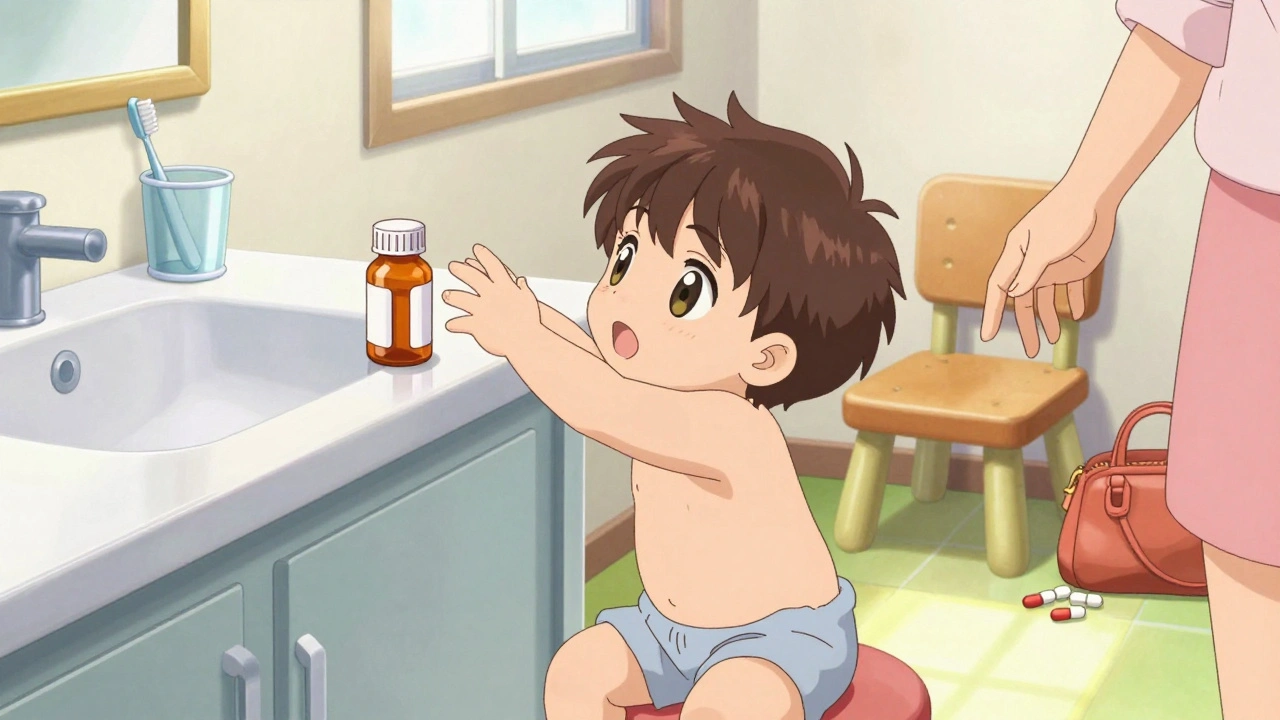
Every year, more than 50,000 children under the age of six end up in emergency rooms because they accidentally swallowed medicine they weren’t supposed to. Most of these incidents don’t happen because a child broke into a locked cabinet. They happen because a parent left a pill on the nightstand, a grandparent forgot their purse on the couch, or a bottle of liquid Tylenol was left on the counter while making dinner. And it’s not just pills-liquid nicotine from e-cigarettes, cough syrups, and even vitamins can be deadly in tiny amounts.
Where Poisoning Happens (It’s Not Where You Think)
Over 90% of accidental poisonings happen inside the home. And the biggest danger? Medications stored within a child’s reach. A 2022 study from Nationwide Children’s Hospital found that nearly 78% of poisonings involved medicines stored below 4 feet-the average height a toddler can reach without climbing. That means even if you think you’re being careful by putting medicine on a high shelf, your child might use a chair, a toilet, or the edge of the bathtub to get to it.
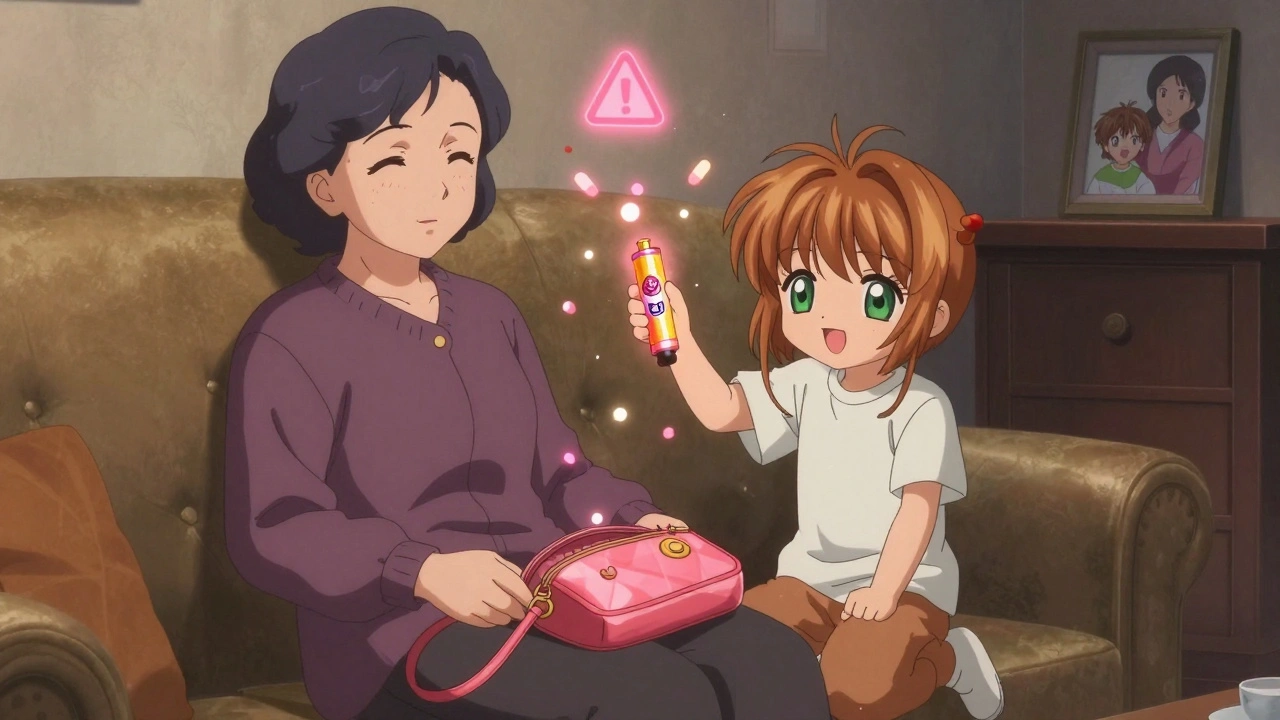
One of the most common mistakes? Storing medicine in purses, coat pockets, or bedside tables. A 2023 report from Nemours KidsHealth showed that 30% of exposures come from visitors’ belongings. Grandparents, babysitters, or even a friend staying over might leave their pills in a bag on the floor. Kids don’t know the difference between their own medicine and someone else’s. To them, it’s just something that looks like candy.
What Medications Are Most Dangerous?
Not all medicines are created equal when it comes to risk. The top three offenders in pediatric poisonings are:
- Acetaminophen (Tylenol) - Even a small overdose can cause irreversible liver damage.
- Ibuprofen (Advil, Motrin) - Too much can lead to kidney failure or stomach bleeding.
- Aspirin - Never give to children under 18. It can trigger Reye’s syndrome, a rare but deadly condition.
But the real silent killer? Liquid nicotine. A single e-cigarette cartridge contains enough nicotine to kill a toddler. Just 0.5 milliliters-less than a teaspoon-can be fatal. And because it often comes in sweet flavors like mango or bubblegum, kids are drawn to it like juice.
Why Child-Resistant Caps Don’t Work
You’ve heard it before: “It’s in a child-resistant bottle, so we’re fine.” That’s a dangerous myth. Child-resistant caps are designed to slow down a curious child-not stop them. Studies show that 80% of toddlers under age 3 can open them within minutes, especially if they’ve seen an adult do it. And if your child has been watching you take your pills every morning? They’ve already learned the trick.
UCSF Benioff Children’s Hospital says to treat child-resistant packaging like a seatbelt-not a full airbag. It’s a backup, not the main safety layer. The only reliable protection is a locked cabinet.
Lock It Up: The Only Real Solution
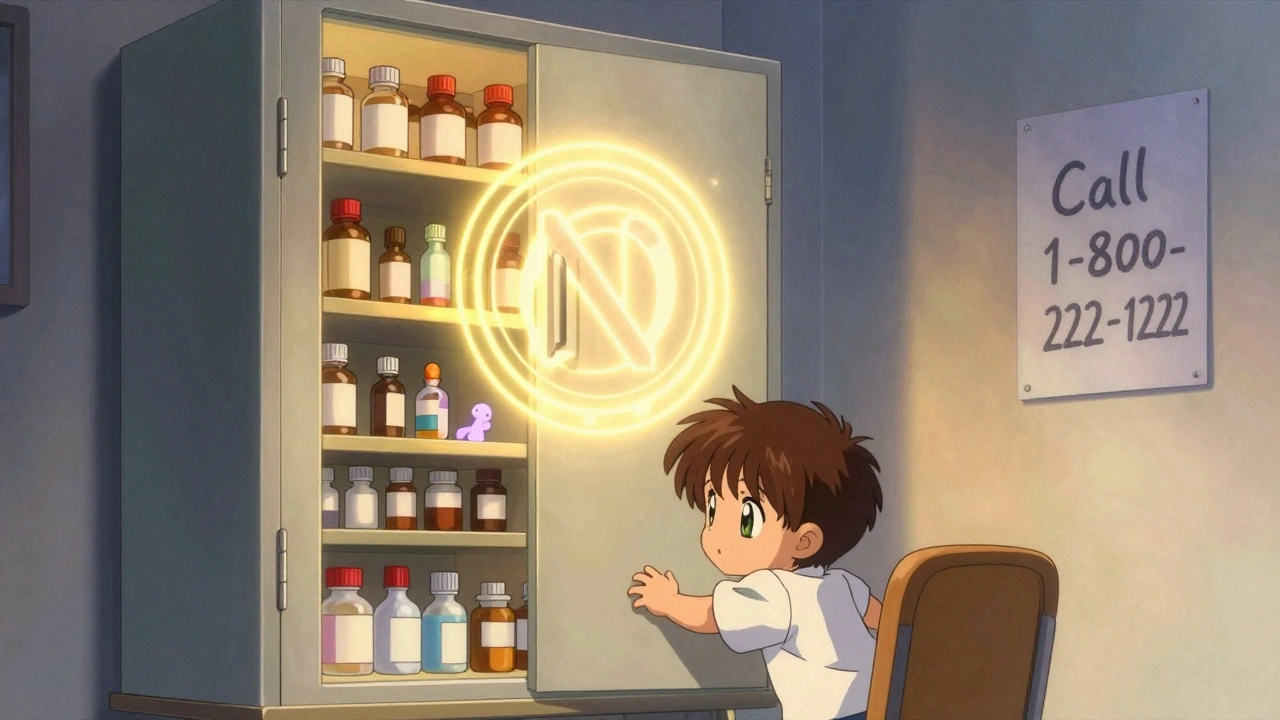
The American Academy of Pediatrics and NYU Langone Health both agree: the only way to truly prevent accidental poisoning is to store all medications-prescription, over-the-counter, and even supplements-in a locked cabinet with a safety latch.
Don’t just use a regular lock. Use an automatic-locking cabinet latch that engages when the door closes. These are cheap, easy to install, and work on any cabinet. Place the cabinet at least 54 inches above the floor-well beyond the reach of even the most determined climber.
And here’s a trick most parents miss: Get down on your hands and knees. Look around your home from your child’s eye level. What do you see? A bottle of painkillers on the bathroom counter? A pill organizer on the kitchen table? A grandmother’s purse on the living room chair? That’s your danger zone. Move everything out of sight and out of reach.
Never Call Medicine “Candy”
It’s tempting. You say, “Here’s your medicine, sweetie-it tastes like candy,” to get a toddler to swallow a bitter liquid. But research from the AAP shows this simple phrase increases the chance of a child taking medicine on their own by 3.2 times. To a 2-year-old, if it tastes good and you call it candy, then it’s fair game.
Instead, say: “This is medicine. It helps you feel better, but you can’t have it unless Mommy or Daddy gives it to you.” Be clear. Be consistent. Don’t make medicine a treat.
Measure Right: The Spoon Trap
One of the most common dosing errors? Using a kitchen spoon. A 2023 Poison Control report found that 42% of incorrect doses happen because parents used a regular spoon instead of a proper measuring device. And here’s the kicker: a teaspoon from your kitchen might hold anywhere from 3 to 7 milliliters. That’s a 40% difference. One extra milliliter of ibuprofen can turn a safe dose into a toxic one.
Always use the dosing syringe or cup that comes with the medicine. If it’s missing, ask your pharmacist for a new one-they’ll give it to you for free. Mark the correct dose with a permanent marker if you need to. And never guess. If you’re unsure, call Poison Control.
When Visitors Come Over
Households with frequent visitors-especially grandparents-have a 35% higher risk of accidental poisoning, according to UCSF Benioff Children’s Hospital. Why? Because visitors often leave their medications in purses, drawers, or nightstands.
Before guests arrive, do a quick sweep: put all medicines away, even your own. If someone brings pills with them, ask them to keep them in their bag-and remind them not to leave it on the couch. Have a small, locked box ready in a closet or high cabinet for visitors to store their meds while they’re there. Make it normal. Make it easy.
Timing Matters: The 12 PM to 6 PM Window
Most people assume poisonings happen at night, when kids are sleepy and less supervised. But Poison Control’s 2023 data shows the highest risk is between noon and 6 p.m.-the busiest part of the day. That’s when parents are cooking, answering phones, changing diapers, or scrolling on their phones. Distractions are the enemy.
UCSF Benioff’s research found that 40% of poisonings happen when a parent is actively using a medicine (like pouring liquid into a cup) and gets interrupted. The bottle gets set down. The child sees it. It’s over in seconds.
Always finish what you’re doing before handing the medicine to your child. Never leave a bottle unattended-even for a second.
Prepare for the Worst
Even with all the right steps, accidents can still happen. That’s why every home with kids needs a clear emergency plan.
- Post the Poison Help number-1-800-222-1222-on the fridge, near the phone, and on your cell phone’s speed dial. Don’t just save it. Write it down where everyone can see it.
- Use the webPOISONCONTROL online tool (available 24/7) to get instant advice if you’re unsure whether a spill or ingestion is dangerous.
- Don’t wait for symptoms. Don’t call your pediatrician first. Call Poison Control immediately. Their data shows that getting help within 5 minutes improves outcomes by 89%.
- Keep up-to-date CPR and Heimlich maneuver training. In 12% of severe cases, a parent’s quick action before EMS arrives saves a life.
What’s Changing in the Future
Some new tools are making prevention easier. Community pharmacies in Pittsburgh and other cities now offer free lock boxes for families with toddlers under age 3. In pilot programs, these boxes reduced accidental access by 41%.
Smart medicine bottles are also being tested-devices that track when a dose is taken and send alerts if a child opens the bottle. One 2022 study showed a 63% drop in unsupervised access with these devices.
But no technology replaces vigilance. The most effective prevention is still: lock it up, keep it out of sight, and never, ever call it candy.
Final Checklist: 5 Things to Do Today
- Find every medicine in your home-including vitamins, cough syrup, and e-cigarette cartridges-and move them to a locked cabinet above 54 inches.
- Install automatic-locking cabinet latches on all cabinets within reach of your child.
- Throw out old or expired meds. Don’t keep them “just in case.”
- Post the Poison Help number (1-800-222-1222) in every room.
- Teach everyone who cares for your child: Never leave medicine unattended. Never call it candy.
Accidental poisoning isn’t a rare tragedy. It’s preventable. But it takes action-not hope. One locked cabinet. One conversation. One less distraction. That’s all it takes to keep your child safe.




Himmat Singh December 13, 2025
The premise of this article is fundamentally flawed. Medication poisoning is not a crisis of storage-it’s a crisis of overregulation and medical overreach. Children have survived for millennia without locked cabinets; the human species did not evolve under childproof caps. The real danger is the paranoia that turns every pill into a weapon and every parent into a jailer. Let children learn boundaries through natural consequences, not through institutionalized fear-mongering.
Bruno Janssen December 14, 2025
I read this. I nodded. I felt guilty. Then I went to the bathroom and left my anxiety meds on the counter because I was tired. And I know-I know-I shouldn’t have. But I’m just one tired person in a system that demands perfection. No one tells you how exhausting it is to be a parent who has to treat their own medicine like contraband. I didn’t need a checklist. I needed someone to say it’s okay to mess up sometimes.
Emma Sbarge December 14, 2025
This is exactly why America is falling apart. We’ve turned parenting into a compliance test. Lock your medicine? Fine. But why are we letting a bunch of overeducated bureaucrats dictate how we raise our kids? In my country, we taught our children respect-not fear. You don’t need a latch on every cabinet. You need discipline. You need a firm voice. And you sure as hell don’t need to post Poison Control numbers like they’re emergency exits in a theater. We’re raising a generation of cowards.
Tommy Watson December 16, 2025
ok so i just read this whole thing and like… i’m not even mad. i just feel bad. i left my girlfriend’s benadryl on the nightstand last week. my 2yo grabbed it. she popped it like a gummy bear. i screamed. she laughed. i cried. i didn’t even know you could die from a single dose of antihistamine. i’m buying a lockbox today. and i’m never calling medicine candy again. also-why do they make liquid nicotine taste like cotton candy? who thought that was a good idea??
Michael Gardner December 17, 2025
Lock it up? Sure. But let’s be real-most of these stories are about grandparents. You know who’s really to blame? The people who bring their meds to your house and then leave their purse on the couch like it’s a gift basket. My mom does this every visit. She says, ‘Oh, I just need to take my blood pressure pill.’ Then she leaves it next to the cookies. I’ve had to confiscate three different bottles from my niece. This isn’t about childproofing. It’s about adult accountability. Stop being careless and expect others to clean up your mess.
Willie Onst December 17, 2025
Man, this hit me right in the soul. I used to think I was a careful dad-until my 18-month-old opened my pill organizer like it was a toy box. I thought, ‘She’s just curious!’ Nope. She thought it was a treasure hunt. Now I keep everything in a locked toolbox on the top shelf. And I say, ‘This is medicine. It’s not food.’ Every. Single. Time. It’s weird at first-kids don’t get it. But they learn. And honestly? I feel like I’m doing my part to keep them safe. Not because I’m scared. Because I love them. And love means showing up, even when it’s annoying.
Jennifer Taylor December 18, 2025
EVERYONE IN THIS THREAD IS MISSING THE BIG PICTURE. THIS IS A PHARMA CONSPIRACY. THEY WANT YOU TO THINK YOUR KID WILL DIE FROM A SINGLE PILLOW. THEY MADE THE BOTTLES HARD TO OPEN SO YOU’LL BUY MORE LOCKBOXES. THEY MADE THE FLAVORS SO SWEET SO YOU’LL THINK IT’S SAFE. THEY KNOW IF YOU’RE AFRAID, YOU’LL BUY MORE STUFF. AND THE POISON CONTROL NUMBER? IT’S A TRAP. THEY WANT YOU TO CALL THEM SO THEY CAN TRACK YOUR IP ADDRESS AND SELL YOUR DATA TO INSURANCE COMPANIES. I DON’T CALL POISON CONTROL. I CALL THE FEDS. I’M NOT PLAYING THEIR GAME.
Shelby Ume December 20, 2025
I’m a pediatric nurse, and I’ve seen what happens when a child swallows even a small amount of liquid nicotine. It’s not dramatic. It’s quiet. They get sleepy. Their breathing slows. Then they stop. No screaming. No warning. Just stillness. And I’ve held mothers as they scream into the phone, ‘But she was just playing!’ I’ve held fathers who can’t speak because their hands are shaking too hard. This isn’t fearmongering. This is survival. If you have a child under three, lock your medicine. Not because it’s trendy. Not because someone told you to. But because if you don’t, you might lose them before you even realize they’re gone. And you’ll spend the rest of your life wondering if you could’ve done one more thing. Please. Just lock it up.