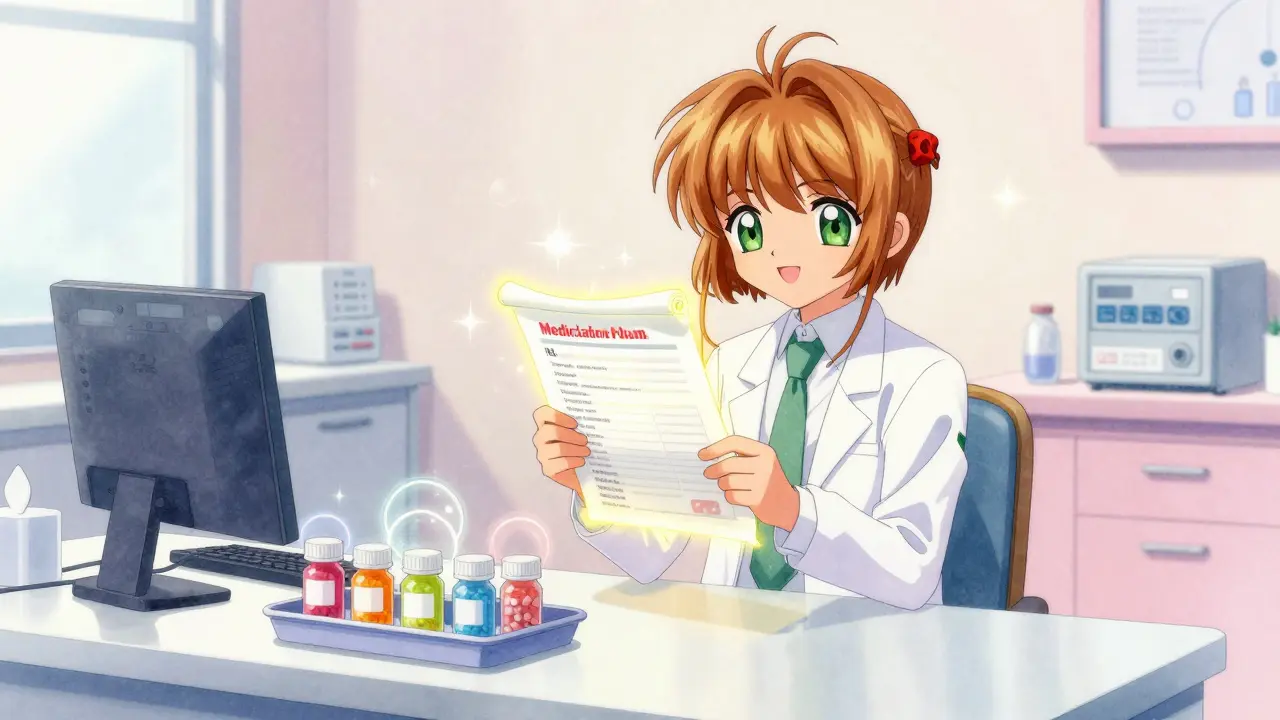
Imagine walking into a doctor's office or pharmacy with a single sheet of paper that holds the key to your health. This isn't just a list of pills; it is a Medication Action Plan (MAP), a structured document designed to bridge the gap between what your providers prescribe and how you actually take your meds. For millions of patients, especially those managing chronic conditions, this template is the difference between staying healthy and ending up in the emergency room due to a simple mix-up.
The MAP originated from the Medicare Prescription Drug, Improvement, and Modernization Act of 2003, which mandated Medication Therapy Management (MTM) services. Today, standardized formats like the CMS1245776 version are required for Medicare Part D beneficiaries. But you don’t need to be on Medicare to benefit. Whether you are juggling three prescriptions or ten, using a MAP during every visit can cut adverse drug events by up to 23%, according to data from the Agency for Healthcare Research and Quality (AHRQ). The goal is simple: clear communication, fewer errors, and better adherence.
What Exactly Is a Medication Action Plan?
A Medication Action Plan is not a static form you fill out once a year and forget. It is a living document. Think of it as a contract and a roadmap combined. It outlines specific steps you need to take to resolve medication-related problems and meet your health goals. According to PowerPak’s Module 4 on Developing a Therapeutic Action Plan, the core purpose is to help patients understand their next steps clearly.
In Germany, for example, the E-Health law introduced a standardized Medication Plan effective January 1, 2016. Studies there showed that 87.5% of patients could find critical information on the first try when using this template. That kind of clarity is vital. When you sit down with a provider, the MAP ensures everyone is looking at the same facts: what you are taking, why you are taking it, and what changes need to happen.
| Section Name | Purpose | Who Fills It Out? |
|---|---|---|
| What We Talked About | Documents clinical discussions and decisions made during the visit. | Provider / Pharmacist |
| What I Need to Do | Lists specific, measurable actions (e.g., "Take metformin with breakfast"). | Provider |
| What I Did and When | Tracks adherence and helps identify missed doses or side effects. | Patient |
| My Follow-Up Plan | Schedules next reviews and lists questions for future visits. | Both Patient and Provider |
| Medication List | Current inventory of all prescription and non-prescription drugs. | Patient (updated by Provider) |
Preparing Your Map Before the Visit
You cannot use a tool effectively if you haven't prepared it. Before you even step foot in the clinic, you need to update your current status. The CDC’s MyMedications Action Plan recommends bringing not just the paper map, but all your actual medication containers. Why? Because research shows that verifying pills against their bottles improves accuracy by 37.2% compared to relying on memory alone.
Here is how to prep:
- Cross out discontinued meds: If you stopped taking something last month, cross it out on your old list. Write the date and the reason (e.g., "Stopped due to nausea"). This prevents the common error where a new doctor assumes you are still taking it.
- Note side effects: In the "Questions I want to ask" section, jot down any new symptoms. Are you dizzy after taking your blood pressure pill? Write it down. Specificity matters.
- Bring a caregiver: CareSource materials suggest giving a copy of the action plan to family members. Having someone else in the room to listen and take notes can double the amount of information retained from the visit.
Dr. Jerry Fahrni, Director of Clinical Services at the National Association of Chain Drug Stores, stated in Pharmacy Times that consistent use of a standardized MAP is the single most effective intervention for reducing medication-related hospitalizations. Preparation is half the battle.
Navigating the Visit: Real-Time Updates
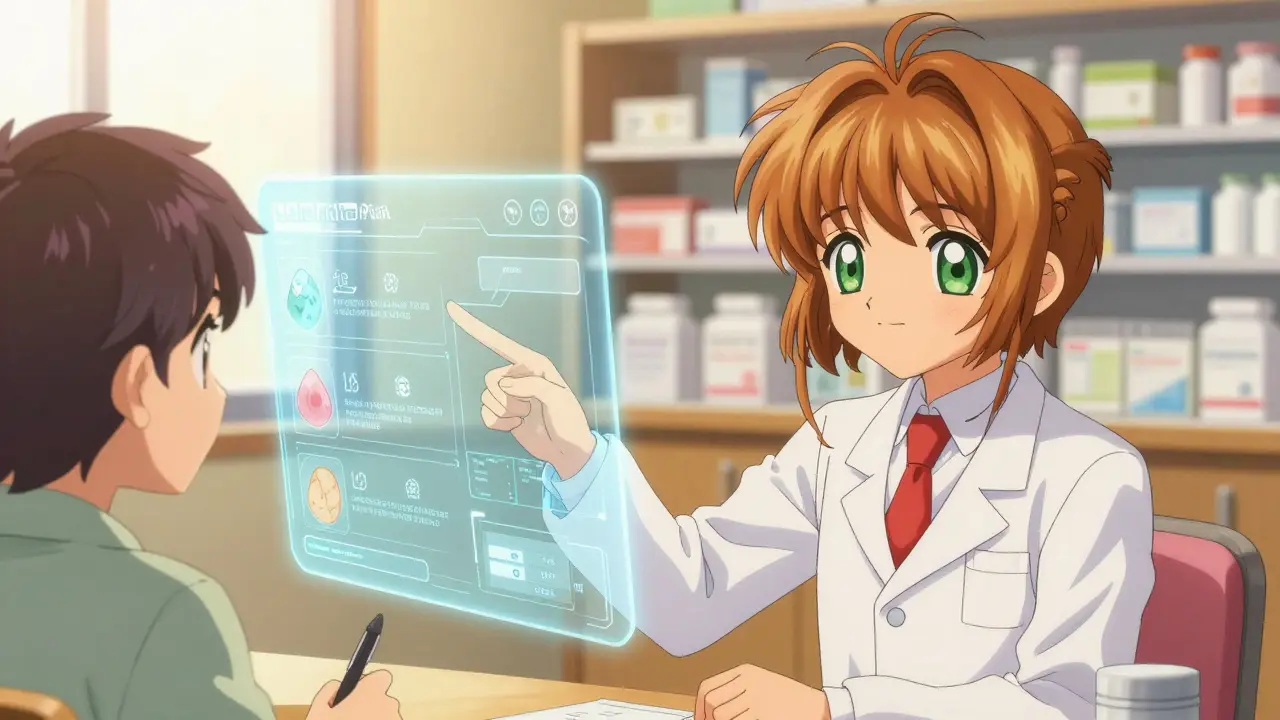
Once you are in the room, the dynamic shifts. You are no longer just a patient listening; you are an active participant in a review process. Providers should dedicate the first 5-7 minutes specifically to reviewing your MAP. This isn't idle chat; it is a systematic check.
Watch for these key interactions:
- The Adherence Check: The provider will look at the "What I did and when I did it" section. Pharmacists spend an average of 3.7 minutes on this alone, according to NCPA metrics. Be honest here. If you skipped doses, say so. They aren't judging you; they are trying to figure out if the dose is too high or the timing is wrong.
- Concrete Action Steps: Vague instructions like "take as directed" are useless. Research shows that plans with specific actions (e.g., "Take 500mg with dinner starting tomorrow") have 34% higher adherence rates. Ask your provider to write exactly what you need to do in the "What I need to do" box.
- High-Risk Med Review: If you are older, ask specifically about fall risks. The CDC recommends addressing medications that increase dizziness or confusion. AHRQ guidelines suggest providers spend 8-12 minutes on this assessment for at-risk patients.
During this time, the provider must update the medication list in real-time. New prescriptions get added with start dates. Old ones get crossed out with stop dates. The Institute for Safe Medication Practices (ISMP) notes that failing to document discontinuation dates contributes to nearly 19% of reconciliation errors. Make sure they write the exact date.
After the Visit: Keeping the Map Alive
The work doesn't end when you leave the office. The American College of Clinical Pharmacy emphasizes that the MAP is a living document. If you don't maintain it, it becomes obsolete-and potentially dangerous.
Within 24 hours of your visit, share the updated MAP with all other healthcare providers. A study in BMC Health Services Research found that patients who shared their MAPs had 22.8% fewer duplicate therapies. Duplicate therapies happen when two doctors prescribe similar drugs because they didn't know the other one had already prescribed them. Your MAP prevents this.
Also, keep a backup. Many elderly patients lose their papers. A pharmacist named John Davis noted on Reddit that laminated wallet-sized versions containing 80% of the critical info can be a lifesaver. Keep one in your car glove compartment and one at home. If you go to the ER, hand them the wallet card immediately. It tells them exactly what you are on without waiting for records to transfer.

Common Pitfalls and How to Avoid Them
Even with the best intentions, things can go wrong. Here are the most common issues and how to fix them.
Health Literacy Barriers: Only 12% of U.S. adults have proficient health literacy skills. If the medical jargon on your MAP confuses you, ask for plain language. The FDA’s Safe Use Initiative is currently testing simplified designs. Don't be afraid to say, "Can you explain that in simpler terms?"
Electronic vs. Paper Conflicts: While EHR interoperability is improving under the 21st Century Cures Act, many clinics still struggle with digital integration. A 2022 Health Affairs study found that 28.6% of safety-net clinics couldn't consistently implement MAPs due to tech incompatibilities. Always carry the physical paper copy until you are sure the electronic system is fully synced across all your providers.
Over-Reliance on Templates: Dr. David Meltzer warned in JAMA Internal Medicine that rigid templates can reduce face-to-face communication time by up to 15%. Use the MAP as a guide, not a script. If your provider is just filling boxes without looking at you, speak up. Ask questions. Ensure the human connection remains strong.
Why This Matters for Your Safety
The stakes are high. The Patient Safety Movement Foundation estimates that full implementation of tools like the MAP could prevent 150,000 annual adverse drug events in the U.S. alone. These aren't just statistics; they are people avoiding unnecessary suffering.
Consider Mary Thompson from Ohio, who reported on the Medicare Rights Center forum that her cardiologist caught a dangerous interaction between two blood pressure meds only because she brought her updated MAP to the appointment. That simple act prevented a potential hospitalization.
Using a Medication Action Plan is not just bureaucratic paperwork. It is a proactive defense mechanism for your health. By preparing beforehand, engaging actively during the visit, and maintaining the document afterward, you take control of your medication therapy. You become the CEO of your own health team, ensuring that every prescription works for you, not against you.
Is a Medication Action Plan required for insurance coverage?
For Medicare Part D beneficiaries enrolled in Medication Therapy Management (MTM) programs, a Comprehensive Medication Review including an Action Plan is a covered benefit. However, having a MAP does not guarantee coverage for specific drugs; it is a management tool. Private insurers may also offer MTM services, but requirements vary by plan.
Can I create my own Medication Action Plan template?
Yes, you can create your own, but using a standardized template like the CMS1245776 or CDC MyMedications format is recommended. Standardized templates ensure that all providers recognize the sections and that critical fields like discontinuation dates are included. Custom templates often miss these regulatory details.
How often should I update my Medication Action Plan?
You should update it at every healthcare encounter where medications are discussed or changed. Additionally, if you start or stop any over-the-counter supplement or prescription on your own, update the list immediately. The American College of Clinical Pharmacy advises treating it as a living document, not an annual form.
What should I do if my provider refuses to use the MAP?
Politely insist on documenting the changes on your personal copy. You can say, "I use this plan to keep track of my meds at home. Could you please note today's changes on it?" Most providers will comply. If they refuse, ensure you get a printed receipt of the new prescription and manually update your own list with the date and dosage.
Does the Medication Action Plan replace my prescription bottle labels?
No. The MAP is a summary and planning tool. The prescription bottle label has legal dosing instructions and pharmacy contact info. Always follow the label for immediate dosing, but use the MAP for long-term tracking, adherence monitoring, and communicating with multiple providers.







Kieran Healy July 13, 2026
It is really nice to see this kind of practical advice. I often feel so lost when leaving the doctor's office, with just a prescription and no real plan. This template sounds like it could make things much clearer for everyone. :)
Patrick Plummer July 14, 2026
Oh, please!! Who has time for this?? It is just more bureaucracy!!! Doctors should just do their job properly in the first place!!! Why do patients need to be secretaries now?? It is ridiculous!!!
Andrew Donovan July 15, 2026
I completely understand the frustration, but think of it as taking the wheel rather than being a passenger. The healthcare system is fragmented, and without a map, you are navigating a maze blindfolded. It is not about adding work; it is about reclaiming agency over your own biology. When you hold the document, you force a moment of clarity that otherwise gets lost in the rush of a fifteen-minute appointment. It transforms the interaction from a transaction into a collaboration. Your health is too precious to leave to chance or memory alone.
Bobby Christiansen July 17, 2026
This is such a terrible idea! It puts the burden on the patient! What if they forget? Then they die! It is the doctors' fault for prescribing too many drugs! We need to sue the pharmaceutical companies instead of making grandma fill out forms! :((((
Patrick Meyer July 17, 2026
Look, its not rocket science. But most people are too dumb to read anyway. So why bother? Just give them the pills and hope for the best. Its a waste of paper and ink. The elite know better but the masses cant handle complexity.
Prashant Shishodia July 17, 2026
You must start today. Do not wait. Print the form. Bring it. Update it. Your life depends on accuracy. Stop making excuses. Take control now.
Autumn LW July 18, 2026
Actually, the lack of adherence to standardized protocols is a symptom of a deeper societal decay. If you cannot manage a simple piece of paper, how can you expect to manage your chronic conditions? It is quite embarrassing that we have to teach adults basic organizational skills. Read the guidelines carefully before attempting to use them.
Scott Colter July 18, 2026
There is a profound philosophical shift happening here. We are moving from a model of paternalistic care to one of shared responsibility. The Medication Action Plan is not just a form; it is a mirror reflecting our relationship with our own mortality. By documenting our actions, we acknowledge our agency. It is a small act of defiance against chaos. Embrace the structure, and find freedom within it.
Paul Lyons July 19, 2026
This is American propaganda! In other countries, the government handles this! We don't need these fancy templates! We need real medicine! Not paperwork! It is an insult to our intelligence!
Deva Vidya July 21, 2026
I tried this last week and it was amazing! My pharmacist actually looked at me! She saw I was taking my blood pressure med at night and causing insomnia. We switched it to morning. I slept so well! Everyone should try it! It works!
ANINDA GHOSH July 22, 2026
In our culture, we respect the wisdom of elders and the precision of tradition. This tool bridges the gap between modern medicine and personal care. It is very useful. Please share it with your family. :)
MiMi Stanley July 23, 2026
I usually just keep a list on my phone. Is this paper version really better? I guess having it physical might help older folks who struggle with technology. It seems helpful for those specific cases.
Najmunisa Govender July 23, 2026
Thank you for sharing this!! It is so important!! I always worry about mixing up my meds!! This gives me peace of mind!! Please keep posting helpful tips!!
Ambarish Pal July 25, 2026
What a disaster waiting to happen! You will lose the paper! You will get it wet! You will write illegible notes! It is a joke! A complete farce! The system is broken and you are trying to fix it with tape! How dramatic! How futile!