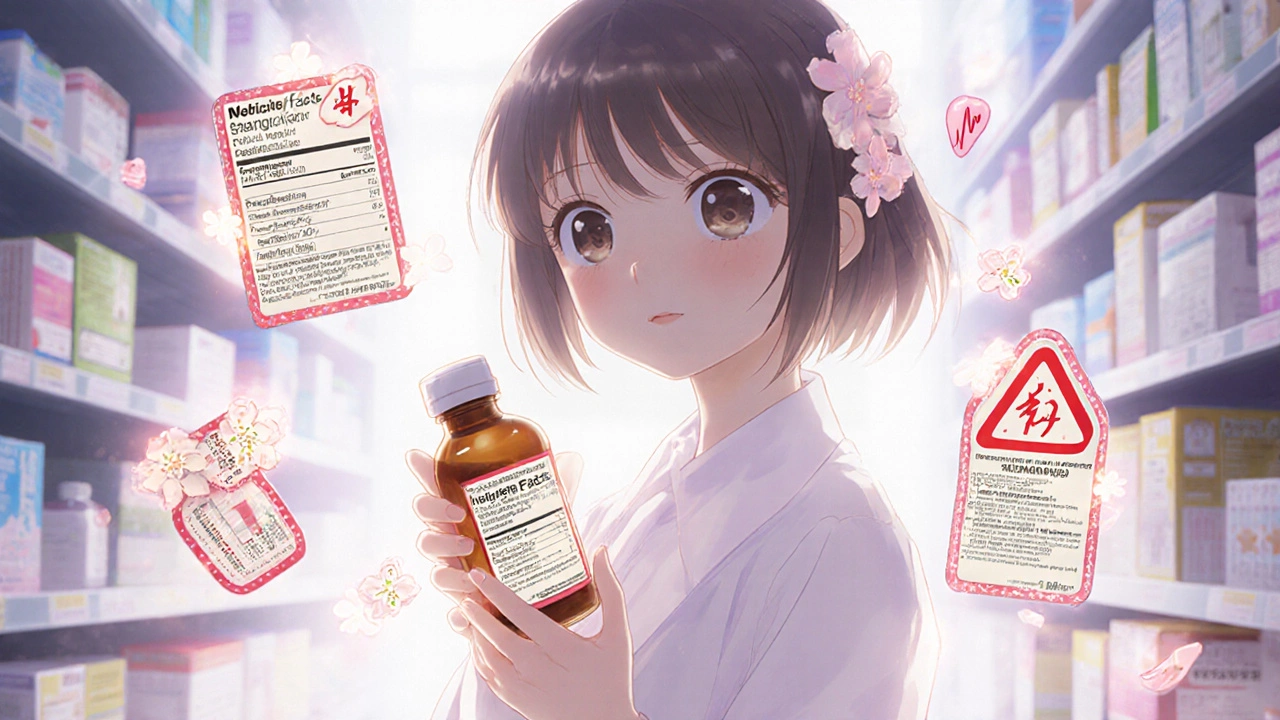
Every year, millions of Americans grab an OTC medicine off the shelf without reading the label. They see "Tylenol" or "Advil" and assume they know what’s inside. But what if that same pill also contains acetaminophen - the same active ingredient in the cold medicine you took yesterday? That’s how accidental overdoses happen. The OTC drug facts label is designed to stop that. It’s not just fine print. It’s your safety net.
What’s on the OTC Drug Facts Label?
The U.S. Food and Drug Administration (FDA) made this label mandatory in 2017. Before that, every brand used different layouts, fonts, and wording. Now, every box, bottle, or blister pack follows the same structure. There are seven sections you need to know:- Active Ingredients - the medicine itself
- Purpose - what the ingredient does
- Uses - what symptoms it treats
- Warnings - what you must avoid
- Directions - how much and when to take it
- Other Information - storage, sodium content, etc.
- Inactive Ingredients - fillers, dyes, preservatives
These aren’t suggestions. They’re legal requirements. If a label doesn’t have all seven sections in this order, it’s not FDA-compliant - and you should be cautious.
Active Ingredients: The Most Important Part
This is where most people skip. They see "Tylenol" and think they’re safe. But "Tylenol" is just a brand name. The active ingredient is acetaminophen. And it’s in dozens of other products - cold medicines, flu remedies, sleep aids, even some prescription painkillers.Look for the exact amount. For example:
- Children’s Tylenol: "Acetaminophen 160 mg per 5 mL"
- DayQuil: "Acetaminophen 325 mg (pain reliever/fever reducer)"
- Excedrin Migraine: "Acetaminophen 250 mg, Aspirin 250 mg, Caffeine 65 mg"
If you’re taking two different products, check if they share the same active ingredient. That’s how people accidentally take 6,000 mg of acetaminophen in a day - way over the 4,000 mg safety limit. That can cause severe liver damage. In 2023, over 1,200 people in the U.S. were hospitalized because of this mistake.
Purpose and Uses: Match Symptoms, Not Just Feelings
The "Purpose" section tells you what the ingredient does. "Acetaminophen" is a pain reliever and fever reducer. "Dextromethorphan" is a cough suppressant. "Phenylephrine" is a nasal decongestant.The "Uses" section tells you exactly what the product is approved to treat. It’s not marketing fluff. It’s science-backed. If your symptom isn’t listed, the medicine won’t help - and might even hurt.
Example: You have a headache and a runny nose. You grab a "cold and flu" pill. It says it treats: headache, fever, runny nose, sore throat. Perfect. But if you only have a headache and no congestion, you’re taking a nasal decongestant you don’t need. That’s extra medicine your body has to process - and extra risk.
Warnings: Don’t Skip This
This section is where lives are saved - or lost.It tells you:
- When NOT to use the medicine ("Do not use if you have liver disease")
- When to ask a doctor first ("Ask a doctor before use if you take blood thinners")
- What side effects to watch for ("May cause drowsiness")
- Alcohol interactions ("Avoid alcohol while taking this product")
- Age restrictions ("Do not use in children under 6 years")
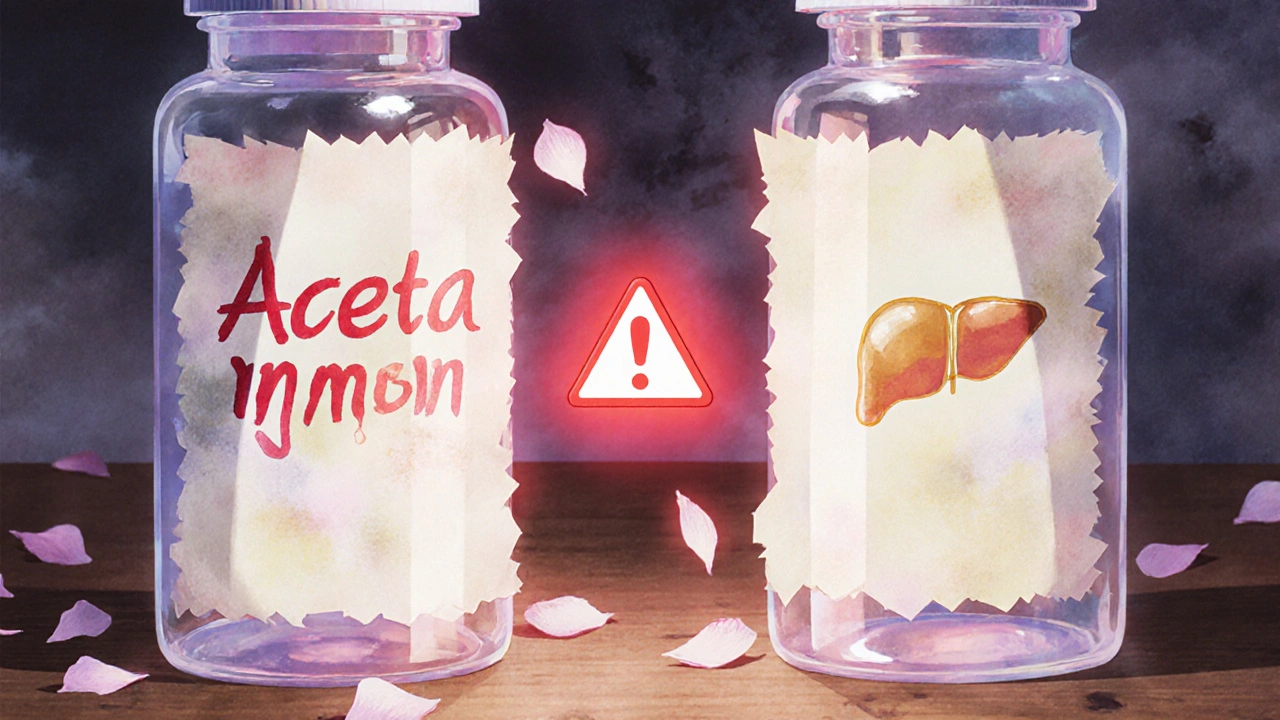
One of the most common warnings is the "Liver Warning" for acetaminophen. About 50 million Americans have underlying liver conditions they don’t even know about. Taking too much acetaminophen can push them into liver failure - fast. The FDA says this warning alone has cut pediatric acetaminophen overdoses by 43% since 2017.
Another big one: "Stomach bleeding risk" for NSAIDs like ibuprofen and naproxen. If you’re over 60, take blood thinners, or have a history of ulcers, this warning could save your life.
Directions: More Than Just "Take Two"
Directions aren’t just about dosage. They’re about timing, duration, and form.Look for:
- Exact dose: "2 caplets every 4 to 6 hours" - not "take as needed"
- Maximum per day: "Do not take more than 12 caplets in 24 hours"
- Age/weight limits: "For children 12-17 years: 1 tablet every 6 hours"
- Duration: "Do not use for more than 10 days"
People often misread "every 4 to 6 hours" as "every 4 hours" - leading to 6 doses in a day when the limit is 4. Or they think "10 days" means 10 pills, not 10 days of use.
Also, pay attention to units. "5 mL" is one teaspoon. "10 mL" is two teaspoons. A 4-ounce bottle of Children’s Motrin holds 118 mL - that’s nearly 24 doses. Don’t guess. Use the measuring cup that comes with it. Kitchen spoons vary too much to be safe.
Inactive Ingredients: Hidden Triggers
These aren’t medicine. They’re fillers - starch, dyes, preservatives, sugar, alcohol.But if you’re allergic to red dye #40, or avoid sugar because of diabetes, or are gluten-sensitive, this matters. One person’s harmless filler is another’s emergency.
Look for:
- "Contains soy"
- "Contains lactose"
- "Contains FD&C Red No. 40"
- "Contains alcohol"
- "Gluten-free"
Many people don’t realize that "inactive" doesn’t mean "safe." A dye can cause a rash. Sugar can spike blood glucose. Alcohol can interact with antibiotics. Always check this list if you have allergies or dietary restrictions.
The 5-Point Check: A Simple System That Works
Pharmacists at CVS and Walgreens recommend a quick 5-step process:- Identify the active ingredient - write it down if you need to.
- Verify uses match your symptoms - if it doesn’t list your symptom, skip it.
- Read all warnings - especially if you’re on other meds or have a health condition.
- Check directions for your age and weight - adult doses aren’t safe for kids.
- Scan inactive ingredients - for allergies or dietary needs.
This takes about 50 seconds. But it cuts medication errors by 68%, according to the BeMedWise Program. That’s not a small win. That’s life-changing.
What’s Changing in 2025?
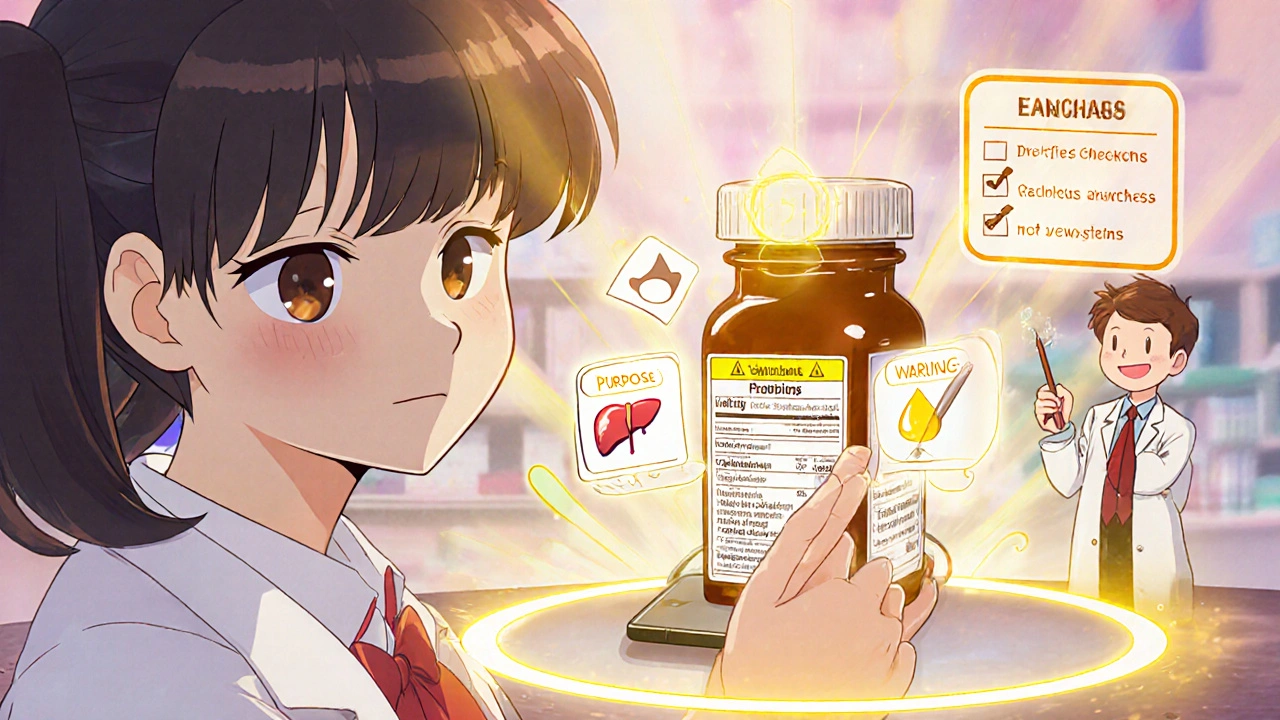
The FDA isn’t done. New rules take effect by December 31, 2025:- Active ingredient concentrations will be printed in 20% larger font
- Color-coded sections (red for warnings, blue for directions)
- Simple icons for high-risk alerts (like a liver symbol for acetaminophen)
- QR codes linking to video explanations (already used by Tylenol, Aleve, and others)
These changes are based on data: 41% of people still can’t find the maximum daily dose on current labels. The goal? Cut medication errors by another 25% by 2027.
What to Do If You’re Still Confused
You don’t have to figure it out alone.- Use the free FDA Drug Label Decoder app - scan the barcode and it breaks down the label in plain language.
- Ask your pharmacist. Walgreens saw a 40% spike in OTC consultations after launching their "Label Literacy" campaign.
- Keep a written list of your active ingredients. If you take five different OTC meds, write down what’s in each. That way, you can spot duplicates.
- When in doubt, don’t take it. Call your doctor or go to a pharmacy. Better safe than sorry.
OTC doesn’t mean "risk-free." It means you’re responsible for your own safety. And the label? It’s your best tool.
What’s the difference between active and inactive ingredients?
Active ingredients are the medicine - the parts that treat your symptoms. Inactive ingredients are everything else: fillers, dyes, preservatives, sugars, or flavors. They help the pill hold together or taste better, but they don’t treat anything. Still, they can cause allergic reactions or interfere with diets, so always check this section if you have sensitivities.
Can I take two OTC medicines at once?
Only if you’ve checked the active ingredients. Many cold and flu products contain acetaminophen, ibuprofen, or diphenhydramine. Taking two products with the same active ingredient can lead to overdose. For example, taking Tylenol and DayQuil together means you’re doubling your acetaminophen dose. Always compare the active ingredients before combining any OTC meds.
Why do some labels say "extra strength"?
"Extra strength" means the product has a higher dose of the active ingredient than the regular version. For example, regular Tylenol has 325 mg of acetaminophen per tablet. Extra Strength Tylenol has 500 mg. That’s a 54% increase. Don’t assume "extra strength" means you can take it more often. The maximum daily limit still applies - and may be lower than you think.
Is it safe to use OTC medicine past its expiration date?
It’s not recommended. While some medicines may still be safe after expiration, their potency drops over time. Pain relievers might not work as well. Allergy meds might not block histamine. And liquid medicines can grow bacteria. The FDA says expiration dates are set to ensure both safety and effectiveness. If it’s expired, throw it out and get a new one.
What should I do if I think I took too much?
Call Poison Control immediately at 1-800-222-1222. Don’t wait for symptoms. Acetaminophen overdose, for example, can cause liver damage without noticeable signs for 24 hours. Keep this number saved in your phone. It’s free, confidential, and available 24/7. If you’re having trouble breathing, chest pain, or confusion, call 911.






king tekken 6 November 28, 2025
so i just read the label on my nyquil and realized i’ve been taking acetaminophen with my ibuprofen for like 3 years?? like… why does no one talk about this?? i thought tylenol was just tylenol 😅 i’m gonna start writing down active ingredients on my phone now. thanks for the wake-up call.
DIVYA YADAV November 29, 2025
you think this is about safety? nah. this is a corporate control tactic. the FDA didn’t standardize labels to protect you-they did it so Big Pharma could bury the truth in plain sight. look at the ‘inactive ingredients’ section-those are the real toxins. dyes, preservatives, gluten-they’re all designed to keep you sick so you keep buying. and don’t get me started on QR codes. that’s surveillance disguised as education. you scan it, they track you, they sell your data to the pharmaceutical-industrial complex. this isn’t health-it’s programming.
Kim Clapper November 29, 2025
While I appreciate the effort to standardize pharmaceutical labeling, I must express profound concern regarding the implications of this regulatory framework. The assumption that laypersons are capable of interpreting pharmacological data with sufficient precision to avoid harm is not only statistically dubious but also ethically fraught. The FDA’s insistence on uniformity, while ostensibly benevolent, inadvertently infantilizes the consumer by implying that cognitive competence is a prerequisite for self-medication-a notion that, in my view, contradicts the foundational principles of American autonomy. Furthermore, the inclusion of QR codes suggests a troubling trajectory toward digitized paternalism. One must ask: who controls the server hosting these video explanations? And what data is harvested when one scans?
Jake Ruhl December 1, 2025
bro i just looked at my cold medicine and it had acetaminophen in it and i was already taking tylenol for my headache… like… how did i not know this?? i thought the brand was the thing. i thought i was being smart by buying the "extra strength" one. turns out i was just being dumb. now i’m scared to take anything. what if i accidentally killed my liver?? i’m gonna start reading every label like it’s a contract i’m signing with death. 😅
doug schlenker December 2, 2025
Really glad someone laid this out clearly. I used to skip the warnings until my mom had a bad reaction to an OTC painkiller because she was on blood thinners. Took me forever to realize the label had it buried in the middle. Now I read every line-even the tiny ones. It’s not about being paranoid. It’s about being informed. And honestly? The 5-point check is genius. I do it every time now. Takes less than a minute, but it’s saved me from mixing stuff I didn’t even know were the same.
Hannah Magera December 4, 2025
My 72-year-old dad just started taking OTC meds for his arthritis and he didn’t know what "NSAID" meant. I sat with him and went through his bottles one by one. We found he was taking two different things with ibuprofen. He was so embarrassed-but now he says he feels like a superhero for reading the label. We made a little chart on the fridge: "Active Ingredient? Check. Warnings? Check. Don’t mix? Double check." It’s not complicated. Just slow down. You’ve got time.
Alexander Rolsen December 4, 2025
the fact that 41% of people can’t find the max daily dose… that’s not ignorance. that’s design. why is the info so tiny? why aren’t the warnings in red? why do they use "per 5 mL" instead of "1 tsp"? they want you to mess up. they profit from your mistakes. i saw a kid in the pharmacy yesterday holding a bottle of children’s tylenol and asking his mom "how many drops?" and she said "just eyeball it." that’s not care. that’s negligence. and the system lets it happen.
Leah Doyle December 4, 2025
OMG I just realized I’ve been taking DayQuil and Advil together for weeks… 😱 I’m so glad I found this. I’m gonna print out the 5-point check and tape it to my medicine cabinet. Also-QR codes? YES PLEASE. I’m terrible at reading tiny print. A video that says "THIS IS ACETAMINOPHEN, DON’T TAKE WITH TYLENOL"? YES. I’m telling all my friends. This is life-saving stuff. 🙏❤️