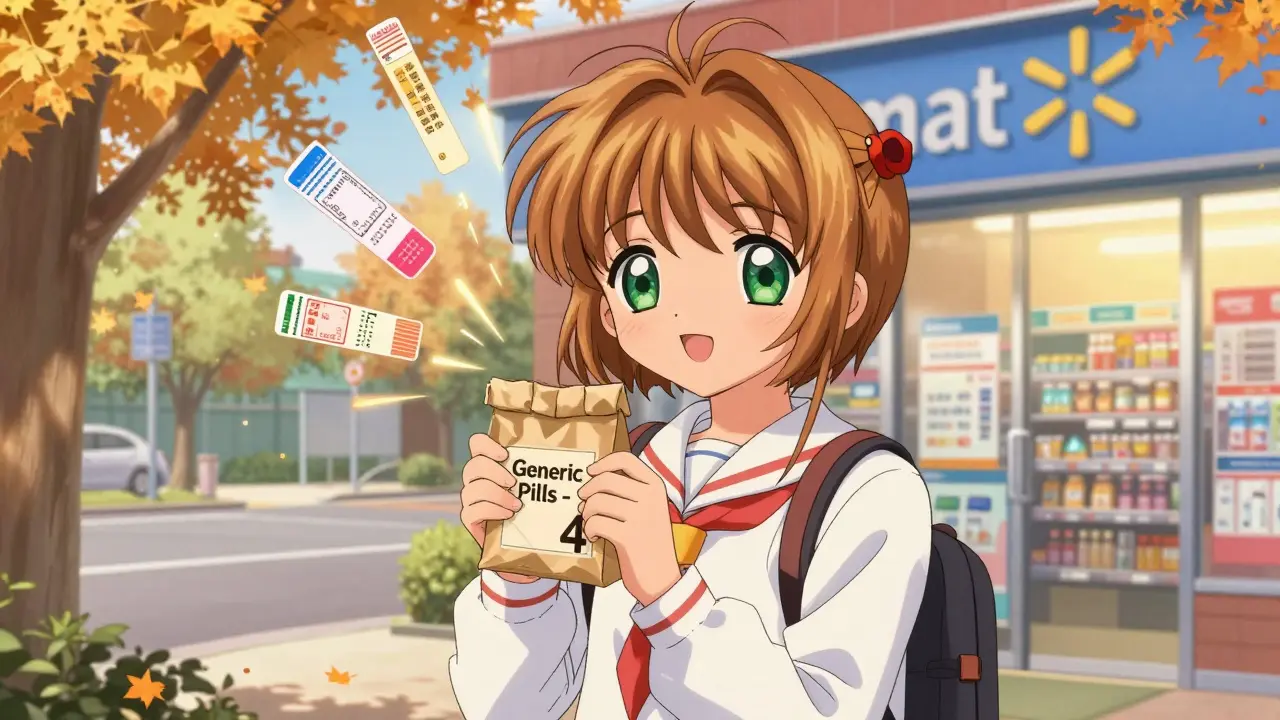
At first glance, it seems backwards: Americans pay more for brand-name drugs than anyone else, yet they pay less for the exact same generic versions. If you’ve ever picked up a prescription for lisinopril, metformin, or atorvastatin at a Walmart pharmacy and seen a $4 price tag, you’re not imagining things. In Germany, France, or the UK, that same pill might cost you €10-€15. Why does this happen? And why does the U.S. manage to keep generic drug prices so low while the rest of Europe struggles with higher costs-even though they have universal healthcare?
How the U.S. Keeps Generic Drug Prices Low
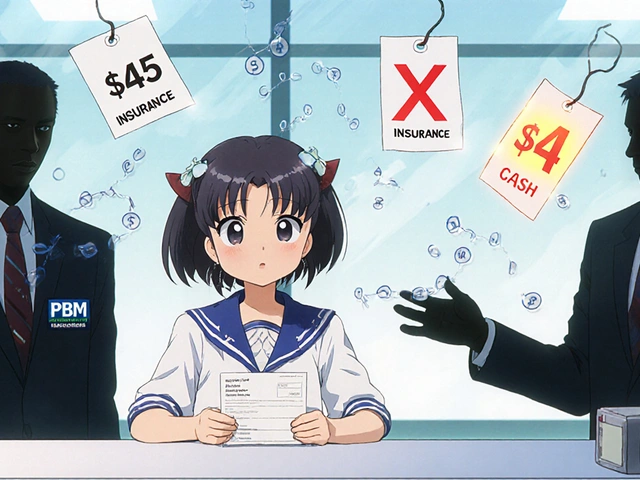
The U.S. generic drug market isn’t just competitive-it’s brutal. With over 90% of prescriptions filled with generics, manufacturers are fighting for every penny. Companies like Teva, Mylan, and Sandoz produce thousands of generic versions of the same drug, and they undercut each other relentlessly. When one company drops its price to $2 for a 30-day supply, the others follow. Sometimes, they drop below manufacturing cost just to stay in the game. That’s why you can walk into a pharmacy in Ohio and pay less for a generic blood pressure pill than someone in Berlin.
This isn’t luck. It’s structure. The U.S. has a fragmented system with dozens of private insurers, Pharmacy Benefit Managers (PBMs), and government programs like Medicare Part D. PBMs negotiate rebates behind the scenes-often 35-40% off list prices-then pass some of those savings to consumers. These rebates aren’t transparent, but they’re real. A drug might have a $50 list price, but after rebates and discounts, the net price paid by insurers is closer to $30. And because PBMs buy in massive volumes, they get even deeper discounts.
On top of that, most states allow pharmacists to automatically substitute brand-name drugs with generics unless the doctor says no. That’s not just policy-it’s routine. You don’t even have to ask. The system is built to push generics to the front, and the market responds with lower prices.
Why Europe Pays More for the Same Pills
In Europe, generics make up only about 41% of prescriptions. That’s not because people don’t want them-it’s because the system doesn’t push them. Many European countries use centralized price controls. Government agencies decide what a drug should cost based on what other countries pay, or how much value it provides. In France, Germany, and the UK, prices are negotiated directly with drugmakers. There’s no race to the bottom. There’s no volume-based discounting on the scale seen in the U.S.
Instead, regulators focus on affordability for the public system. They don’t care how much it cost to develop the drug-they care if it’s worth the price. That leads to lower prices for brand-name drugs, but it also means less pressure to drive down generic prices. If a company knows it can only charge €10 for a generic, and that’s enough to cover costs and make a small profit, why risk undercutting competitors? There’s no incentive to slash prices further.
Plus, substitution rules are stricter. In France, a pharmacist can’t switch your brand-name drug for a generic without the doctor’s approval. In Germany, it’s allowed, but many patients still ask for the brand. Cultural habits, lack of awareness, and fragmented pharmacy systems slow down generic adoption. Less competition = higher prices.
The Brand-Name Paradox
Here’s where it gets ironic. While Americans pay less for generics, they pay more than almost any other country for brand-name drugs. A 2023 U.S. government report found that brand-name drug prices in the U.S. were over four times higher than in other OECD countries. For example, Jardiance, a diabetes drug, costs $204 in the U.S. but only $52 on average in 11 other countries. Stelara, used for autoimmune diseases, is $4,490 in the U.S. versus $2,822 elsewhere.
Why? Because the U.S. is the main engine funding global drug innovation. Pharmaceutical companies set high prices here to recoup the cost of research and development. The U.S. market accounts for 40% of global drug sales, even though it has only 4% of the world’s population. That means companies rely on American consumers to shoulder most of the R&D burden. Countries like Germany and Japan pay less because they negotiate hard-but they still get the drugs developed with money from U.S. sales.
Experts call this “free riding.” The U.S. pays the upfront cost. Europe and Japan benefit from the innovation without paying the same price. That’s why companies launch new drugs in the U.S. first. It’s the only market where they can recover billions in development costs quickly.
What Happens When Prices Go Too Low
There’s a dark side to the U.S. generic market’s success. When prices get too low, manufacturers leave. A generic drug might cost $1 a pill, but if it costs $1.20 to produce, no one will make it. That’s exactly what happened with some antibiotics, corticosteroids, and blood thinners in recent years. Companies shut down production. Shortages followed. Then, when only one or two suppliers remained, they raised prices-sometimes by 1,000%.
This isn’t theoretical. In 2022, the price of a generic version of the heart drug digoxin jumped from $10 to $500 overnight after most manufacturers exited the market. The same thing happened with a generic version of the chemotherapy drug vincristine. The system works great when there’s competition. But when competition disappears, consumers pay the price.
Europe doesn’t have this problem-not because their prices are higher, but because they don’t let prices fall so low in the first place. Their systems ensure manufacturers make a stable, predictable profit. That means fewer shortages, but also higher costs for patients and taxpayers.
Medicare’s New Role Is Changing the Game
In 2022, Congress passed the Inflation Reduction Act, giving Medicare the power to negotiate prices for the most expensive brand-name drugs. In 2024, the first 10 drugs were selected for negotiation. Medicare’s negotiated prices for these drugs were, on average, 2.8 times lower than what Americans were paying before. For Jardiance, the price dropped from $204 to $145. For Stelara, from $4,490 to $3,800.
This is a big deal. It’s the first time the U.S. government has directly stepped in to control brand-name drug prices. And it’s already sending shockwaves through the global market. Drugmakers are warning that if U.S. prices fall too far, they’ll have to raise prices in Europe to make up for lost revenue. Alexander Natz of the European Confederation of Pharmaceutical Entrepreneurs said in 2025 that a U.S. price cap could force companies to hike prices overseas-potentially making European drugs more expensive, too.
It’s a delicate balance. Lower U.S. prices mean less revenue for innovation. Higher prices mean Americans pay more. The system was built on the idea that the U.S. would pay more so the world could get new drugs. But now, that model is being tested.
What This Means for Patients
If you’re an American, you’re getting a deal on generics. For most people, a month’s supply of a common generic drug costs less than a coffee. But if you need a new, brand-name drug-especially for cancer, diabetes, or autoimmune conditions-you’re looking at thousands of dollars a month, even with insurance.
If you’re in Europe, you pay less for brand-name drugs, but more for generics. And if you need a drug that’s not on your country’s approved list? You might not get it at all. Countries like Germany and France use strict cost-effectiveness reviews. If a drug doesn’t meet their value threshold, it’s denied coverage-even if it works.
And if you’re traveling? Don’t be surprised if you pay more for your generic blood pressure pill in Paris than you do in Phoenix. That’s not a glitch. It’s the system.
The Bigger Picture: Who Pays for Innovation?
At the core of this whole issue is a simple question: Who should pay for drug innovation? The U.S. system says: the people who use the drugs, especially in the most profitable market. The European system says: society, through taxes and public negotiation.
The result? The U.S. has more access to new drugs, faster. Europe has more predictable costs, but slower access. The U.S. generic market is efficient, but fragile. Europe’s system is stable, but slower to adapt.
There’s no perfect answer. But one thing is clear: the current model can’t last forever. As Medicare starts negotiating prices, as drugmakers face pressure to lower U.S. costs, and as global supply chains get more fragile, the gap between U.S. and European drug prices will narrow. But the fundamental difference-the U.S. paying more for innovation, Europe paying less for access-isn’t going away anytime soon.
For now, if you need a generic pill in the U.S., you’re getting one of the best deals in global healthcare. But if you need something new? You’re still paying for the whole world’s research.
Why are generic drugs cheaper in the U.S. than in Europe?
Generic drugs are cheaper in the U.S. because of intense competition among manufacturers, massive volume purchasing by Pharmacy Benefit Managers (PBMs), and automatic generic substitution laws in most states. With over 90% of prescriptions filled with generics, companies slash prices to stay competitive-even below manufacturing cost. Europe has less competition, centralized pricing, and stricter rules on generic substitution, which keeps prices higher.
Do Americans really pay less for generics, or is it just because of insurance?
Yes, Americans pay less even after insurance. Many generics cost $0-$10 per month with insurance, and even without insurance, prices at discount pharmacies like Walmart or Costco are often under $10 for a 30-day supply. In contrast, European patients typically pay fixed co-pays of €10-€15 for the same drug, regardless of insurance. The U.S. net price after rebates and discounts is significantly lower than the list price in Europe.
Why do U.S. brand-name drugs cost so much more than in Europe?
The U.S. doesn’t regulate brand-name drug prices. Companies set prices based on what the market will bear, and since the U.S. pays 40% of global drug sales, manufacturers rely on American consumers to fund research and development. European countries negotiate prices directly with drugmakers and cap them based on cost-effectiveness, so they pay less-but they also get the drugs developed using U.S. profits.
Are generic drug shortages in the U.S. linked to low prices?
Yes. When generic drug prices fall below manufacturing costs, companies stop producing them. This happened with drugs like digoxin and vincristine. Once only one or two suppliers remain, they raise prices dramatically. The U.S. system rewards competition-but when competition drives prices too low, it creates dangerous shortages.
Will Medicare drug price negotiations make generics cheaper too?
No. Medicare negotiations only apply to brand-name drugs selected under the Inflation Reduction Act. Generics are already priced by market competition, and Medicare doesn’t negotiate those prices. However, if brand-name drug prices drop significantly, it could reduce pressure on the generic market and stabilize prices long-term.
Is the U.S. unfairly subsidizing drug development for the rest of the world?
Yes, according to multiple analyses by the U.S. Department of Health and Human Services and the IQVIA Institute. The U.S. pays higher prices for brand-name drugs, which fund about two-thirds of global pharmaceutical R&D. Other countries benefit from those innovations without paying the same cost. This is often called “free riding,” and it’s why drugmakers launch new drugs in the U.S. first.






pradnya paramita February 2, 2026
The U.S. generic drug ecosystem operates under a hyper-competitive, volume-driven model where PBMs act as oligopolistic intermediaries, extracting economies of scale through centralized procurement and rebating mechanisms that distort price transparency. The result is a race-to-the-bottom pricing structure that incentivizes margin compression to the point of existential risk for manufacturers, particularly for low-margin, high-volume generics like metformin or lisinopril. This structural fragility manifests in supply chain vulnerabilities-when production becomes unprofitable, consolidation occurs, leading to monopolistic price spikes, as seen with digoxin and vincristine. The system is efficient until it isn't-and then it collapses catastrophically.
Jhoantan Moreira February 4, 2026
Wow, this is such a nuanced take 😊 Honestly, I never realized how much the U.S. is basically funding global pharma R&D while the rest of us get the benefits. Kinda feels like the U.S. is the superhero paying for the whole team’s suits while everyone else just shows up to the battle 🦸♂️💊 Still, the generic prices are wild-my mate in the UK pays €12 for the same pill I get for $4. It’s kinda insane when you think about it.
Meenal Khurana February 4, 2026
Generics are cheaper in the U.S. because competition is brutal.
Joy Johnston February 4, 2026
It is imperative to acknowledge that the structural architecture of the U.S. pharmaceutical distribution system-particularly the role of Pharmacy Benefit Managers as non-transparent intermediaries-creates a paradoxical dynamic wherein nominal list prices are rendered functionally irrelevant by negotiated rebates, which are neither disclosed nor uniformly distributed to end consumers. The absence of regulatory oversight in pricing mechanisms permits market forces to operate with minimal accountability, resulting in a bifurcated landscape where generic accessibility is maximized, yet brand-name affordability remains structurally untenable for a significant portion of the population.
Coy Huffman February 6, 2026
so like… the us pays more for brand names so everyone else gets cheap drugs? that’s wild. we’re basically the drug world’s ATM 😅 but then again, if we cap prices, do we just stop getting new meds? idk man. feels like a trap.
Nathan King February 6, 2026
One cannot help but observe the moral hazard inherent in a system where a single nation bears the disproportionate burden of innovation financing while others externalize costs through centralized price controls. This is not merely an economic phenomenon-it is a systemic exploitation of market asymmetries. The notion that American consumers are ‘subsidizing’ global access is not a feature of capitalism-it is its most pernicious distortion, wherein the most vulnerable pay for the privilege of global equity.
Harriot Rockey February 6, 2026
This is such a good breakdown! 🙌 I love how you explain the trade-offs-like, yes, we get cheap generics, but the brand-name prices are insane, and now with Medicare negotiating, it might actually fix some of this. I’ve had friends who couldn’t afford their insulin, and it breaks my heart. Maybe this is the start of something better? 💙 We need more transparency, more fairness. Everyone deserves medicine, not just the wealthy.
rahulkumar maurya February 7, 2026
Of course Americans pay less for generics-because the system is engineered to collapse under its own weight. The so-called ‘efficiency’ is a mirage. You think $4 pills are a win? Wait until the only manufacturer left raises the price 5000% because no one else can afford to produce it. This isn’t capitalism-it’s a Ponzi scheme disguised as a market. Meanwhile, Europe’s stable, regulated system? That’s what real governance looks like. The U.S. doesn’t innovate-it exploits.
Alec Stewart Stewart February 8, 2026
man i just take my $4 pill every day and don't think about it. but reading this makes me realize how lucky i am. my grandma in texas used to skip doses cause she couldn't afford it. i hope they fix this. not everyone gets walmart prices. 🤞
Demetria Morris February 9, 2026
Of course the U.S. system is broken. You let corporations run wild, then wonder why people die. This isn’t healthcare-it’s a profit scheme disguised as a market. And now you want to blame Europe for not paying enough? Wake up. The real criminals are the CEOs hoarding billions while seniors choose between insulin and rent.
Geri Rogers February 11, 2026
STOP pretending this is about ‘efficiency’-this is a WAR on the poor. You think $4 generics are a win? Try telling someone who just got their 1000% price hike on digoxin that ‘competition is good.’ The system is designed to fail so corporations can profit from the chaos. And now Medicare’s negotiating? Great. Now the pharma giants will just jack up European prices to compensate. You’re all pawns. 💥
Caleb Sutton February 11, 2026
They’re lying. The real reason generics are cheap is because the FDA is pressured by Big Pharma to approve cheap foreign factories with zero oversight. Those pills? Half of them come from India and China with banned ingredients. You think you’re saving money? You’re poisoning yourself. And Medicare’s price caps? That’s just the first step before they nationalize everything. Wake up.