Milk Thistle Drug Interaction Checker
Check Your Medication Safety
Select the medications you're taking to see potential interactions with milk thistle. This tool analyzes how your medications are processed by liver enzymes.
Many people take milk thistle to support liver health, especially if they’re managing fatty liver disease, alcohol use, or just want to detox. But if you’re also on prescription meds-like blood thinners, statins, or seizure drugs-you could be walking into a hidden risk. The problem isn’t milk thistle itself. It’s how it talks to your liver’s drug-processing system. And that conversation can change how your medications work, sometimes dangerously.
How Milk Thistle Interacts With Your Liver’s Drug Factory
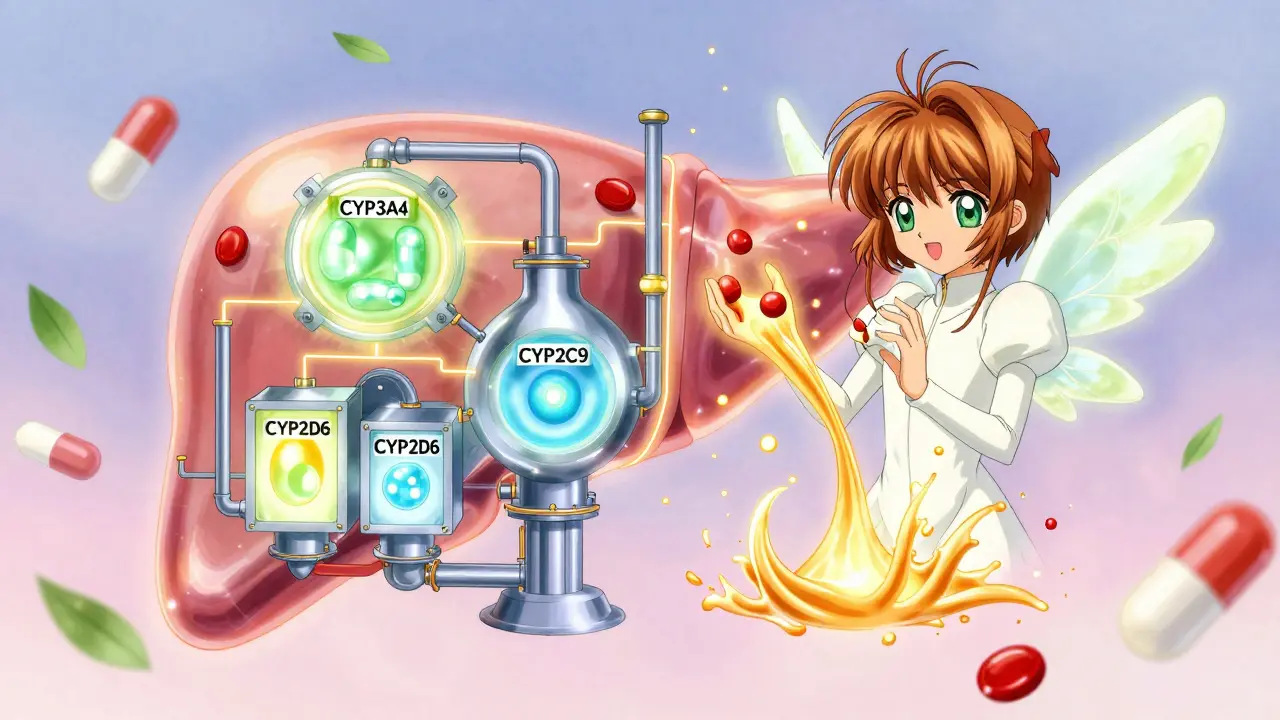
Your liver doesn’t just filter toxins. It’s also the main factory that breaks down most drugs. This job is handled by a group of enzymes called cytochrome P450, or CYP enzymes. The big players here are CYP3A4, CYP2C9, and CYP2D6. These enzymes are like specialized machines: each one processes a different set of drugs. Milk thistle’s active ingredient, silymarin, can interfere with these machines-but not in a simple, predictable way.Some studies show silymarin blocks CYP2C9, slowing down how fast your body clears drugs like warfarin (a blood thinner) or phenytoin (an anti-seizure medicine). That means those drugs build up in your system. Too much warfarin can cause dangerous bleeding. Too much phenytoin can cause dizziness, confusion, or even seizures.
But here’s the twist: other studies show that after taking milk thistle for more than a week, your liver might actually start producing more of these enzymes. That’s called induction. Now your body breaks down drugs faster. Warfarin might stop working well enough to prevent clots. Statins could lose their cholesterol-lowering effect. This flip-flop effect-first inhibition, then induction-is why doctors can’t give a simple yes-or-no answer.
Real-World Cases: When Milk Thistle Changed Drug Effects
Lab studies are one thing. Real people are another. On Reddit, a user posted in February 2024 about how starting milk thistle caused their INR (a blood clotting measure for warfarin users) to spike from 2.5 to 5.8. They ended up in the ER with bruising all over their arms. After stopping milk thistle, their INR dropped back to normal in five days. That’s not rare. Over 40 users on that thread reported similar INR changes.On the flip side, a 2019 clinical trial gave 24 healthy volunteers 420 mg of silymarin daily for two weeks. They tested how well the body processed midazolam, a drug broken down by CYP3A4. The result? Only a 7.2% change in drug levels-well below the 20% threshold that doctors consider clinically meaningful. So for some drugs, milk thistle might do nothing at all.
Then there’s the case of a 58-year-old man with hepatitis C who took 420 mg of milk thistle daily while on sofosbuvir/velpatasvir, a direct-acting antiviral. He reported zero issues. His liver enzymes improved. His viral load dropped. No drug interaction signs. Why? Because direct-acting antivirals aren’t primarily metabolized by CYP enzymes. They use different pathways. So context matters-big time.
What Drugs Should You Worry About?
Not all drugs are equal. Some are very sensitive to tiny changes in how they’re processed. These are called narrow therapeutic index drugs. A small change in blood levels can cause harm. Here’s where milk thistle becomes risky:- Warfarin (Coumadin): CYP2C9 metabolism. Even a 10% change in levels can cause bleeding or clots.
- Phenytoin (Dilantin): CYP2C9 and CYP2C19. Too much = toxicity. Too little = seizures.
- Statins (like simvastatin, atorvastatin): Mostly CYP3A4. Higher levels can cause muscle damage.
- Immunosuppressants (tacrolimus, cyclosporine): CYP3A4. Too high = kidney damage. Too low = organ rejection.
- Some antidepressants (sertraline, fluoxetine): CYP2D6. Can lead to serotonin syndrome if levels rise.
Drugs like metformin, levothyroxine, or most antibiotics? Not much to worry about. They don’t rely on the same liver enzymes. But if you’re on anything listed above, don’t guess. Get tested.
Why the Confusion? The Science Is Still Unsettled
You’ll find conflicting advice everywhere. The European Medicines Agency says milk thistle is unlikely to cause interactions at normal doses. The U.S. NIH’s LiverTox database says it’s “possibly interacting” with CYP2C9 substrates. Dr. Joseph Pizzorno, a leading natural medicine expert, says the risk is overstated-only 12 case reports in 40 years. Dr. David Bernstein, a top hepatologist, says caution is essential, especially for people on multiple drugs.Here’s why the disagreement exists:
- Dose matters: 140 mg vs. 420 mg can trigger different responses.
- Time matters: Inhibition shows up in days. Induction takes 7-10 days.
- Product quality varies: Only 32% of supplements meet their label claims for silymarin content.
- Genetics matter: Some people naturally process CYP enzymes faster or slower due to DNA differences.
There’s no universal answer. That’s why blanket statements like “milk thistle is safe with everything” are misleading.
What Should You Do? A Practical Guide
If you’re taking milk thistle-or thinking about it-here’s what to do:- Check your meds. Make a list of everything you take, including over-the-counter drugs and supplements. Look up each one’s metabolism pathway. If it’s processed by CYP2C9, CYP3A4, or CYP2D6, be cautious.
- Don’t start or stop milk thistle suddenly. If you’re already taking it and want to quit, do it gradually. Sudden changes can cause rebound effects.
- Get lab tests before and after. If you’re on warfarin, check your INR before starting milk thistle, then again at day 7 and day 14. For phenytoin, check levels at day 3, 7, and 14. For statins, monitor liver enzymes and muscle pain.
- Use standardized extracts. Look for products labeled 70-80% silymarin. Avoid whole herb powders-they’re unpredictable.
- Talk to your pharmacist. They see drug interactions daily. Ask: “Could milk thistle affect my meds?” Show them your list.
- Track your symptoms. Unexplained bruising, dizziness, muscle pain, or changes in mood? These could be signs of altered drug levels.
When to Avoid Milk Thistle Altogether
There are situations where the risk outweighs any benefit:- You’re on warfarin and your INR is already unstable.
- You’ve had an organ transplant and are on immunosuppressants.
- You’re taking phenytoin or other anti-seizure meds with a history of breakthrough seizures.
- You’re pregnant or breastfeeding. There’s not enough safety data.
- You’re scheduled for surgery. Stop milk thistle at least 2 weeks before to avoid bleeding risks.
For most people with fatty liver disease, milk thistle is safe and helpful. Studies show it improves liver enzymes in 65% of NAFLD cases. But if you’re on meds, it’s not a free pass. It’s a calculated risk.
The Bigger Picture: Supplements Aren’t Regulated Like Drugs
Milk thistle is sold as a dietary supplement in the U.S., not a medicine. That means the FDA doesn’t require proof of safety or interaction data before it hits the shelf. Companies don’t have to test how their product interacts with 20 different drugs. That’s why product quality varies so much. One bottle might have 60% silymarin. Another might have 90%. And you won’t know which is which unless you pay for third-party testing.That’s why doctors are frustrated. They see patients come in with liver damage from statins, but the patient says, “I’ve been taking milk thistle for months.” The doctor has no way to know if it caused the problem, helped it, or did nothing.
The future might fix this. Researchers are testing new forms of silymarin-like silybin bound to phosphatidylcholine-that may reduce liver enzyme interference while keeping the liver-protecting benefits. But those aren’t widely available yet.
Can milk thistle raise liver enzymes?
Yes, in rare cases. While milk thistle is usually associated with lowering liver enzymes like ALT and AST, some studies-including those in Marceddu’s 2022 review-show that a small percentage of users (about 13.8%) experienced elevated liver enzymes after taking it. This may be due to individual sensitivity, poor-quality supplements, or underlying liver conditions. If your liver enzymes rise after starting milk thistle, stop it and get tested.
Is milk thistle safe with statins?
It’s uncertain. Statins like simvastatin and atorvastatin are broken down by CYP3A4, which milk thistle may inhibit or induce. Most clinical trials show no significant interaction, but case reports exist of muscle pain or elevated liver enzymes in people taking both. If you’re on a statin, monitor for muscle soreness, weakness, or dark urine. Check your liver enzymes 2-4 weeks after starting milk thistle.
How long does it take for milk thistle to affect drug metabolism?
Inhibition of enzymes like CYP2C9 can occur within 24-48 hours of first use. Induction-where your liver starts making more enzymes-takes longer, usually 7-10 days. This means the risk isn’t immediate, but it also doesn’t show up right away. That’s why monitoring for 2-4 weeks after starting milk thistle is critical.
Does milk thistle help with alcohol-related liver damage?
Yes, but it’s not a cure. Studies show milk thistle can reduce liver inflammation and improve enzyme levels in people with alcohol-related liver disease. However, it does not reverse scarring (fibrosis) or prevent further damage if alcohol use continues. It’s best used as a supportive tool alongside abstinence and medical care.
Can I take milk thistle with vitamin D or fish oil?
Yes. Vitamin D and fish oil are not metabolized by CYP enzymes. They don’t interact with milk thistle in any clinically meaningful way. These are safe combinations and are often recommended together for liver support.
What’s the best dose of milk thistle for liver support?
Most studies use 140-420 mg of standardized silymarin (70-80% concentration) per day, divided into 2-3 doses. For general liver support, 140 mg twice daily is common. For more advanced conditions like NAFLD, 420 mg daily is often used. Always choose a product with third-party testing (USP, NSF, or ConsumerLab) to ensure quality.
Final Thought: Knowledge Is Your Best Defense
Milk thistle isn’t dangerous. But it’s not harmless, either. It’s a powerful botanical with real effects on your body’s drug-processing system. If you’re healthy and not on meds, it’s likely safe. If you’re on blood thinners, seizure drugs, or immunosuppressants, it’s a potential landmine.Don’t rely on Google. Don’t trust supplement labels. Talk to your doctor. Bring your bottle. Show them your meds. Ask: “Could this interact with what I’m taking?” If they don’t know, ask for a pharmacist consult. Your liver might thank you-and so might your next lab results.







Danielle Stewart December 19, 2025
Just wanted to say thanks for laying this out so clearly. I’ve been taking milk thistle for my fatty liver and was worried about my statin, but didn’t know how to check. Now I’m scheduling a pharmacist consult this week.
Knowledge is power, and this post is basically a free medical consultation.
mary lizardo December 20, 2025
One must question the intellectual integrity of a society that permits the unregulated sale of pharmacologically active botanicals under the guise of ‘dietary supplements.’ This is not medicine; it is pharmaceutical anarchy.
The FDA’s abdication of oversight in this domain constitutes a dereliction of duty, and the public’s willingness to self-medicate with unstandardized, untested phytochemicals is nothing short of pathological.
jessica . December 22, 2025
They dont want you to know this but milk thistle is a cover for big pharma to sell more warfarin. The FDA and WHO are in on it. They make you think its safe so you keep taking your pills while they profit.
Also the ‘studies’? All funded by drug companies. Real doctors know this. You think your INR is ‘normal’? They control the labs too.
Ryan van Leent December 22, 2025
I’ve been taking milk thistle for 3 years with my blood pressure med and never had a problem so this whole thing is overblown
People panic over nothing and then go to the doctor and get prescribed more drugs to fix the panic
Just stop being so scared of herbs and start trusting your body
Also I read this whole thing and I’m pretty sure the author just wants you to buy their ebook
Isabel Rábago December 23, 2025
If you’re on warfarin and you’re thinking about milk thistle, you’re already playing Russian roulette with your blood.
There’s no such thing as ‘natural’ when it comes to biochemistry. Everything interacts. Everything has a price.
Stop romanticizing herbs. They’re not tea. They’re potent molecules that rewrite your internal chemistry.
If you don’t get lab work done before and after, you’re not being careful-you’re being negligent.
And yes, your ‘holistic’ friend who swears by it? She’s lucky. Not wise.
Anna Sedervay December 23, 2025
The very notion that a layperson can safely self-administer a phytochemical with known CYP450 modulation potential-without genomic profiling, therapeutic drug monitoring, or pharmacokinetic consultation-is not merely irresponsible; it is a symptom of epistemic decay in the post-truth era.
One wonders whether the proliferation of such supplements is an act of corporate malfeasance or a collective surrender to magical thinking.
And yet, the market thrives. Because ignorance is profitable.
Matt Davies December 25, 2025
This post is a goddamn masterpiece. Like, seriously. I read it at 2am while sipping chamomile tea (which, by the way, doesn’t mess with CYP3A4, thank you very much) and felt like I’d just been handed a survival guide for modern life.
Most people treat supplements like candy. You? You treated them like live grenades with instruction manuals.
Thank you for not sugarcoating it. The world needs more of this-clear, calm, and brutally honest.
Ashley Bliss December 27, 2025
It’s not just about milk thistle. It’s about the entire illusion of control we’ve built around our bodies.
We think we can ‘detox’ with a bottle from the health store while still eating processed food, drinking alcohol, and scrolling until 3am.
We want the magic pill. The herbal savior. The quick fix that doesn’t require us to change anything real.
But the liver doesn’t care about your intentions. It doesn’t care if you ‘mean well.’ It just metabolizes.
And when it’s overwhelmed? It doesn’t scream. It just… stops.
And then you wake up with jaundice and a $40,000 hospital bill.
And you’ll blame the supplement.
But the real villain? The belief that healing can be bought.
And that’s the tragedy.
holly Sinclair December 28, 2025
What’s fascinating here isn’t just the enzyme kinetics-it’s the epistemological tension between anecdotal experience and clinical evidence. One person’s ‘miracle cure’ is another’s ‘silent killer,’ and both are equally real to them.
But science doesn’t operate on personal truth. It operates on reproducibility, variability, and dose-response curves.
And yet, the human brain is wired to distrust systems that don’t give us binary answers. We crave yes/no. Safe/dangerous. Good/bad.
But biology is a gradient. A spectrum. A dance between genetics, timing, dosage, and gut microbiome.
So when we say ‘milk thistle is safe,’ we’re not saying anything true. We’re saying something comforting.
And comfort, in medicine, is often the most dangerous drug of all.
Monte Pareek December 29, 2025
Look I’ve been a pharmacist for 22 years and I’ve seen this exact scenario a hundred times
People take milk thistle because they saw a YouTube video or their cousin’s yoga teacher said it’s ‘cleansing’
They don’t tell their doctor because they’re afraid they’ll be judged
Then they end up in the ER with a bleeding ulcer or rhabdo from statins and they’re like ‘but I was just taking herbs’
Here’s the truth: if you’re on meds that have a narrow therapeutic window you don’t get to play guesswork with your liver
Standardized extract? Good. 70% silymarin? Great. But still? Tell your pharmacist. Show them the bottle. Ask them to check the interaction database
It takes 3 minutes
And it could save your life
And if your doctor doesn’t know? Find a new one
This isn’t about being paranoid
This is about being alive
Allison Pannabekcer December 29, 2025
I love how this post doesn’t demonize milk thistle or fear-monger. It just says: here’s the science, here’s the risk, here’s how to stay safe.
That’s the kind of middle ground we need more of.
Not ‘all herbs are evil’ and not ‘everything’s fine.’
Just… here’s what you need to know to make a smart choice.
And honestly? That’s the most respectful way to treat people.
Thanks for writing this. I’m sharing it with my entire family.
Sarah McQuillan December 30, 2025
Actually I think this is all hype
Most of these ‘interactions’ are from people taking 1000mg of some cheap powder from Amazon
Real silymarin in proper doses? I’ve been taking it with my blood pressure med for 5 years and my labs are perfect
Also I’ve seen people get ‘adverse reactions’ to water
Just because something *can* interact doesn’t mean it *will*
And the FDA doesn’t regulate drugs either so who’s the real villain here
Aboobakar Muhammedali December 30, 2025
Thank you for this post
I am from India and we use milk thistle in Ayurveda for liver but we never knew about CYP enzymes
My uncle took it with his cholesterol medicine and got very weak muscles
We thought it was aging
Now I understand
Will show this to my family
They think herbs are always safe
They need to know
Thank you again