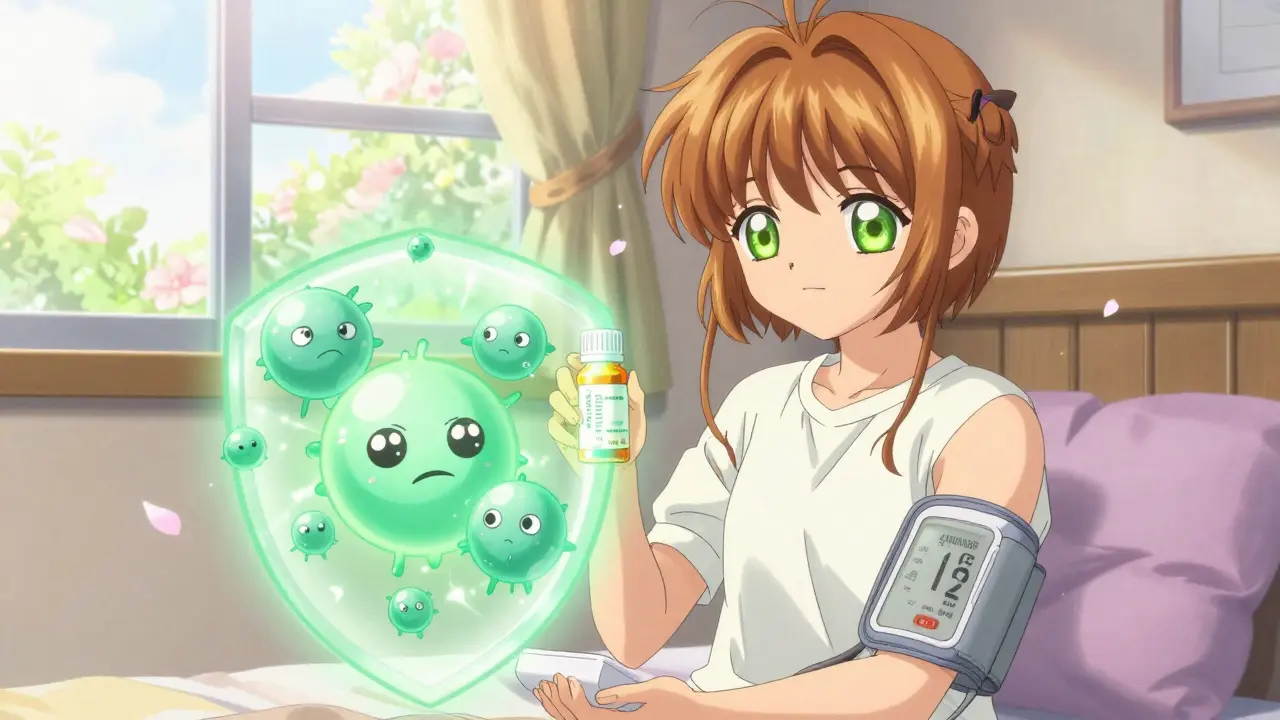
When you’re sneezing, itching, or fighting a stuffy nose from allergies, antihistamines can be a lifesaver. But if you have high blood pressure, you might be wondering: Are antihistamines safe for me? The answer isn’t simple. Some antihistamines barely touch your blood pressure. Others? They can cause drops-or even spikes-especially if they’re mixed with decongestants. Knowing which is which could keep you out of the ER.
How Antihistamines Work (And Why Blood Pressure Gets Involved)
Antihistamines block histamine, a chemical your body releases during allergic reactions. Histamine doesn’t just make your nose run-it also relaxes blood vessels. That’s why allergic reactions often cause redness, swelling, and sometimes even a drop in blood pressure. When you take an antihistamine, you’re shutting down that histamine signal. But blocking histamine doesn’t just stop sneezes. It can also change how your blood vessels behave.
Here’s the twist: histamine helps keep blood vessels slightly open. Block it too much, and your vessels might tighten up-or, in some cases, go too loose. That’s why some people feel dizzy after taking diphenhydramine (Benadryl). It’s not just drowsiness. It’s a shift in vascular tone.
First-Generation vs. Second-Generation: The Big Difference
Not all antihistamines are created equal. There are two main types, and your blood pressure response depends heavily on which one you pick.
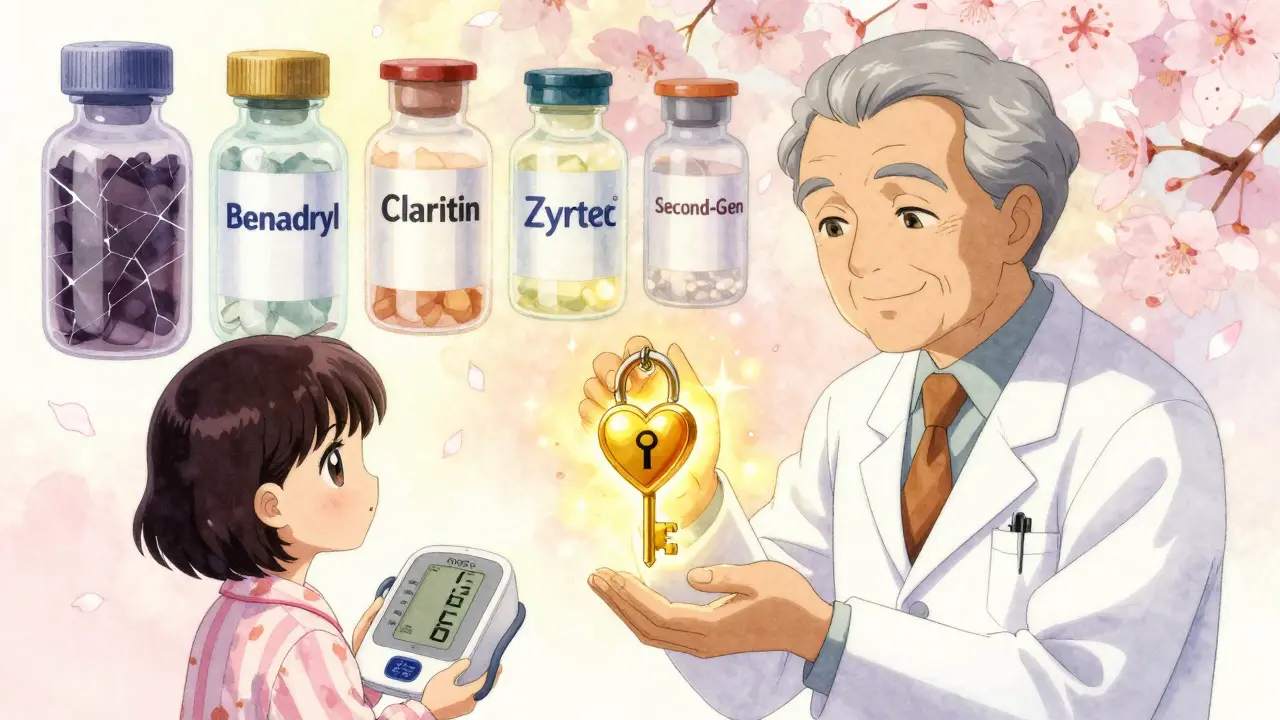
- First-generation: These include diphenhydramine (Benadryl), chlorpheniramine, and hydroxyzine. They cross the blood-brain barrier easily, which is why they make you sleepy. But they also affect your heart and blood vessels more directly. IV diphenhydramine, for example, can drop systolic blood pressure by 8-12 mmHg within 15 minutes. Oral doses are milder, but still enough to cause dizziness or lightheadedness-especially when standing up.
- Second-generation: These are loratadine (Claritin), cetirizine (Zyrtec), fexofenadine (Allegra), and desloratadine. They’re designed to stay out of your brain. That means less drowsiness. But more importantly, they barely touch your blood pressure. Studies show 97% of users have no significant change in BP. Fexofenadine, in particular, is metabolized differently and avoids dangerous drug interactions.
The American Heart Association’s 2022 guidelines say second-generation antihistamines are safe for people with hypertension. First-gen? Proceed with caution.
Decongestants Are the Real Problem
Here’s where things get tricky. Many allergy pills aren’t just antihistamines-they’re combo packs. Look at the label: Claritin-D, Zyrtec-D, Allegra-D. The “D” stands for pseudoephedrine, a decongestant.
Pseudoephedrine tightens blood vessels to clear nasal passages. That’s great for congestion. Bad news for your blood pressure. Studies show it can raise systolic pressure by about 1 mmHg on average. But for someone with uncontrolled hypertension? That 1 mmHg can turn into a 5-10 mmHg spike. A 2022 GoodRx survey found 47% of people using decongestant combos reported noticeable BP increases.
Other combo ingredients matter too:
- Acetaminophen (Tylenol) in allergy meds can add 3-5 mmHg to BP at max daily doses.
- Ibuprofen (Advil) in cold meds can raise BP by 3-4 mmHg, especially in people already on blood pressure meds.
Bottom line: If you have high blood pressure, avoid anything labeled “-D,” “Multi-Symptom,” or “Cold & Allergy.” Stick to plain antihistamines.

Who’s at Risk? And What to Watch For
Not everyone with hypertension needs to panic. But certain people should be extra careful:
- Those with uncontrolled hypertension (systolic over 140 mmHg)
- People on multiple blood pressure medications
- Those with heart rhythm problems (like long QT syndrome)
- Patients with liver disease (affects how drugs are broken down)
Also, watch for these signs after taking an antihistamine:
- Dizziness or lightheadedness
- Blurred vision
- Rapid heartbeat
- Feeling faint when standing up
These aren’t just side effects-they’re warning signs your body’s blood pressure regulation is being disrupted.
Monitoring Your Blood Pressure: A Simple Guide
If you’re hypertensive and need an antihistamine, here’s what to do:
- Check your baseline: Take your BP at home 2-3 days before starting the medication. Write down the numbers.
- Use second-gen only: Pick loratadine, fexofenadine, or cetirizine. Avoid diphenhydramine unless absolutely necessary.
- Monitor after first dose: If you’re high-risk, check your BP 2-4 hours after taking it. If it jumps more than 10 mmHg, stop and call your doctor.
- Don’t mix: Never combine antihistamines with decongestants, NSAIDs, or alcohol.
- Track long-term: Keep a log for a week. If your average BP stays 5 mmHg higher than baseline, talk to your allergist about alternatives.
The Cleveland Clinic recommends home monitors over clinic readings-because stress from being at the doctor’s office can skew results. Your real baseline is what you see at home.
What the Experts Say
Dr. Richard Nicklas from the American College of Allergy, Asthma & Immunology says second-generation antihistamines are now the gold standard for patients with heart conditions. He points to studies showing cetirizine may even reduce inflammation in blood vessels-a potential bonus for people with hypertension.
Meanwhile, the FDA removed terfenadine and astemizole from the market in the late 1990s after they caused dangerous heart rhythms. These were first-gen drugs that blocked potassium channels in the heart. Today’s second-gen drugs don’t do that. They’re built differently.
Even the NIH is researching genetic differences in how people metabolize antihistamines. A 2022 study found 14 gene variants affect how quickly your body clears these drugs. If you’re a slow metabolizer (common in people with CYP3A4 or CYP2D6 variants), even normal doses can build up. That’s why some hospitals now test high-risk patients before prescribing.
Real People, Real Experiences
Reddit user u/HypertensionWarrior wrote: “I got IV Benadryl for a severe reaction during allergy testing. My systolic dropped 12 points in 30 minutes. They had me sit for 30 minutes before letting me leave. I didn’t know antihistamines could do that.”
Another user on r/Allergy said: “I switched from Benadryl to Claritin. My dizziness stopped. My BP stayed stable. I wish I’d known this years ago.”
On the flip side, 22% of hypertensive users who took diphenhydramine reported dizziness linked to low BP. And 14% of Drugs.com reviews mentioned “blood pressure drops” in their personal logs.
What You Should Do Right Now
If you’re on blood pressure meds and reach for allergy relief:
- Check your medicine bottle. Does it say “-D”? Put it back.
- Switch to plain loratadine, fexofenadine, or cetirizine. They’re cheap, available OTC, and safe.
- Take your BP before and after your first dose. Keep a log.
- If you feel dizzy, lightheaded, or your heart races-stop and call your doctor.
- Don’t assume “natural” or “herbal” allergy remedies are safer. Some contain hidden stimulants.
There’s no need to suffer through allergies just because you have high blood pressure. You just need the right drug. And now you know which one to pick.
Can antihistamines cause high blood pressure?
Pure antihistamines like loratadine, cetirizine, and fexofenadine don’t raise blood pressure. But combination products with decongestants (like pseudoephedrine) can increase systolic pressure by 5-10 mmHg. Always check the label for “-D” or “decongestant.”
Is Benadryl safe if I have high blood pressure?
Diphenhydramine (Benadryl) is a first-generation antihistamine and can lower blood pressure, especially if taken in high doses or via IV. It may cause dizziness or fainting. For people with hypertension, it’s not the best choice. Safer alternatives like Claritin or Zyrtec are available.
What’s the safest antihistamine for high blood pressure?
Fexofenadine (Allegra) and loratadine (Claritin) are the safest. They don’t cross the blood-brain barrier, have minimal drug interactions, and show no significant effect on blood pressure in clinical trials. Cetirizine (Zyrtec) is also safe but may cause slight drowsiness in some people.
Can I take antihistamines with my blood pressure medicine?
Second-generation antihistamines like loratadine and fexofenadine generally don’t interact with blood pressure medications. But avoid first-gen antihistamines like diphenhydramine if you’re on beta-blockers or calcium channel blockers-they can amplify drowsiness or dizziness. Always check with your pharmacist before mixing meds.
Do antihistamines affect heart rate?
First-generation antihistamines like diphenhydramine can cause a slight increase in heart rate due to anticholinergic effects. This isn’t dangerous for most people, but if you have arrhythmias or a history of heart problems, it’s best to avoid them. Second-generation antihistamines rarely affect heart rate.






becca roberts March 16, 2026
Oh wow, so Benadryl is basically a stealthy blood pressure assassin? I thought it was just the thing that made me nap for three hours. Guess I’ve been lucky-or stupid. Either way, switching to Claritin was the best decision I ever made after my doctor side-eyed me for using it with my beta-blockers. Who knew allergies could be a cardio workout?
Andrew Muchmore March 18, 2026
Avoid -D products. Plain antihistamines are fine. Fexofenadine is best. Check labels. Don't mix with NSAIDs or alcohol. Done.
Srividhya Srinivasan March 19, 2026
Hmm... let me guess-Big Pharma is hiding the truth again! Did you know that the FDA removed terfenadine because they were pressured by pharmaceutical lobbyists who wanted to replace it with *more expensive* second-gen drugs? And now they're pushing fexofenadine like it's holy water? Meanwhile, natural remedies like butterbur and quercetin have been proven in peer-reviewed studies to outperform antihistamines-with ZERO side effects! But nooo, you'll take a chemical that's been 'FDA-approved' because you're too lazy to research real solutions. Wake up, sheeple!
Sanjana Rajan March 20, 2026
I swear, half the people on here are still using Benadryl like it's 1998. I had a cousin who passed out in the grocery store after taking it for a pollen allergy. He was 42. Had no idea his BP was already borderline. Now he’s on three meds and blames ‘allergies’ for his heart issues. People. Just. Read. The. Label. It’s not rocket science. If it says ‘-D’, leave it on the shelf. Your blood vessels will thank you.
cara s March 21, 2026
It is, perhaps, a curious and somewhat alarming phenomenon that the very substances we rely upon to alleviate the minor discomforts of seasonal allergies-substances that, on the surface, appear benign and innocuous-may, in fact, exert profound and clinically significant effects on our cardiovascular homeostasis. I am, of course, referring to the anticholinergic properties of first-generation antihistamines, which, when absorbed systemically, may lead to vasomotor instability, orthostatic hypotension, and, in rare but documented cases, reflex tachycardia. One must, therefore, exercise considerable caution, particularly if one is concurrently managing hypertension with pharmacologic agents that modulate autonomic tone. The implications are not trivial.
Amadi Kenneth March 23, 2026
Wait… wait… so you’re telling me the government let these drugs stay on shelves? After what happened with Thalidomide? And now they’re saying it’s ‘safe’? What about the 2018 CDC report that linked 12,000 ER visits to OTC allergy meds? They buried it under ‘anecdotal evidence’! And don’t even get me started on how the FDA approves drugs with ‘minimal BP effect’-they define ‘minimal’ as under 5 mmHg-but what if you’re already at 160/100? That 5 is a death sentence! They’re lying to us. Always are.
Shameer Ahammad March 25, 2026
The scientific consensus, as articulated by the American College of Allergy, Asthma, and Immunology, unequivocally supports the use of second-generation antihistamines in the hypertensive population. Furthermore, the pharmacokinetic profile of fexofenadine-specifically its lack of CYP3A4 metabolism and minimal P-glycoprotein interaction-renders it the most suitable agent for patients on multiple antihypertensive regimens. In contrast, diphenhydramine exhibits significant antimuscarinic activity, which may lead to paradoxical sympathetic activation and subsequent elevations in peripheral vascular resistance. One must, therefore, exercise pharmacological discernment.
Alexander Pitt March 25, 2026
If you have high blood pressure, use loratadine, fexofenadine, or cetirizine. Don’t use anything with pseudoephedrine. Don’t use Benadryl unless you have no other choice. Check your BP before and after the first dose. If it jumps more than 10 points, stop. Talk to your doctor. Simple. No magic. No conspiracy. Just science.
Manish Singh March 26, 2026
I’ve been managing hypertension for 8 years and allergies for 15. I used to take Benadryl because it ‘worked better.’ Then I got dizzy walking to my car one morning. My wife called 911. Turned out my BP dropped to 88/54. I didn’t even know it was possible. Switched to Allegra. No dizziness. No panic. Just peace. If you’re reading this and still using first-gen-please, just try one pill of the second-gen. Your body will thank you. No drama. Just change.
Nilesh Khedekar March 26, 2026
I heard a guy on YouTube say that antihistamines are secretly used by the government to make people sleepy so they don’t notice the chemtrails. But then I read this article and realized-oh wait, maybe Benadryl really does make you dizzy? That’s wild. I thought it was just the pollen. So now I’m confused. Should I take Zyrtec or just go outside and breathe the ‘poison’? I think I’ll just eat more honey. That’s what my grandma did. She lived to 98. She never took a pill.
Robin Hall March 26, 2026
The regulatory framework governing the approval of non-prescription antihistamines is fundamentally flawed. The FDA’s criteria for ‘minimal impact on blood pressure’ is based on population averages, which inherently disregard individual pharmacogenomic variability. For instance, individuals homozygous for CYP3A4*22 or CYP2D6 poor metabolizer phenotypes are at significantly elevated risk of drug accumulation and subsequent hemodynamic instability. The absence of mandatory pre-market genetic screening constitutes a gross violation of the duty of care. This is not negligence. This is systemic malfeasance.
jared baker March 28, 2026
Plain antihistamine = good. Antihistamine + decongestant = bad. Benadryl = risky. Claritin = safe. Check your bottle. If it says ‘-D’-put it down. You’re welcome.