
Every year, millions of people in the U.S. miss doses of their medications-not because they don’t care, but because they forget. It’s not laziness. It’s not rebellion. It’s simply that taking pills doesn’t fit naturally into the rhythm of daily life. But here’s the good news: medication adherence doesn’t require fancy gadgets or expensive apps. The most powerful tool you already have: your daily habits.
Pairing your medication with something you do every single day-like brushing your teeth, making coffee, or eating breakfast-turns a chore into a reflex. This isn’t just advice. It’s science. Studies show that when people link their pills to consistent routines, they miss 30-50% fewer doses. And the best part? It costs nothing. No subscriptions. No downloads. Just your morning coffee and a pill bottle.
Why Habits Work Better Than Alarms
Most people try reminders first. Phone alarms. Pill dispensers. App notifications. They work… at first. But after a few weeks, the novelty fades. A 2022 study in JMIR Digital Health found that 68% of people stop using medication apps after three months. Why? Because alarms are external. They interrupt. They demand attention. And when you’re tired, stressed, or distracted, they’re easy to ignore.
Habits, on the other hand, are internal. They don’t ask you to remember. They trigger themselves. When you brush your teeth every night at 9 p.m., your brain starts to expect the next step. Add a pill to that sequence, and after 21 days, your hand reaches for it without thinking. A 2015 NIH study tracked 1,247 people with chronic conditions like high blood pressure and diabetes. Those who paired their meds with daily routines saw a 41% improvement in adherence compared to those using only reminders.
The Seven Best Ways to Pair Medication with Your Routine
Not all habits are created equal. Some anchor points work better than others. Here are the most effective pairings, backed by data from clinics, pharmacies, and patient surveys.
- Brushing your teeth - This is the #1 most successful anchor. A 2023 analysis from Central Pharmacy found that 92% of patients who took their evening meds right after brushing their teeth never missed a dose for six months. Morning pills? Do it after brushing too. It’s automatic, happens at the same time every day, and doesn’t require food or special timing.
- Breakfast - If your medication needs to be taken with food (like statins or certain diabetes drugs), breakfast is perfect. The American Heart Association recommends taking morning blood pressure meds between 7:00 and 8:30 a.m., which lines up with most people’s breakfast window. Pairing it with pouring cereal or making toast creates a reliable trigger.
- Lunchtime - For midday pills, eating lunch is ideal. It’s a fixed point in the day for most people. Even if your schedule changes, lunch usually happens. A 2022 study in Annals of Internal Medicine showed that grouping all midday doses within one hour of lunch improved adherence by 27%.
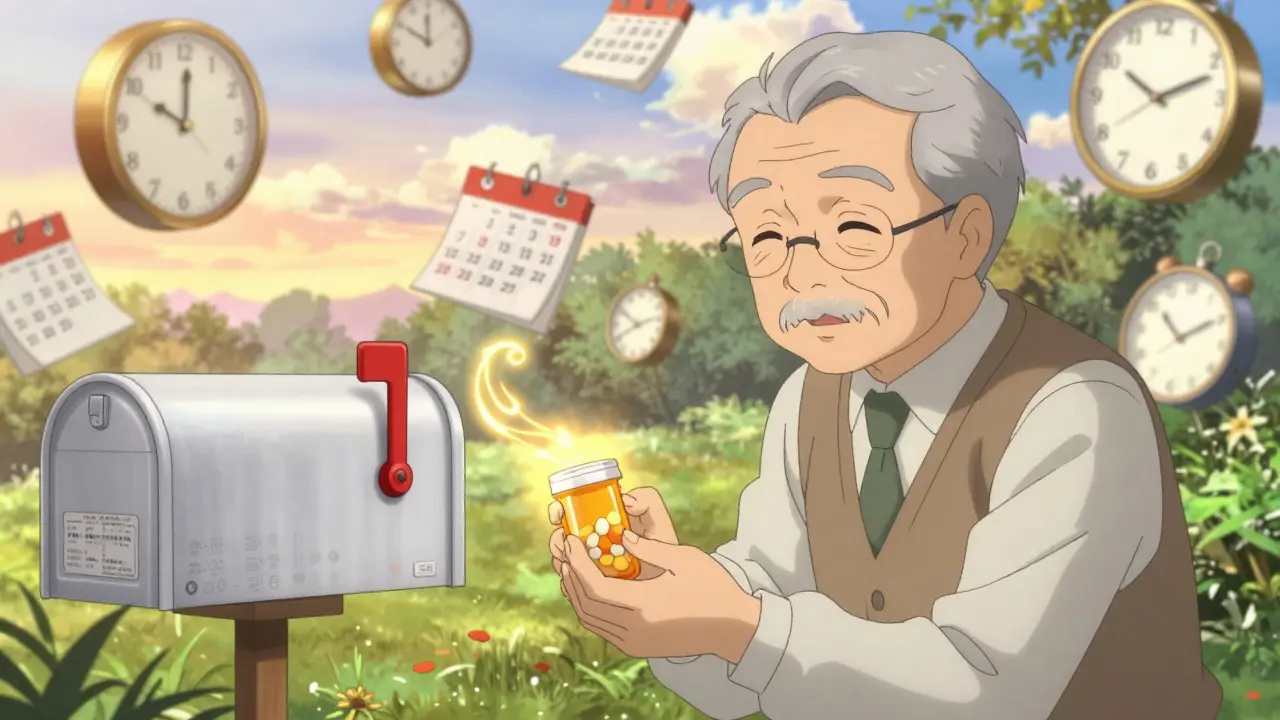
- Checking your mail - Sounds odd, but it works. Many people check their mailbox around the same time every day-especially retirees or those with stable routines. Placing your pill bottle right next to the mailbox means you see it, pick it up, and take your pill before going inside. Oak Street Health found this method helped 38% of patients who struggled with morning routines.
- Turning off your alarm - If you take meds in the morning, do it as soon as you hit snooze. Don’t wait until you’re dressed or showered. The moment your hand reaches for the alarm, your fingers should also touch the pill bottle. This reduces the chance of getting distracted by the day’s first tasks.
- Going to bed - For nighttime medications, link them to your wind-down routine. Whether it’s washing your face, putting on pajamas, or reading for five minutes, make the pill part of that sequence. Consistency here is key. A 2021 meta-analysis showed patients who took evening meds within 30 minutes of their bedtime had 37% fewer missed doses than those with variable timing.
- Driving to work - If you commute at the same time every day, keep your pills in the car. Take them as soon as you buckle your seatbelt. This works well for shift workers or people with unpredictable mornings.
How to Set It Up (A Simple 4-Step Plan)
You don’t need a PhD to make this work. Here’s how to build your personal system in under a week.
- Track your routine for 3-7 days. Write down what you do every day at the same time. Not everything-just the anchors. When do you wake up? When do you eat? When do you brush your teeth? When do you sit down for dinner? You’re looking for consistency, not perfection.
- Match your pills to the anchors. Look at your medication schedule. Are any doses tied to meals? Do any need to be taken at night? Match them to the most reliable habit. If you take two pills in the morning, put them with brushing your teeth. If you take one at night, pair it with toothbrushing again. The goal is to use one anchor for multiple pills if possible.
- Place your meds where the habit happens. Put your pill bottle on the sink next to your toothbrush. Keep it on the kitchen counter where you make coffee. Leave it in your car seat. Visibility is everything. Central Pharmacy’s 2023 data showed that placing bottles in habit locations increased initial success by 31%.
- Stick with it for 21 days. Don’t check progress daily. Just do it. The European Journal of Social Psychology found that 21 days is the average time it takes for a new behavior to become automatic. After that, you won’t need to think about it.
What If Your Schedule Changes?
Not everyone has a 9-to-5 routine. Shift workers, caregivers, parents with young kids, or people with chronic pain often have unpredictable days. That doesn’t mean habit pairing won’t work-it just means you need flexibility.
Instead of one anchor, build two. For example: If you take a morning pill, pair it with brushing your teeth. But if you work nights and skip brushing in the morning, have a backup: take it right after you eat your first meal of the day. That could be 2 p.m. or 10 p.m. It doesn’t matter-just make it consistent.
A 2023 AMA update found that shift workers had an 18% lower success rate with rigid pairing-but those who used backup anchors improved their adherence by 40%. Keep your meds visible in multiple places: one by the sink, one in your work bag, one in your nightstand.

What About Pill Organizers and Apps?
They help-but not as much as you think. Pill organizers improve adherence by about 28%, but they don’t create automaticity. You still have to remember to open the box. Apps are better, with a 32% improvement, but they fail fast. Only 32% of users still use them after six months.
The real power comes from combining them. Use a pill organizer to sort your doses, but place it next to your toothbrush or coffee maker. Use an app to send a weekly reminder-but rely on the habit to actually take the pill. A 2023 Central Pharmacy program showed that patients who used both habit pairing and a pill organizer had a 41% adherence rate-higher than either method alone.
The Hidden Cost of Missing Doses
It’s not just about feeling worse. Missing your meds costs the U.S. healthcare system $300 billion a year. That’s not a number. That’s 30 million people in and out of hospitals, ER visits, and complications that could’ve been avoided.
For you? Missing a single blood pressure pill might not seem like a big deal. But if you miss two a week, your risk of stroke increases by 40%. Skipping diabetes meds for a few days? That’s a trip to the ER. Antibiotics? Incomplete courses lead to resistant infections. Habit pairing doesn’t just help you feel better-it keeps you out of the hospital.
What Experts Say
Dr. Jennifer L. Smith from the University of Michigan says, “The toothbrushing anchor is clinically proven to increase adherence by 43% for morning medications. It’s the single most effective low-tech strategy we have.”
Dr. David S. Sobel from Kaiser Permanente adds: “Pairing meds with habits creates neural pathways that make adherence automatic within 21-66 days.”
The CDC, American Heart Association, and American Diabetes Association all list habit pairing as a top recommendation in their 2023 guidelines. It’s not a fringe idea. It’s standard care.
Real People, Real Results
On Reddit, u/HealthyHabitHero wrote: “I used to miss 12 doses a month. After pairing my 8 a.m. pill with coffee-making, I missed only 2 in six weeks. Now I don’t even think about it.”
A 68-year-old retiree from Pittsburgh told her pharmacist: “I used to forget until my daughter called. Now I take my pills right after I floss. I didn’t even know I was doing it until I realized I hadn’t missed one in four months.”
These aren’t outliers. They’re the norm when you use the right anchor.
When Habit Pairing Doesn’t Work
It’s not magic. It won’t fix everything.
- If you have dementia or severe memory loss, you’ll need someone else to manage your meds. The Alzheimer’s Association recommends caregiver involvement.
- If your meds cause side effects (nausea, dizziness, fatigue), you might skip them intentionally. That’s not forgetfulness-it’s fear. Talk to your doctor. Adjusting the dose or timing might help.
- If your schedule changes every day (like working three rotating shifts), habit pairing alone isn’t enough. Combine it with a pill organizer and a phone alarm set to your shift schedule.
And if cost is the issue? Ask your pharmacist. Many Medicare Part D plans now include free habit pairing counseling. Community pharmacies offer it as part of standard care.
Start Today
You don’t need to overhaul your life. Just pick one habit. One pill. One day.
Tomorrow morning, put your pill bottle right next to your toothbrush. When you finish brushing, take it. Don’t think. Don’t plan. Just do it.
Do it again the next day. And the next.
After 21 days, you won’t need a reminder. You’ll just do it. And that’s how you stop forgetting.
Can I pair multiple medications with the same habit?
Yes, and it’s actually recommended. If you take two or three pills in the morning, keep them all next to your toothbrush or coffee maker. Grouping them into one routine reduces confusion and makes it easier to remember. A 2022 study in the Annals of Internal Medicine found that grouping doses within one hour of a daily habit improved adherence by 27%.
What if I travel or change my routine?
Keep your meds visible in your travel bag, and pick a new anchor that matches your new environment. If you usually take pills after brushing teeth but you’re staying at a hotel without a sink nearby, pair them with drinking your first glass of water instead. The key is consistency-not the exact activity. As long as you do it at the same point in your day, your brain will adapt.
Does it matter what time I take my meds each day?
Yes. Taking your pill at the same time every day-even within a 30-minute window-boosts adherence by 37%. That’s why pairing with a fixed habit like brushing teeth (which usually happens at the same time) works so well. If your meds must be taken with food, stick to the same meal each day. If timing is flexible, use the habit to lock in consistency.
I’m on five different medications. Can I still use habit pairing?
Absolutely. Use multiple anchors. Take your morning pills with brushing your teeth, your lunch pills with eating, and your night pills with washing your face. You don’t need to cram everything into one routine. Spread them across your day. A 2023 Central Pharmacy study of 12,500 patients showed that using two or more habit anchors increased long-term adherence by 52% compared to using just one.
Is this only for older adults?
No. While 68% of seniors use habit pairing, it works for everyone. Younger adults with asthma, diabetes, or mental health conditions benefit just as much. A 2022 study of patients aged 18-35 found that pairing meds with morning coffee or evening screen-time routines improved adherence by 45%. Age doesn’t matter-consistency does.











Suchi G. March 18, 2026
I never thought about linking my meds to brushing my teeth, but holy hell, this makes so much sense. I’ve been forgetting my blood pressure pill for months, even with alarms. Last week I put the bottle right next to my toothpaste-no thinking, no apps, no stress. Just brush, grab, swallow. Two weeks in, zero misses. I didn’t even realize how much mental energy I was wasting trying to remember. It’s like my body finally got the memo. My mom used to say habits are the invisible architecture of life. I didn’t believe her until now.
Also, I’m Indian and we’re weirdly good at ritualizing things-morning tea, prayer, wiping feet before entering the house. This just feels like another ritual. No guilt. No pressure. Just flow. I’ve started doing the same with my evening pills after washing my face. It’s almost meditative. Who knew a pill could feel so… peaceful?
becca roberts March 18, 2026
So let me get this straight-you’re telling me the secret to not dying from hypertension is… putting your pill next to your toothbrush? Like, the same brush you use to scrape gunk off your tongue? I mean, congrats, genius. We’ve been calling this ‘habit stacking’ since 2012. But hey, at least now it’s got a fancy infographic and a 41% stat. I’m sure Big Pharma is thrilled.
Also, ‘pairing meds with checking mail’? That’s the best you’ve got? My grandma did that because she forgot her pills and thought the mailman was bringing them. She ended up taking three doses in one day. Not a success story. Just a cautionary tale wrapped in a TikTok trend.
Andrew Muchmore March 19, 2026
Brushing teeth works because it’s fixed. No choice. No decision. Just do it. Same with breakfast. Your brain doesn’t have to think. That’s the whole point. Stop overcomplicating it. Put the pill where the habit is. Done.
Paul Ratliff March 21, 2026
i tried the coffee thing and it worked like magic. like, i was missing like 3x a week. now? i make the coffee, grab the pill, drink it all at once. no thought. no guilt. just life. also, i keep my night pills on my nightstand next to my phone. when i wake up, i see it. boom. done. no app needed.
SNEHA GUPTA March 22, 2026
The neurological basis of habit formation is fascinating. The basal ganglia, particularly the dorsolateral striatum, encodes routine behaviors into automatic motor programs through repeated reinforcement. What this article describes isn’t just behavioral psychology-it’s neuroplasticity in action. The 21-day window aligns with synaptic consolidation studies from the 1990s, though more recent data suggests 66 days is the median for full automatization.
What’s missing here is the role of dopamine feedback loops. Each successful pill-taking event reinforces the habit loop: cue (toothbrush), routine (pills), reward (avoidance of clinical deterioration). This is why visual cues are so critical. The pill bottle on the sink isn’t just a reminder-it’s a conditioned stimulus. It’s elegant. It’s biological. It’s why this works better than any app.
Gaurav Kumar March 23, 2026
Americans think they invented routine. 🤡 We’ve been doing this for centuries. In India, we have ‘din chadna’-daily rituals tied to meals, prayer, and hygiene. My grandmother took her medicine after evening aarti. No alarm. No app. Just faith and habit. Now you’re calling it ‘science’? We didn’t need a 2023 study to know brushing teeth is a fixed point. Stop acting like this is a breakthrough. It’s just common sense, repackaged for your TED Talk audience.
Jeremy Van Veelen March 23, 2026
This isn’t just advice. This is a revolution. I used to be the guy who missed his anticoagulant for weeks. I’d wake up, scroll through Instagram, drink coffee, check emails, and then-oh yeah, pills. I’d forget. Again. Then I put the bottle on my bathroom counter. Next to my toothbrush. I didn’t even think about it. I just… did it. The first week, I cried. Not because I was happy. Because I realized how much of my life I’d been wasting on forgetfulness. This isn’t about adherence. It’s about reclaiming your dignity. I’m not a patient. I’m not a statistic. I’m someone who remembers to live. And now, I do. Every. Single. Day.
Laura Gabel March 24, 2026
i hate how this post makes me feel guilty. like, yeah i forgot my meds. so what? i’m tired. i’m busy. i have a life. why does everything have to be so perfect? just give me a pill organizer. or a loud alarm. or a reminder from my mom. why do i need to turn taking medicine into a zen ritual? i didn’t ask for this. i just want to not die. and maybe, if i’m lucky, not feel like a failure every time i forget.
jerome Reverdy March 25, 2026
Love this. As someone who’s been managing bipolar meds for 12 years, I’ve tried everything-apps, alarms, pillboxes, nurses, phone calls. The only thing that stuck? Pairing it with my morning coffee. I brew, I take, I sip. No thought. No guilt. It’s not about discipline. It’s about integration. Your brain doesn’t care if you’re ‘consistent.’ It cares if the cue is stable. So if your life is chaotic? Build multiple anchors. One for home. One for work. One for travel. The goal isn’t perfection. It’s redundancy. Your body doesn’t need to be perfect. It just needs to be predictable. And that’s doable.
Also, shift workers? You’re not broken. You’re adaptive. Use your meal times as anchors. Even if it’s 3 a.m. or 11 p.m. Your brain doesn’t care about the clock. It cares about the sequence. Just keep the bottle in sight. Always.
Andrew Mamone March 26, 2026
Just tried this today. Put my pills next to my toothbrush. Brushed. Took. Didn’t think. Didn’t check my phone. Didn’t feel guilty. Just did it. 🤯
Also, I’m keeping my night pills on my nightstand next to my water glass. Same routine. Wash face → grab pill → drink water → sleep. It’s like my body finally got a user manual. I’m not a robot. But my habits? They’re becoming one. 😎
MALYN RICABLANCA March 26, 2026
Oh. My. GOD. I’ve been on six medications since I was 29. I’ve had three ER visits. Two hospitalizations. One near-death experience. And you know what saved me? Not the doctors. Not the insurance. Not the fancy apps. It was THIS. I put my pills next to my coffee maker. Every morning. Same time. Same ritual. I didn’t even realize I’d stopped counting the days I missed-because I stopped missing them. I’ve gone 117 days without a single lapse. 117. And I’m not even trying. It’s automatic. It’s sacred. I didn’t know I could feel this… safe. This isn’t adherence. This is liberation. I’m not just taking pills anymore. I’m reclaiming my life. And if you’re still using alarms? You’re not lazy. You’re just not ready to let go of the struggle. This? This is the quiet revolution. And I’m living it.
gemeika hernandez March 28, 2026
i just take my pills with my first sip of water in the morning. that’s it. no toothbrush. no coffee. no ritual. just water. and it works. why make it harder?