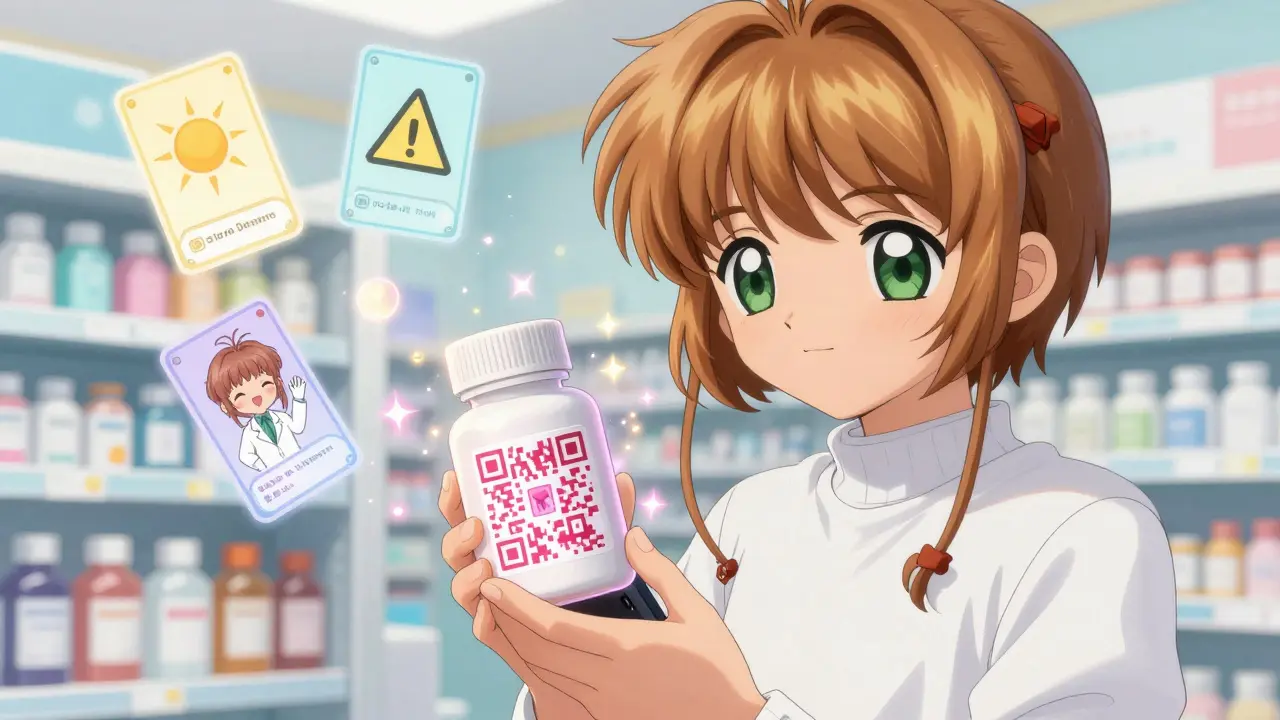
Imagine picking up a new medication. The bottle has a tiny square code on the label. You scan it with your phone, and instantly, you see exactly how to take the drug, potential side effects in plain language, and even a video from your pharmacist explaining the routine. This isn't science fiction. It is happening right now in pharmacies across the globe.
For years, prescription labels were static pieces of paper. They had limited space, small print, and zero interactivity. Today, QR codes are machine-readable matrix barcodes that link physical medication packaging to comprehensive digital information resources. These codes bridge the gap between the physical pill bottle and the vast ocean of digital health data. But simply slapping a code on a label isn't enough. To make this work safely and effectively, you need to understand the tools behind them-specifically, dynamic digital prescription label systems.
Why Static Labels Are No Longer Enough
The traditional paper label hits a wall quickly. Space is premium real estate on a small vial or box. Pharmacists have to fit the patient's name, dosage, pharmacy address, and warnings into a few inches. If a warning needs updating, or if a patient speaks a different language, the label doesn't change. It stays printed, potentially outdated, and rigid.
This rigidity creates risk. According to a 2023 case study by Freyr Solutions, implementing digital labeling solutions reduced medication errors by 43%. That is a massive drop in preventable harm. The core issue? Information access. When patients don't understand their meds, they skip doses or take them wrong. A Journal of Medical Internet Research study published in January 2023 found that digital engagement improved patient adherence rates by 28%.
The shift isn't just about convenience; it's about survival. During the 2020-2021 pandemic, digital health solutions went from "nice to have" to critical infrastructure. The Healthcare Distribution Alliance reported a 327% increase in pharmaceutical QR code implementation between 2019 and 2022. The momentum hasn't stopped. By 2028, the global market for these technologies is projected to hit $1.2 billion.
Static vs. Dynamic QR Codes: The Critical Choice
Not all QR codes are created equal. In the pharmaceutical world, using the wrong type can lead to compliance nightmares and frustrated patients. You generally have two choices: static and dynamic.
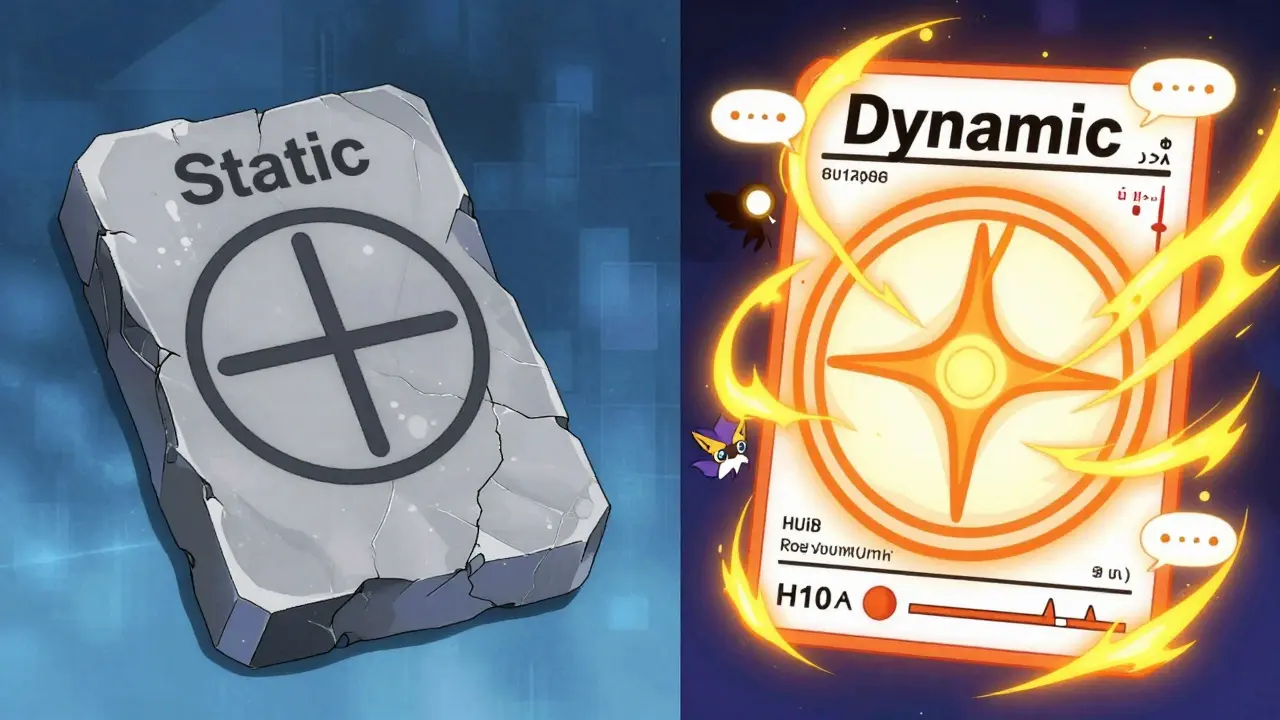
Static QR codes contain a permanent URL. Once printed, that destination never changes. If the website goes down, the code is useless. If you find a typo in the instructions, you have to reprint every single label. According to Clappia's 2023 industry analysis, only 12% of pharmaceutical implementations use static codes. Why so low? Because they lack flexibility.
Dynamic QR codes, which account for 88% of implementations, are different. They point to a short redirect URL that leads to your actual content. This means you can change the destination after printing without changing the code itself. You can also track who scans it, when, and where. For a pharmacy, knowing that 500 people scanned the label for "Metformin" but only 20 viewed the full instructions tells you something is wrong with your landing page design.
| Feature | Static QR Code | Dynamic QR Code |
|---|---|---|
| Post-print Editing | No (0% flexibility) | Yes (100% flexibility) |
| Analytics Tracking | None | Detailed (17+ data points per scan) |
| Landing Page Uptime | Dependent on original URL stability | 99.8% uptime via redirects |
| Use Case Suitability | Evergreen, unchanging content | Medication guides, recalls, updates |
If you are building a digital prescription system, choose dynamic. Always. The ability to update safety information instantly is not just a feature; it is a liability shield.
Designing for Scannability and Accessibility
A QR code that cannot be scanned is worse than no code at all. It creates false confidence. Patients think they have access to info, try to scan it, fail, and give up. To avoid this, you must follow strict technical standards.
The ISO/IEC 18004:2015 standard mandates specific design rules. First, you need a "quiet zone"-a clear border around the code. This should be at least four modules wide. Second, contrast is king. The code needs a 70% contrast ratio against its background. Black on white works best. Avoid pasting a black code onto a dark blue label; it won't read.
Placement matters too. Never put a QR code on a seam, a fold, or a curved surface that distorts the shape. If you must place it on a curved vial, make the code 30% larger than you would for a flat surface. Testing protocols suggest validating your codes under real-world conditions: glossy packaging under fluorescent lighting (minimum 300 lux), matte brochures at 45-degree angles, and even large signage from 10 feet away.
Accessibility is another major hurdle. Dr. Michael Rodriguez, Chief Medical Officer at Johns Hopkins Hospital, warned in a March 2024 commentary about "digital divides exacerbating health disparities." He noted that 38% of patients over 65 require assistance scanning QR codes, compared to only 12% of younger patients. Your digital tool must include fallback options. Perhaps a button on the landing page that says "Call Pharmacy for Help" or text-to-speech capabilities for visually impaired users. The Access Board endorsed QR codes for accessibility, but only if they integrate with smartphone features like screen readers.
Integrating with Pharmacy Workflows
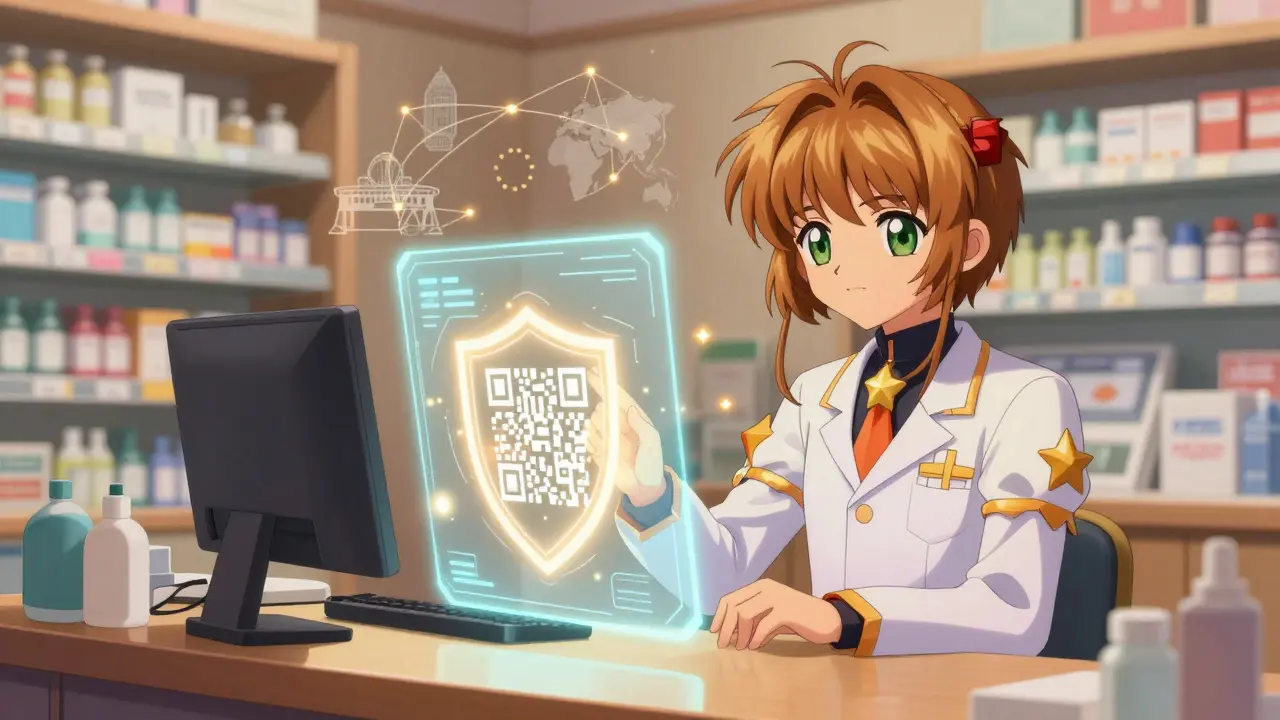
Adding QR codes isn't just a marketing move; it's a workflow integration. Your pharmacy management system needs to talk to your digital label tool. This usually happens via APIs. Look for tools that support HL7 FHIR APIs for electronic health records (EHR) and NCPDP SCRIPT standards for pharmacy data exchange.
Clappia, a popular platform for this, released version 3.7 in March 2024, adding real-time inventory tracking with 99.2% accuracy. This means when a pharmacist dispenses a med, the system automatically generates a unique QR code linked to that specific patient's profile. No manual entry. No errors.
Training staff is essential. Reddit user u/MedSafetyPro reported that implementing QR codes reduced patient callback questions by 63%. However, u/PharmTech2020 noted that staff training took 17 hours per technician to achieve proficiency. Don't underestimate the learning curve. Follow the sQR.me 'Pharmaceutical QR Code Implementation Framework,' which suggests a 6-phase process including 40-80 hours of training per facility. Ensure every technician knows how to generate, verify, and troubleshoot the codes.
Regulatory Compliance and Global Standards
Regulations are catching up to technology. Singapore's Health Sciences Authority launched an e-labeling pilot program on April 1, 2024. This allows pharmacy-only products to have minimal physical labels as long as a QR code provides complete product information. The US FDA has also issued draft guidance supporting electronic labeling for medical devices.
In Europe, the European Medicines Agency endorsed QR codes for product information access in 2023. Draft legislation suggests mandatory QR code implementation for all prescription medications in the EU by 2026. If you are a manufacturer or distributor, you need to prepare now.
Compliance requires more than just a link. The landing page must contain specific safety information consistent with the approved Product Information Leaflet (PIL). This includes indications, dosing instructions, contraindications, warnings, drug interactions, and overdose info. Keep these elements highlighted and easy to find. Do not bury critical warnings behind three clicks.
Cost-Effectiveness vs. Alternatives
Why use QR codes instead of RFID chips or NFC tags? Cost and compatibility. Global Vision's 2023 cost analysis shows QR codes cost approximately $0.0003 per unit. RFID tags range from $0.08 to $0.50 per unit. That is a huge difference when you are printing millions of labels.
Furthermore, QR codes work with any smartphone made after 2018, achieving 95%+ scan success rates. NFC requires specific hardware and closer proximity. While RFID is great for supply chain tracking, QR codes are superior for patient-facing communication because they are cheap, universal, and require no special hardware for the end-user.
Future Trends: AI and Personalization
The next frontier is personalization. Imagine a QR code that detects the user's language and serves content in Spanish, Mandarin, or English automatically. Global Vision demonstrated this dynamic multilingual delivery in April 2024. Even more advanced, Freyr Solutions announced AI-powered medication interaction checkers within QR landing pages in May 2024. A patient could scan their new antibiotic, and the app would cross-reference it with their other meds listed in the EHR, flagging potential conflicts instantly.
As we move toward integrated digital ecosystems, QR codes will likely become mandatory for Universal Device Identifiers (UDIs) on medical devices, per FDA's 2023 final rule. The technology is maturing rapidly. McKinsey surveyed industry executives in February 2024, and 87% said QR codes would be "essential or highly important" to pharmaceutical labeling within five years.
The key takeaway? Start simple. Use dynamic codes. Design for clarity. Train your staff. And always, always provide a human backup for those who struggle with the tech. Digital tools enhance care; they should never replace the human connection.
What is the difference between a static and dynamic QR code for prescriptions?
A static QR code contains a fixed URL that cannot be changed once printed. If the web page moves or breaks, the code becomes useless. A dynamic QR code uses a redirect link, allowing you to update the destination URL, track scan analytics, and manage content without reprinting the label. Dynamic codes are recommended for 92% of pharmaceutical use cases due to their flexibility.
Are QR codes safe for elderly patients who may not use smartphones well?
QR codes can pose challenges for older adults. Studies show 38% of patients over 65 need help scanning them. To mitigate this, ensure your digital label tool includes accessible features like large text, high contrast, and voice-to-text options. Additionally, always provide a phone number or alternative method for accessing information for those who cannot scan the code.
How much does it cost to implement QR codes on prescription labels?
The cost is extremely low. Printing a QR code costs approximately $0.0003 per unit. The main expenses come from software subscriptions for dynamic code management and staff training. Compared to RFID tags ($0.08-$0.50 per unit), QR codes are significantly more cost-effective for patient-facing applications.
What regulations govern the use of QR codes on medication labels?
Regulations vary by region. Singapore launched an e-labeling pilot in April 2024 requiring minimum safety info on physical labels with full details via QR. The EU is moving toward mandatory QR codes by 2026. The US FDA supports electronic labeling for medical devices. Always ensure your landing page content matches the approved Product Information Leaflet (PIL) and includes all required safety warnings.
Can QR codes reduce medication errors?
Yes. A 2023 case study by Freyr Solutions documented a 43% reduction in medication errors after implementing digital labeling solutions. By providing instant access to detailed instructions, side effects, and interaction checks, patients are better informed and less likely to make dosing mistakes.










Aditya Singh June 9, 2026
Look, this is a paradigm shift in pharmaceutical informatics and patient-centric care delivery models. The integration of dynamic QR matrices with HL7 FHIR APIs represents a monumental leap forward in interoperability and data granularity. We are essentially bridging the analog-digital divide in real-time medication adherence protocols. It's exhilarating to see how these tools can democratize access to critical health metadata for underserved populations globally. The potential for reducing iatrogenic harm through enhanced digital literacy is simply immense.
Brett Webster June 10, 2026
While the tech is promising, we need to be realistic about implementation hurdles.
I've worked in pharmacy logistics for years, and the biggest bottleneck isn't the code itself; it's the workflow disruption. Pharmacists are already drowning in administrative tasks. Adding another step-verifying that the dynamic link resolves correctly before handing off the bottle-adds friction.
That said, if you use a system like Clappia that automates the generation via EHR integration, the ROI on reduced callback questions is undeniable. Just don't expect overnight adoption without significant staff training investment.
Sherry Wheeler June 11, 2026
This is nothing short of revolutionary! Imagine the sheer empowerment of having your health information literally in the palm of your hand, instantly accessible, clear, and understandable. It’s not just about convenience; it’s about dignity and autonomy in our healthcare journey. We are moving from a model of passive compliance to active engagement. The future is bright, vibrant, and deeply connected. Let’s embrace this wave of change with open arms and hearts!
shreya sinha June 11, 2026
One must consider the profound ethical implications of such technological encroachments into the sanctity of personal medical privacy. While the proponents argue for efficiency, they often overlook the inherent vulnerabilities introduced by linking physical medications to digital footprints. Is it truly wise to rely on corporate servers for life-saving instructions? What happens when the internet fails during a crisis? The reliance on transient digital infrastructure over tangible, immutable paper labels suggests a troubling prioritization of novelty over robustness. Furthermore, the digital divide remains a stark reality, leaving elderly and socioeconomically disadvantaged patients further marginalized by systems designed for the tech-savvy elite. This is not progress; it is a convenient solution for corporations seeking to reduce printing costs at the expense of universal accessibility.
Lee Coates June 13, 2026
Typical Silicon Valley buzzword salad trying to solve problems that didn't exist :P We had perfectly fine paper labels for decades. Now we need apps, scans, and cloud storage just to know if my pills will make me dizzy. Keep your fancy codes away from American pharmacies. We prefer old-school reliability over buggy software updates that brick your info.
Miranda River June 14, 2026
honestly its kinda wild how we went from reading tiny print to scanning squares lol but yeah the static vs dynamic thing is huge bc who wants dead links? also typos in the article r everywhere but whatever. the ai part sounds cool tho, maybe itll tell u if ur meds clash w/ ur coffee or something. just dont let the big pharma track every scan u do ok? privacy matters ppl.
Brandon Brodsky June 15, 2026
Oh, look at us, reinventing the wheel with a barcode. Groundbreaking. I suppose the next step is embedding microchips in our eyeballs so we don't even have to hold the phone. But sure, let's pretend that a 38% failure rate for seniors isn't a massive liability lawsuit waiting to happen. The 'human backup' mentioned at the end is the only reason this doesn't get laughed out of court.
Callie Skipper June 17, 2026
i mean it makes sense i guess. my grandma always struggles with the small print on her bottles so if she could just scan it and hear a voice explain it that would be nice. but yeah dont forget the people who dont have smartphones or data plans. simple stuff.
Glenn Davis June 17, 2026
Paper works. Stop complicating things.