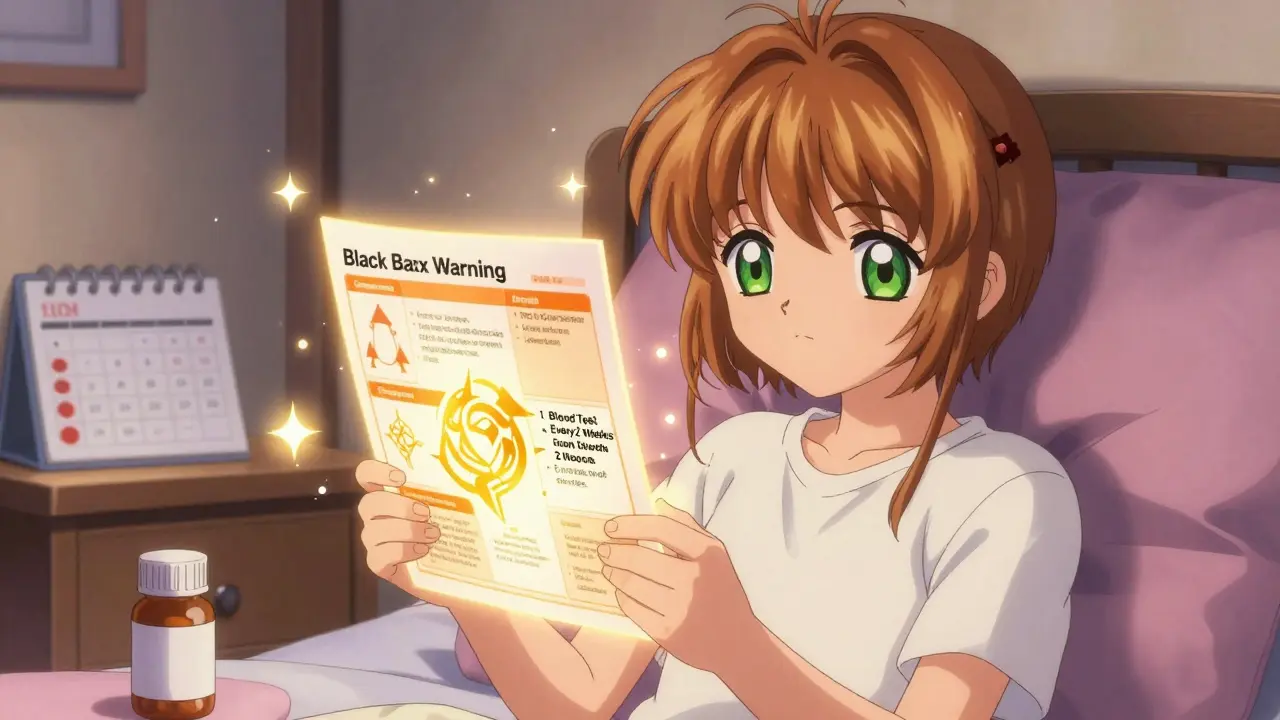
When you pick up a new prescription, you might get a small booklet along with your pills. It’s not just extra paper. This is a Medication Guide-a legally required document from the FDA designed to tell you what you absolutely need to know about serious risks and what you must do to stay safe. Most people don’t read it. But if you skip it, you could miss critical warnings that could prevent hospitalization or even save your life.
What Makes a Medication Guide Different?
Not all drug information is the same. There are package inserts for doctors, instructions for using an inhaler or injector, and then there’s the Medication Guide. This one is only given for drugs with serious, preventable dangers. Think blood thinners, antidepressants, cancer drugs, or immune system suppressors. The FDA requires these guides when they believe patients can avoid harm if they understand the risks.
These guides aren’t written in medical jargon. By law, they must be at a 6th- to 8th-grade reading level. That means short sentences. Clear headings. No confusing terms like "hematologic toxicity"-instead, it says "your blood counts may drop dangerously low." The font is at least 10-point, and key sections are bolded. It’s meant to be read, not ignored.
The Seven Sections You Must Know
Every Medication Guide follows the same structure. You don’t need to read every word, but you must find these seven sections:
- What is the most important information I should know about [drug name]? This is where the biggest risks are listed. It’s often called the "black box" warning-even if it’s not actually in a box. This section tells you things like "can cause severe liver damage" or "may lead to life-threatening infections."
- What should I tell my healthcare provider before taking [drug name]? This lists conditions or medications that make this drug dangerous for you. If you have liver disease, kidney problems, or take another drug that interacts badly, this section will tell you.
- What are the possible or reasonably likely serious side effects of [drug name]? This is where monitoring instructions hide. Look for phrases like "get your blood tested regularly," "check your liver function every 3 months," or "call your doctor immediately if you notice..."
- How should I take [drug name]? This tells you dosage, timing, and-critically-when and how often to get monitored. For example: "Your provider should check your blood before you start and every 3 months after."
- What should I avoid while taking [drug name]? Alcohol? Sunlight? Driving? This section tells you what to stop doing.
- What are the other possible side effects? Less serious stuff like headache or nausea. You can skim this.
- How should I store [drug name]? Basic stuff-keep it dry, out of reach of kids, etc.
How to Find the Monitoring Instructions
The most dangerous mistake people make? They read the risks but miss the monitoring part. You can’t just know something is risky-you need to know how to catch it early.
Look for these exact phrases:
- "Get your blood tested regularly"
- "Your doctor should check your liver function before and every 3 months"
- "Call your doctor immediately if you notice unusual bruising or bleeding"
- "Do not stop taking this medicine without talking to your doctor"
- "Monitor for mood changes, especially in the first 4-6 weeks"
For example, the guide for clozapine (used for severe schizophrenia) says: "About 1 in 200 people taking clozapine may develop agranulocytosis-a dangerous drop in white blood cells." Then it tells you: "You must have a blood test every week for the first 6 months. After that, every 2 weeks. If you miss a test, you can’t get your next dose."
Same with warfarin (Coumadin): "Your INR must be checked at least once a month. If your dose changes, check it within 3-5 days."
These aren’t suggestions. They’re requirements. Skip them, and you’re gambling with your health.
Use the Traffic Light System
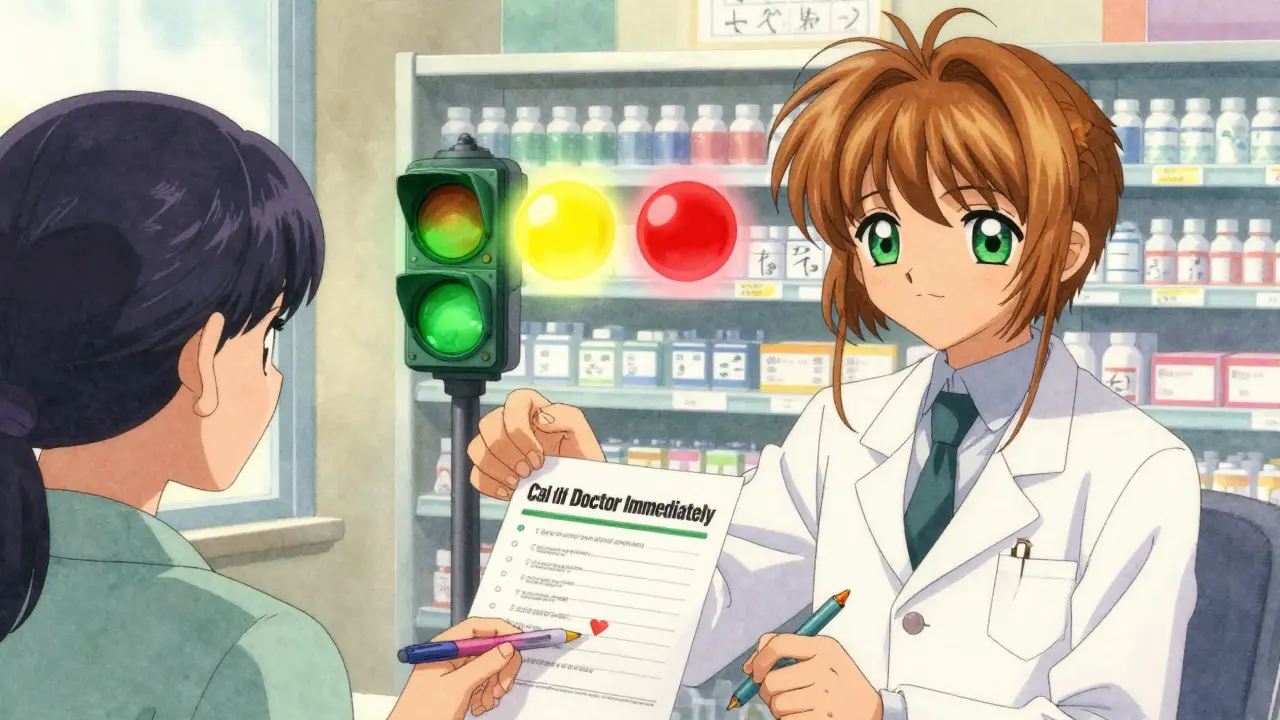
One pharmacist in Pittsburgh, Sarah Chen, taught her patients a simple trick called the "traffic light" system:
- Green = Normal. You’re fine. Keep taking it.
- Yellow = Watch for this. Call your doctor within 24 hours. Examples: mild nausea, fatigue, slight dizziness.
- Red = Emergency. Go to the ER or call 911. Examples: chest pain, confusion, black stools, uncontrolled bleeding.
She had patients highlight each section with colored pens. Patients who used this method were 55% more likely to follow their monitoring schedule. It turns confusing text into action.
What to Do Before Each Filling
Guides get updated. The FDA requires manufacturers to update them within 30 days of any new safety info. In 2022 alone, 92% of guides were updated. That means the one you got last month might be outdated.
Before each refill, spend 2 minutes:
- Check the guide’s date. Is it newer than your last one?
- Flip to "Most Important Information"-has anything changed?
- Look for new monitoring instructions. Did they change how often you need blood tests?
You can also check the guide online. Go to DailyMed (a free NIH website) and search your drug name. You’ll find the current, official version. Print it if needed.
Why Most People Skip It-and How to Fix It
A 2023 survey found only 38% of patients consistently read their Medication Guides. Why? They’re long. The language feels overwhelming. Many think, "My doctor already told me everything."
But here’s the truth: Your doctor might not have time to explain every risk. And pharmacies? Only 59% of independent pharmacies consistently hand out the guide when they dispense the drug. You might have to ask for it.
Try this: When you get your prescription, say, "Can I get the Medication Guide for this?" If they say no, ask for it again. If they still say no, ask for the website or phone number to get it. You’re legally entitled to it.
And if you’re overwhelmed? Just read the bolded sections. Highlight the monitoring instructions. Circle the emergency symptoms. That’s all you need to start.
What Happens When You Follow the Guide
The FDA studied 500 patients who followed their guides exactly. Those who did what the guide said had 32% fewer serious side effects. That’s not a small number. That’s the difference between staying home and ending up in the hospital.
One patient on antidepressants read the guide and noticed it said: "Pay close attention to sudden mood changes, especially in the first 4-6 weeks." She started journaling her mood daily. When she felt unusually agitated at week five, she called her doctor. They adjusted her dose. She avoided a crisis.
Another patient on a cancer drug missed his blood test. He didn’t think it mattered. His white blood cell count dropped dangerously low. He got a severe infection. He was hospitalized for two weeks. His guide said: "Get a blood test every 2 weeks. If you miss one, call before taking the next dose." He didn’t read it.
What’s Changing in 2025 and Beyond
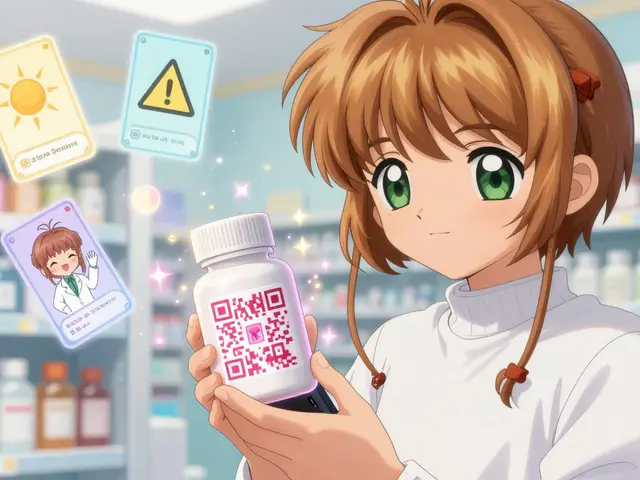
The FDA is pushing hard to make these guides easier to use. By 2026, all high-risk drug packages will have QR codes that link directly to the current guide. Some companies are testing AI tools that pull your medical history and highlight only the parts that apply to you.
But until then, you still have to read it. And you still have to act.
Medication Guides aren’t marketing fluff. They’re your last line of defense. If you’re on a drug with serious risks, this guide is your safety net. Don’t wait for a crisis to learn how to use it.
Do I have to get a Medication Guide every time I refill my prescription?
Yes. By law, pharmacies must give you a Medication Guide every time you fill a prescription for a drug that requires one-even if you’ve gotten it before. If they don’t offer it, ask for it. If they refuse, ask to speak to the pharmacist or file a complaint with the FDA. You have the right to receive it.
What if I don’t understand the language in the guide?
Pharmacies are required to offer help. Ask the pharmacist to explain it to you. Many offer free counseling sessions when you pick up high-risk medications. You can also call the drug manufacturer’s patient support line-usually listed on the guide. Some companies even offer translated versions or audio guides.
Can I rely on my doctor to explain everything?
No. Doctors are often pressed for time and may not cover every risk, especially monitoring schedules. The Medication Guide is designed to fill those gaps. It’s your responsibility to read it, not just your doctor’s. Use it as a checklist, not a suggestion.
Are Medication Guides the same as the package insert?
No. The package insert is written for doctors and contains technical data, dosing studies, and clinical trial results. The Medication Guide is for patients. It’s shorter, simpler, and only includes risks that can be avoided if you know what to watch for.
What should I do if I notice a mistake in the guide?
Contact the drug manufacturer directly using the phone number on the guide. You can also report it to the FDA through their MedWatch program. Even small errors-like an incorrect monitoring schedule-can be life-threatening. Reporting them helps improve safety for everyone.





Alex Arcilla March 25, 2026
bro i read my med guide once and it saved my life. i was on clozapine and missed my blood test because i thought 'eh, i feel fine'. next thing i know, i'm in the er with zero white cells. the guide said 'if you miss a test, don't take the next dose'. i didn't read it. don't be me.
Brandon Shatley March 26, 2026
i always skip these things till my mom yells at me. she’s a nurse. she says if you don’t read the guide, you’re basically playing russian roulette with your liver. i started highlighting the red sections with a marker. now i actually remember what to watch for. thanks mom.
florence matthews March 27, 2026
this is so important!! 🙌 i used to think the guide was just fluff, but after my dad had a bad reaction to warfarin because he didn’t know to check his INR, i started reading them religiously. now i print them out and stick them on my fridge. seriously, do this. your future self will thank you 💙
Mihir Patel March 28, 2026
OMG I JUST REALIZED I’VE BEEN IGNORING MY MED GUIDE FOR 3 YEARS 😱 I WAS ON ANTIDEPRESSANTS AND NEVER KNEW ABOUT THE MOOD CHANGES WARNING. I THOUGHT IT WAS JUST 'STRESS'. NOW I’M JOURNALING EVERY DAY. THANK YOU FOR THIS. I FEEL LIKE I JUST GOT A SECOND CHANCE AT LIFE.
Agbogla Bischof March 30, 2026
This is critical public health information. Every patient on high-risk medications must be educated on these guides. The FDA mandates them for a reason: preventable harm. Many patients assume their physician will cover all risks, but time constraints prevent comprehensive counseling. The guide is not optional-it is your legal right and your primary safety tool. Always verify updates via DailyMed. Do not rely on pharmacy handouts alone.
Anil Arekar March 31, 2026
I appreciate the clarity of this article. The traffic light system is an excellent innovation. It transforms abstract medical warnings into actionable behavioral cues. In my experience working with elderly patients in rural India, such visual frameworks significantly improve adherence. I have adopted this method in my community health outreach programs with remarkable success.
Caroline Bonner April 1, 2026
I cannot tell you how many times I’ve seen people dismiss these guides because they’re ‘too long’ or ‘too boring’-but here’s the thing: you don’t need to read every word. You need to read the bold parts. You need to circle the emergency symptoms. You need to underline the blood test schedules. I printed out my guide, cut out the red-flag sections, and taped them to my pill bottle. Now, every time I reach for my meds, I see the warning. It’s saved me twice already. Please, if you’re on anything risky-do this. It takes two minutes. Two minutes could mean the difference between a Tuesday and an ICU stay.
Chris Crosson April 2, 2026
I’m a pharmacist’s kid. I’ve seen what happens when people ignore these. Last week, a guy came in for his third refill of methotrexate and didn’t even know he needed monthly liver tests. He thought the doctor ‘already told him.’ He didn’t. He just said ‘take it once a week.’ So I pulled out the guide, showed him the section, and said, ‘This isn’t a suggestion. It’s a lifeline.’ He cried. Then he printed it. We need more of this. Not more drugs. More education.
Linda Foster April 2, 2026
The legal requirement for Medication Guides is a necessary safeguard. While some may find the language accessible, others still require additional support. Pharmacies should be mandated to provide verbal summaries, particularly for patients with low health literacy. This is not merely informational-it is a public health imperative.
Rama Rish April 3, 2026
read the guide. highlight the red. circle the blood test. done. you don’t need to be a doctor. just be smart.
Chris Farley April 3, 2026
FDA says you need this? Cool. So what? I’m not a child. I don’t need a pamphlet to tell me not to die. If I’m dumb enough to take a drug without knowing the risks, I deserve what I get. This is just more government overreach. You want people to be responsible? Stop treating them like toddlers with colored pens.
Amber Gray April 4, 2026
i just read the red parts and put 🚨 on my phone wallpaper. it’s a vibe. i’m alive. 🙌
Danielle Arnold April 5, 2026
yeah i read the guide. it said 'call your doctor if you feel weird.' so i did. they said 'it’s probably fine.' so i stopped reading the guide. thanks for the pamphlet, i guess?