Imagine you are sitting in a quiet room trying to hear someone whisper across the table, but the sounds seem muffled as if your ears are plugged with cotton. This frustrating scenario often signals Otosclerosisa condition causing abnormal bone growth in the middle ear. While many people assume hearing loss is strictly part of aging, this specific issue targets a different demographic entirely. In fact, roughly one in 200 people in the United Kingdom faces this challenge, making it one of the most common causes of hearing loss in adults under 50.
Understanding otosclerosis isn't just medical trivia; it is the key to reclaiming your quality of life. Without intervention, the condition progresses steadily. However, modern medicine has caught up. Treatments today improve hearing in 90% of cases. This guide breaks down exactly what happens inside your skull, how doctors spot the problem, and the realistic path forward when the bones decide to grow where they shouldn't.
The Mechanics of Abnormal Bone Growth
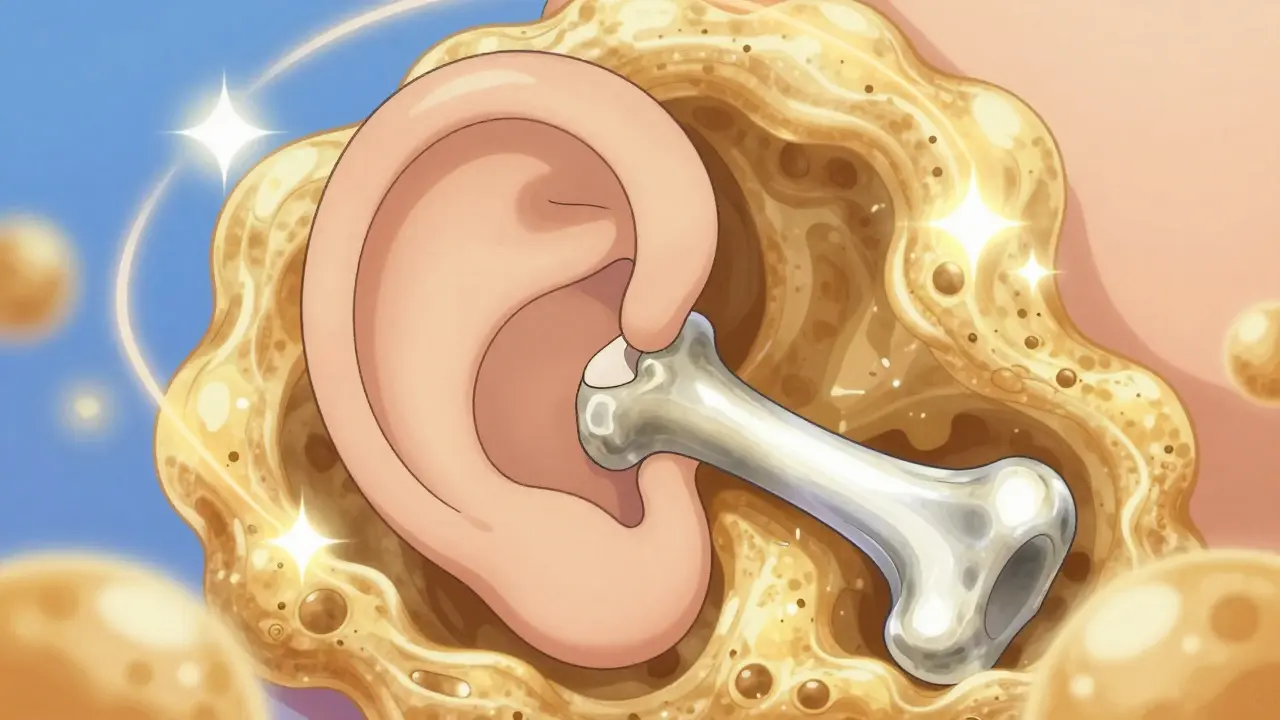
To grasp why hearing gets worse, you need to look at the machinery behind the eardrum. Inside the middle ear sits a tiny chain of three bones called the auditory ossicles. The smallest of these is the Stapes bonethe stirrup-shaped bone measuring approximately 3.2mm in length. Normally, this bone vibrates freely to transmit sound waves into the inner ear fluid. Think of it like a window that needs to open and close quickly to let air through.
When otosclerosis strikes, this mechanism jams. Instead of healthy, solid bone, your body starts producing spongy, vascular tissue around the stapes. Over time, this irregular bone hardens and fuses the stapes to the surrounding structures. This process effectively glues the bone in place. Sound waves hit the frozen bone, but the vibration cannot pass into the inner ear, resulting in Conductive hearing lossa type of hearing impairment caused by blockage in sound transmission. Unlike the gradual fade of age-related loss, this is a physical blockage that creates an audible gap between what the microphone detects and what the brain receives.
Why does this happen? Research points heavily toward genetics. Scientists have identified 15 distinct genetic loci linked to the condition, with the RELN gene on chromosome 7q22 playing a significant role. While we don't have a single "cure" for the root cause yet, understanding the genetic link helps explain why it often runs in families. About 60% of patients report having a family history of similar hearing problems.
Recognizing the Symptoms Early
Catching otosclerosis early matters because hearing loss is progressive. Untreated cases typically show deterioration of 15-20 decibels over five years. The warning signs are distinct enough that you might notice them before a doctor tells you something is wrong. One of the most telling symptoms involves pitch. Unlike noise damage which kills high frequencies first, otosclerosis often makes low-pitched sounds harder to hear.
You might struggle to hear whispers or voices below 2,000 Hz. Many patients describe a specific frustration where they think others are mumbling, only to discover later their audiogram showed significant loss at lower frequencies. Another common companion symptom is Tinnitusperception of noise such as ringing buzzing or hissing. Surveys indicate that 80% of people with this condition experience bothersome ringing in the ears, with some finding it severely disrupts sleep.
- Difficulty hearing low-pitched voices
- Muffled sounds even when the ear feels clear
- Worsening hearing during pregnancy
- Persistent ringing or humming sounds (tinnitus)
- Dizziness or balance issues in rare cases
Note that pregnancy can accelerate the condition due to hormonal changes. If you are female and noticing sudden hearing drops during or after pregnancy, this is a critical signal to see a specialist. While the condition rarely results in total deafness, leaving it ignored allows that small gap in the ear to widen significantly over time.
How Doctors Diagnose the Problem
Finding the root cause requires more than just asking "Can you hear me." The gold standard for diagnosis involves pure-tone audiometry. During this test, doctors measure how well you hear tones at various frequencies while wearing headphones. They also compare how sound travels through the air versus through bone conduction.
A normal result shows little difference between air and bone hearing. However, otosclerosis creates a gap known as an air-bone gap. Clinicians look for a difference of at least 15 dB to raise suspicion. If your speech discrimination scores remain above 70%, it suggests the nerve itself is working, but the mechanical transmission is broken. This distinction is vital because it separates otosclerosis from sensorineural issues where the nerve damage is permanent.
| Test Type | Normal Result | Typical Otosclerosis Result |
|---|---|---|
| Pure Tone Audiometry | No significant gap | Air-bone gap of 20-40 dB |
| Speech Discrimination | Near 100% | Usually above 70% |
| Temporal Bone CT Scan | Clear bone density | Radiolucent foci 0.5-2.0mm |
If the audiogram looks promising, doctors might order a Temporal Bone CT scan. This imaging technique can visualize the abnormal bone growth directly. Early stages show characteristic radiolucent foci, essentially dark spots on the scan where the bone remodeling is active. Misdiagnosis is a real risk here; about 22% of patients experience diagnostic delays averaging 18 months because symptoms mimic Eustachian tube dysfunction. Being aware of the specific pattern of hearing loss helps speed up this process.

Treatment Options and Surgical Solutions
Once you confirm the diagnosis, you face a choice: amplify the sound or fix the mechanics. Initially, mild cases might just require monitoring. NHS England recommends annual audiograms to track progression for those waiting it out. If the loss remains manageable, a simple solution often works best. Hearing aidsdevices worn in the ear to amplify sound help bypass the blockage by sending louder signals to the ear. About 65% of diagnosed patients start here because it avoids surgical risks.
However, when the gap widens beyond 30-40 dB, surgery often becomes the superior option. The procedure is called a Stapedectomysurgical operation to replace the fixed stapes bone or stapedotomy. An otolaryngologist removes the fused stapes and replaces it with a lightweight prosthesis. Recent advances include the StapesSound™ prosthesis approved by the FDA in 2024, featuring titanium-nitride coatings to reduce adhesions.
Success rates are encouraging. Clinical trials show 94% success with these newer prostheses compared to 89% for traditional ones. Even standard procedures achieve functional hearing in 87% of patients. But it isn't without risk. Dr. Robert Glaser of the Cleveland Clinic notes that about 1% of patients experience profound sensorineural hearing loss following surgery. This devastating complication must be discussed thoroughly during consent. Revision surgeries are possible but have lower success rates (around 75%) compared to primary attempts (95%). Choosing a surgeon who performs at least 50 supervised stapedotomies is crucial for safety.
Medical management exists too. Sodium fluoride has shown efficacy in slowing progression. A double-blind study published in January 2024 demonstrated a 37% reduction in hearing deterioration over 24 months compared to placebo. While this won't reverse the bone fusion, it can help stabilize the situation for those not ready for surgery.
Living with Otosclerosis Long-Term
Life doesn't stop after diagnosis, but it does change. Since women account for 70% of cases, hormonal factors play a larger role than men realize. Pregnancy can trigger temporary hearing dips, though postpartum recovery often improves. Support groups are valuable resources; the Hearing Loss Association of America reports 1,200 active members sharing strategies. Connecting with others reduces the isolation that comes with muffled hearing.
Protecting your remaining hearing is also essential. Avoid loud noises to prevent adding noise-induced loss to the mix. If you undergo surgery, expect a recovery period where balance might feel slightly off. Most return to normal functioning within weeks. The financial aspect is another consideration. Procedures average $8,500-$12,000 out-of-pocket in the US depending on insurance coverage. Despite costs, the long-term benefit of restoring natural sound transmission usually outweighs lifelong hearing aid dependence.
Is otosclerosis painful?
Generally, no. The condition is painless. The primary symptom is gradual hearing loss. Some patients may experience occasional dizziness, but sharp ear pain is not typical and should be checked for other infections.
Will my hearing loss get worse over time?
Untreated, yes. Studies show an average decline of 15-20 dB every five years. However, effective treatment like stapedectomy stops this progression and restores lost hearing levels.
Can children get otosclerosis?
It is rare in children but can occur. Symptoms typically manifest between ages 30-50. Pediatric cases are monitored closely as the impact on development can be significant.
Does flying affect otosclerosis symptoms?
Pressure changes can worsen discomfort temporarily. If you have active swelling or are planning travel, consult your doctor to manage pressure equalization safely.
Are hearing aids better than surgery?
It depends on severity. Hearing aids amplify sound non-invasively, while surgery mechanically fixes the blockage. Many try aids first and opt for surgery if the loss reaches 30-40 dB.







Amber Armstrong April 1, 2026
It really hurts to imagine losing your ability to hear clear whispers when you try so hard to connect with people around you. I remember feeling that same frustration when the world suddenly seemed muted like someone turned down the volume knob on life itself. Hearing loss isolates you in ways nobody talks about until it starts happening to you slowly day after day. Many folks think age is the only culprit but this bone issue strikes way younger than expected. It makes me sad seeing how many people wait too long before getting the help they desperately need. The symptoms often sneak up on you quietly while you think something else is wrong entirely. Low pitch sounds going away first is such a strange symptom that most miss completely. Tinnitus adds another layer of noise that never goes away even when the room is silent. Pregnancy seems to make things worse for women which feels incredibly unfair during a time meant for joy. Support groups are lifelines because sharing stories helps reduce the heavy feeling of loneliness. You do not have to walk through this darkness alone when there are so many tools available now. Surgery fixes the mechanical blockage better than anything else in the grand scheme of things. Technology keeps improving every single year bringing us closer to perfect solutions. Hope remains the most powerful medicine alongside the medical treatments we have today. Just knowing what to look for gives you a fighting chance against the silence.
Victor Ortiz April 3, 2026
Most of this information is surface level garbage that ignores the genetic complexity involved. People keep posting these articles without understanding the real statistical failure rates of stapedectomy procedures. You cannot just recommend surgery as if it carries zero risk for the patient undergoing the operation.
emma ruth rodriguez April 4, 2026
The procedural success rates cited in recent literature exceed ninety percent when performed by qualified specialists. Clinical guidelines suggest a nuanced approach rather than dismissing surgical options outright due to fear of complications. Complications occur but remain statistically rare compared to the benefit of restored auditory function.
Carolyn Kask April 5, 2026
It seems absolutely ridiculous that public funding takes priority over private efficiency in modern medicine. British healthcare waits months for simple appointments while insurance covers everything instantly in my state. We should focus on getting results faster instead of worrying about cost equity.
Brian Yap April 6, 2026
We do try our best to help everyone access treatment regardless of where they live globally. Australia balances public and private sectors quite well for ear issues like this specific condition. Maybe both systems have value depending on what works best for the individual patient needs.
Ruth Wambui April 6, 2026
The fluoride in water is likely accelerating this bizarre calcification process inside the tiny bones. Big Pharma wants you sick so they can sell more prosthetic parts made from titanium. They ignore the natural remedies because profit matters more than your inner ear health.
Jonathan Sanders April 8, 2026
Nobody cares about your story until you are ready to pay for the cure yourself. My mother had this and died waiting for an appointment queue that never moved fast enough. Life is cruel and medical advice means nothing if you lack the funds for it eventually.
Michael Kinkoph April 9, 2026
One! Must! Prioritize! Health! Above! All! Other! Distractions!!! Ignoring! The! Warning! Signs! Is! Foolishness! Of! The! Highest! Order!!! Society! Rewards! Those! Who! Protect! Their! Assets!!! Sound! Transmission! Is! Precious! And! Fragile!!! Never! Delay! Seeking! Expert! Medical! Intervention!!!
Rick Jackson April 10, 2026
Patience and research lead to the best outcomes.
Katie Riston April 11, 2026
Perception of reality shifts dramatically when the mechanical bridge to sound is severed permanently. We often take the vibration of air for granted until it becomes a distant memory stored in neural pathways. Silence is not merely absence of noise but a fundamental change in existence itself. The bone growth mirrors the internal decay we fear as we age despite youth. Medical intervention becomes a battle against entropy trying to preserve connection with the external world. Philosophy meets biology in the small stirrup shaped bone holding so much significance. Our identity relies heavily on how we perceive the voices of loved ones clearly. Technology bridges gaps but cannot replace the organic flow of acoustic waves naturally. Every decibel lost represents a fragment of shared experience slipping into the void silently. Understanding the mechanism helps us accept the fragility of our physical forms gracefully. Healing requires acknowledging vulnerability rather than pretending invincibility exists anywhere in nature. We must respect the intricate engineering of the body while accepting its inevitable limitations. True freedom comes from accepting our physical imperfections without shame or regret. Connection is possible even when the tools we rely upon begin to fail us. We find resilience in the way we adapt to new sensory realities over time.