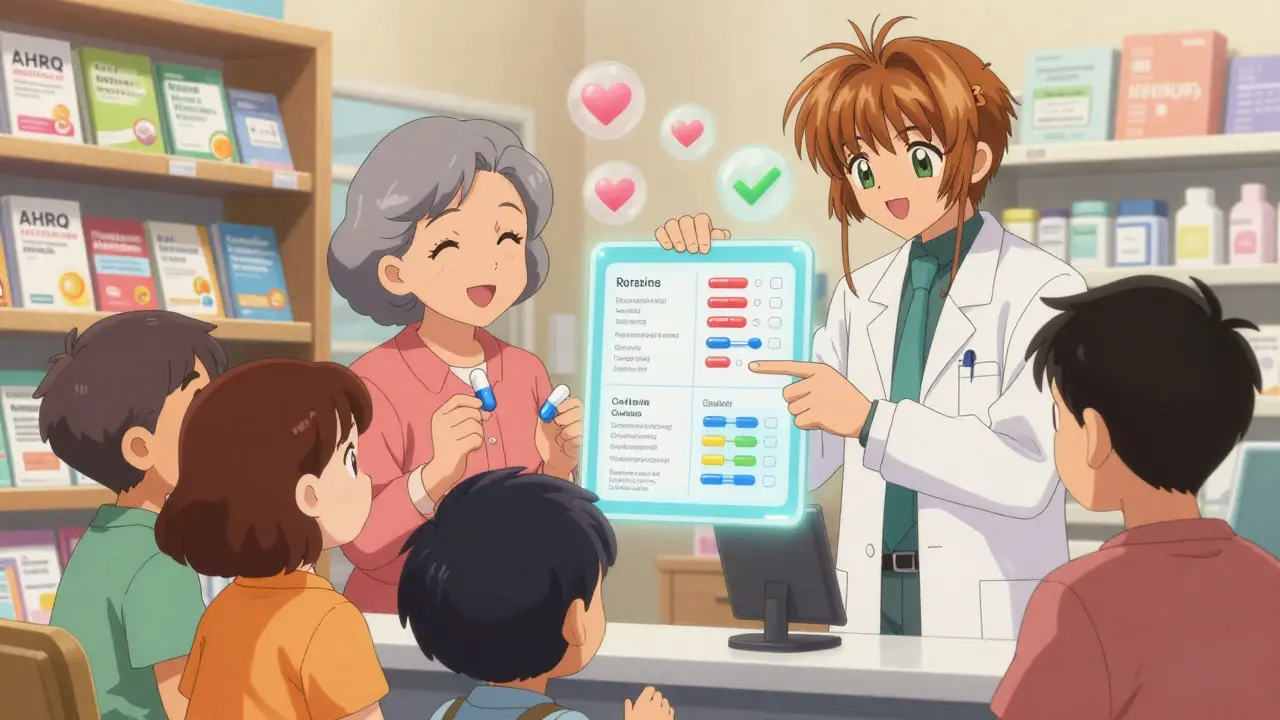
When a Spanish-speaking patient walks into a pharmacy and asks, "¿Tiene la versión genérica de esa medicina? La original es muy cara" - "Do you have the generic version of that medicine? The brand name is too expensive" - they’re not just trying to save money. They’re trying to stay healthy. But too often, the answer they get doesn’t help them understand what they’re actually taking.
Generic medications are not cheaper because they’re weaker. They’re cheaper because they don’t carry the marketing costs of brand names. The same active ingredient. Same effectiveness. Same safety standards. But in Spanish, confusion still runs high. Many patients think different-colored pills mean different medicine. Some refuse to refill prescriptions because the pills look different. Others worry their doctor is giving them "second-rate" drugs. These fears aren’t silly. They’re real. And they come from a lack of clear, culturally accurate information.
What Exactly Is "Medicamento Genérico"?
In Spanish, generic medication is called el medicamento genérico. This term appears in official resources from the Agency for Healthcare Research and Quality (AHRQ), Health Information Translations, and Spanish Academy. But knowing the word isn’t enough. Patients need to understand what it means.
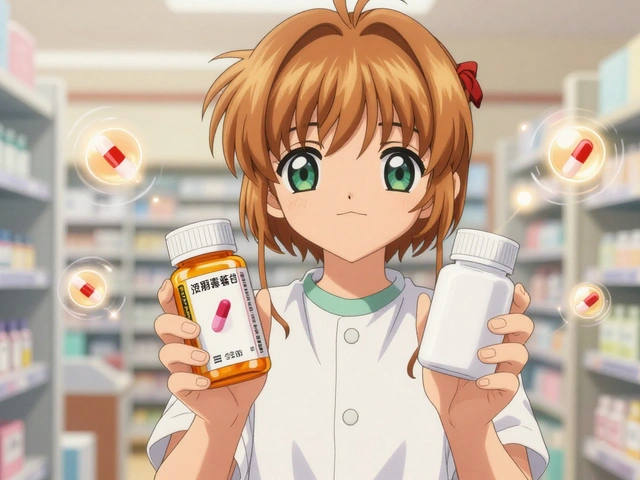
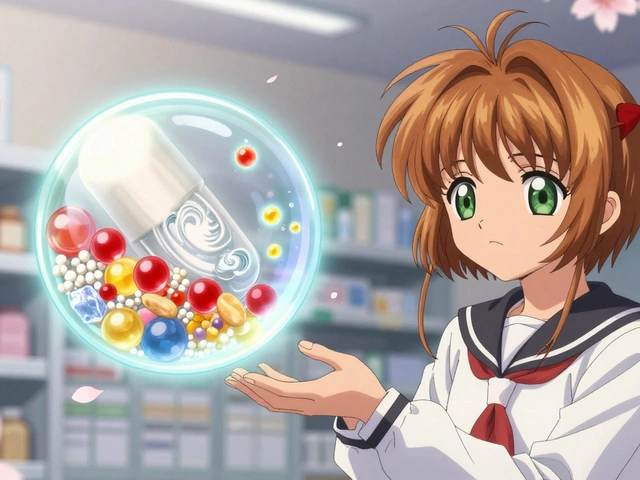
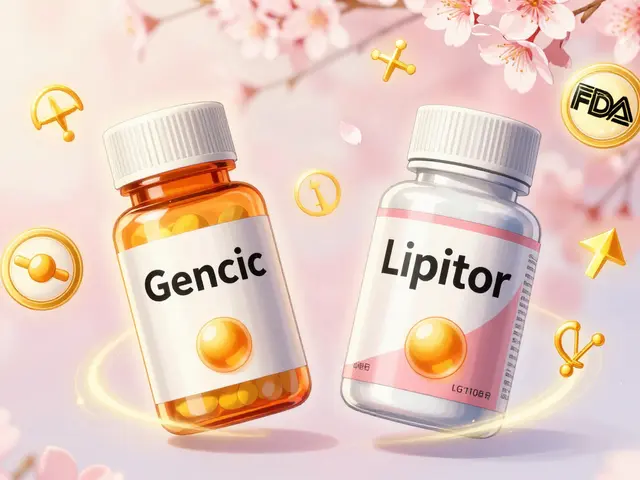
A generic drug has the same active ingredient, dosage, strength, and intended use as the brand-name version. It’s held to the same FDA standards. The only differences are in color, shape, flavor, or inactive ingredients - things that don’t affect how the medicine works. Yet many Spanish-language materials skip this part entirely. They translate "generic" but don’t explain equivalence.
That’s why resources like the AHRQ’s My Medicines List (available in Spanish since February 2023) are so important. It doesn’t just list drugs. It asks patients to write down: the brand name, the generic name, why they take it, the dose, and how often. This simple tool helps patients compare their own prescriptions and spot when a switch to generic has happened. One woman in California told Healthline her father finally understood he could safely switch to generics after using the Spanish version - and saved $200 a month.
Why Do Spanish-Speaking Patients Struggle With Generics?
It’s not just language. It’s context.
A 2023 survey by the California Health Care Foundation found that 78% of Spanish-preferring patients felt more confident using generics after seeing bilingual guides. But 63% still doubted they worked as well as brand names. Why? Because many resources fail to address the visual differences.
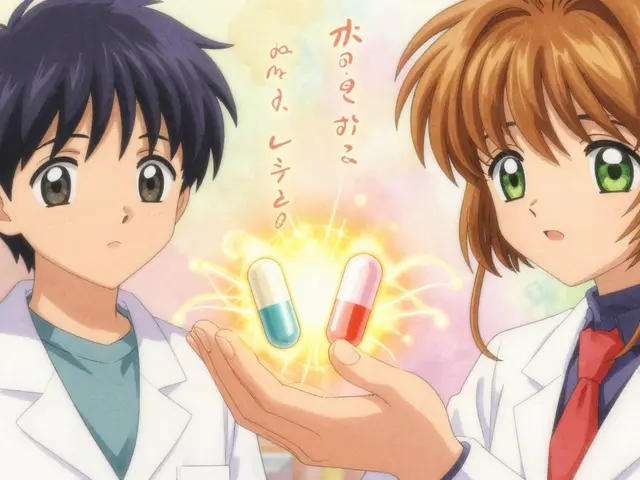
Imagine you’ve taken the same blue pill for years. Then, you get a white oval pill with "ABC" stamped on it. You panic. You think it’s fake. Or worse - you think it’s not the same. That’s exactly what happened to a patient in a 2023 Medscape report. They stopped taking a life-saving blood thinner because the resource they were given didn’t explain that different manufacturers make the same drug look different.
Pharmacists say this is one of the top reasons patients don’t refill prescriptions. And it’s not just about pills. It’s about trust. If you’ve been told your medicine is "the same," but it looks nothing like what you’ve used before - and no one shows you why - you’ll stop taking it.
Best Spanish-Language Resources Available Today
Not all Spanish materials are created equal. Some are useful. Others are confusing or outdated.
- AHRQ’s My Medicines List (Spanish): This is the gold standard. It’s clear, practical, and designed for everyday use. It includes space to write both brand and generic names side by side. Updated through December 2024.
- MedlinePlus Spanish PDFs: Offers bilingual comparisons of brand and generic names. Good for reference, but lacks interactive tools.
- Wake AHEC Pharmacy Translation Card: Designed for healthcare providers. Includes phrases like: "Esta medicina tiene una apariencia diferente, pero es lo mismo" - "This medicine looks different, but it is the same." Perfect for clinics.
- NIH’s "Medicamento Genérico" App (launched Sept 2023): A mobile tool with side-by-side images of brand vs. generic pills, cost calculators, and audio pronunciations. Over 147,000 downloads. Used by patients and providers.
- Spanish Academy’s Pharmacy Vocabulary Guide (updated July 2023): Teaches 27 key terms: medicamentos de venta libre (OTC), receta médica (prescription), efectos secundarios (side effects). Great for self-study.
What sets the best apart? They don’t just translate words. They show pictures. They use real-life examples. They answer the unspoken question: "¿Es esto realmente lo mismo?" - "Is this really the same?"
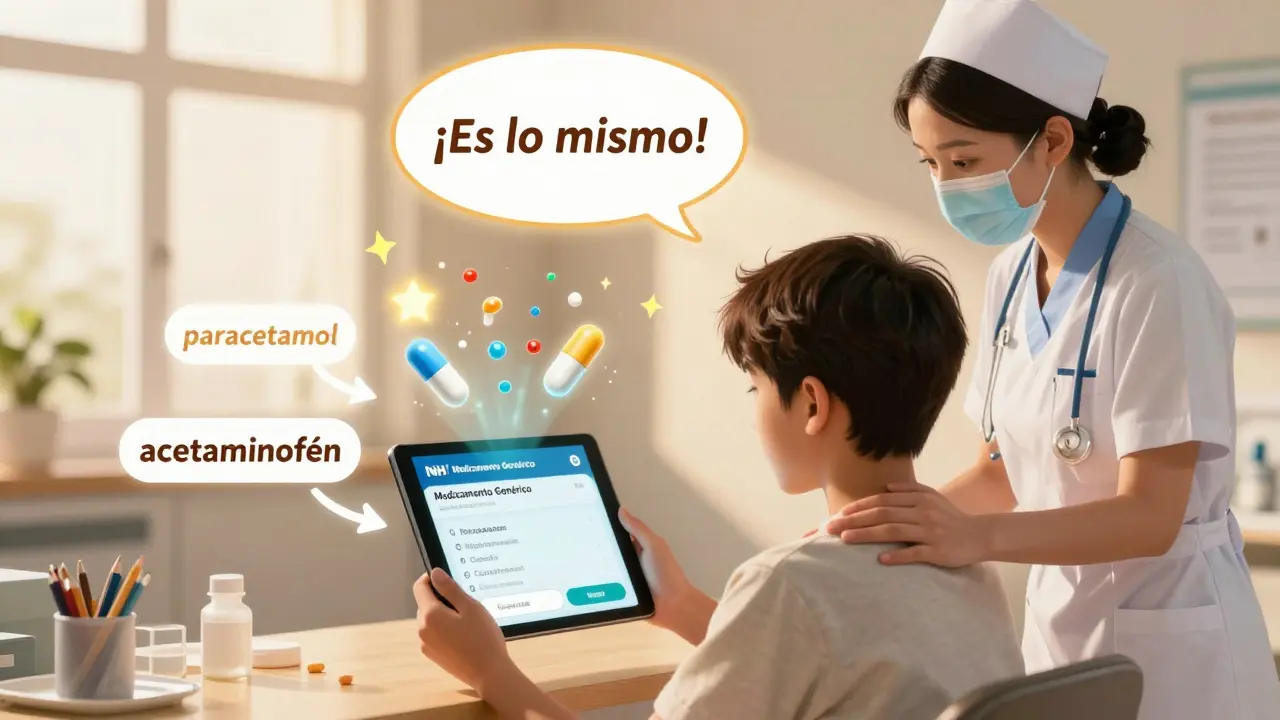
Regional Differences Matter - "Paracetamol" vs. "Acetaminofén"
One of the biggest oversights in Spanish-language health materials? Assuming all Spanish-speaking patients speak the same version of Spanish.
In Spain, the generic pain reliever is called paracetamol. In Mexico, Colombia, and most of Latin America, it’s acetaminofén. Same drug. Same effect. But if a patient from Mexico gets a handout from a clinic using "paracetamol," they might think it’s a different medicine.
Dr. Carlos Maldonado of the National Hispanic Medical Association pointed this out in 2023: "Resources explaining generic medications are particularly crucial - yet many ignore regional naming differences." A 2022 analysis by MyLanguageConnection.com found that 60% of Spanish-speaking patients in the U.S. had been confused by inconsistent drug names across clinics.
That’s why the NIH app now includes region-specific labels. Kaiser Permanente’s Spanish portal shows both terms side by side. And the AHRQ updated its 2024 version to include QR codes linking to video explanations in Mexican, Puerto Rican, and Colombian Spanish dialects.
How Providers Can Use These Tools Effectively
Healthcare workers don’t need to be fluent in Spanish to help. They just need the right tools.
Wake AHEC’s 2022 guide says most staff need 10-15 hours of training to use translation resources well. The biggest challenge? Not grammar. It’s knowing which phrase to use when.
Here’s what works:
- Use visual aids. Show side-by-side images of brand and generic pills. Studies show this reduces confusion by 37%.
- Use audio. Say the name aloud. "Farmacia" is pronounced "far-MA-sya," not "far-MAY-see-ah." Lingoda’s 2023 guide warns that mispronunciations cause mistrust.
- Ask, not assume. Don’t say, "You understand, right?" Say, "Can you tell me what you think this medicine does?"
- Use the AHRQ form. Have patients fill it out together. It turns a one-way lecture into a conversation.
Kaiser Permanente saw a 52% drop in patient calls about pill appearance after launching their visual library. That’s not magic. That’s clarity.
Why This Matters Beyond Cost
Generic medications make up 90% of prescriptions filled in the U.S. - but only 22% of drug spending. That’s billions saved every year. And for Spanish-speaking patients, those savings can mean the difference between taking medicine and skipping doses.
But cost isn’t the only issue. Non-adherence - when patients stop taking their meds - leads to hospitalizations, complications, and even deaths. The American Pharmacists Association found that 40% of medication errors in Spanish-speaking patients involve confusion over dosage or equivalence. Dr. Maria Hernandez of Harvard Medical School noted in 2022 that bilingual resources cut medication errors by 23% since 2015. But generic confusion remains one of the top three reasons patients don’t take their meds.
This isn’t just about translation. It’s about equity. Section 1557 of the Affordable Care Act requires providers to offer materials in languages spoken by their communities. The National CLAS Standards say materials must be easy to understand. Yet a 2023 audit found only 28% of community health centers had resources that clearly explained generic equivalence.
What’s Next? AI, Apps, and Personalized Help
The field is evolving fast.
In early 2024, MedlinePlus launched enhanced Spanish databases with visual drug identifiers. The NIH app now lets users scan a pill to find its generic match. Epic Systems, the giant EHR company, is piloting AI tools that automatically generate Spanish explanations tailored to a patient’s region - whether they’re from El Salvador or Spain.
These aren’t just tech upgrades. They’re lifelines. A 68-year-old grandmother in Florida shouldn’t need to guess whether her new pill is "the same" as the one she’s taken for 10 years. She should see it. Hear it. Understand it.
The demand is growing. The U.S. Hispanic population will hit 111 million by 2060. More people. More prescriptions. More need for clear, accurate, and culturally grounded information.
Resources exist. They work. But only if they’re used right. The goal isn’t to translate a pamphlet. It’s to build trust. To say, clearly and simply: "Esto es lo mismo. Y te va a ayudar. Y te va a costar menos." - "This is the same. And it will help you. And it will cost you less."
Are generic medications as effective as brand-name drugs in Spanish-speaking patients?
Yes. Generic medications contain the same active ingredients, dosage, and strength as brand-name drugs and are required by the FDA to meet the same safety and effectiveness standards. Studies show they work just as well, even in Spanish-speaking populations. The main difference is cost - not quality. Confusion often comes from appearance changes, not effectiveness.
Why do some Spanish-speaking patients refuse generic medications?
Many believe different-looking pills mean different medicine. If a patient has taken a blue pill for years and gets a white oval one, they may think it’s fake or weaker. Poor communication, lack of visual aids, and inconsistent terminology across clinics fuel this fear. Resources that show side-by-side images and explain equivalence reduce refusal rates by up to 37%.
Is "paracetamol" the same as "acetaminofén" in Spanish?
Yes. "Paracetamol" is the term used in Spain, while "acetaminofén" is used in most Latin American countries. Both refer to the same generic pain reliever. Many Spanish-language health resources now list both terms to avoid confusion. Patients who move between regions or visit different clinics may encounter both - and should be told they are identical.
Where can I find reliable Spanish-language guides on generic medications?
Reliable sources include the Agency for Healthcare Research and Quality (AHRQ) "My Medicines List" (updated 2024), MedlinePlus’s bilingual PDFs, the NIH "Medicamento Genérico" app, and Wake AHEC’s pharmacy translation card. These are updated regularly and designed for real-world use by patients and providers.
Do healthcare providers need special training to use these Spanish resources?
Yes. While fluency isn’t required, providers benefit from 10-15 hours of training on how to use translation tools effectively. Key skills include using visual aids, avoiding jargon, asking open-ended questions, and recognizing regional terminology differences. Clinics like Kaiser Permanente report fewer patient calls and higher adherence after implementing structured training.





Denise Jordan March 11, 2026
Look, I get it. Generic meds are ‘the same.’ But have you ever tried explaining that to your abuela who’s been taking blue pills for 15 years and suddenly gets a white one that tastes like chalk? No one shows you the science. They just hand you a pamphlet in Spanish and say ‘it’s fine.’ Meanwhile, she’s hiding the new pills in the cabinet because she thinks they’re ‘fake.’
Gene Forte March 13, 2026
Every life saved by a generic medication is a quiet victory. The real tragedy isn’t the cost-it’s the silence. When we fail to explain that a white pill can be just as powerful as a blue one, we’re not just losing money. We’re losing trust. And trust? That’s harder to rebuild than any formulary.
Kenneth Zieden-Weber March 14, 2026
So let me get this straight-we’ve got an app that scans pills, videos in regional dialects, and side-by-side images… but the system still doesn’t work? The fact that we need a $2 million tech solution to explain that ‘paracetamol’ and ‘acetaminofén’ are the same thing is a national embarrassment. We’re not failing because of language. We’re failing because we refuse to listen.
And don’t get me started on clinics that hand out AHRQ forms like they’re party favors. If the patient can’t read it, it’s just paper. If the pharmacist can’t say it out loud, it’s just noise.
Chris Bird March 15, 2026
Generic meds are just corporate fraud disguised as savings. Big Pharma makes you think they’re equal, but they’re not. The inactive ingredients? They’re toxic. The absorption rates? Totally different. The FDA? A joke. This whole ‘same drug’ thing is a scam to push cheaper pills on poor people. You think your abuela’s gonna survive on this? She’s gonna end up in the ER.
Miranda Varn-Harper March 16, 2026
It is profoundly concerning that healthcare institutions continue to prioritize translation over comprehension. One cannot simply substitute linguistic equivalents for conceptual clarity. The notion that a QR code linking to a Puerto Rican Spanish video constitutes adequate patient education is not merely inadequate-it is ethically negligent.
Donnie DeMarco March 17, 2026
bro this whole thread is wild. i just had my tio tell me he stopped his blood pressure med ‘cause the pill looked like a tic tac. no joke. he thought it was candy. the pharmacy gave him a sheet with ‘medicamento genérico’ written in tiny font and a picture of a blue pill. he got a white one. he’s like ‘this ain’t it.’
we need memes. we need tiktoks. we need someone to make a 30-sec video of a guy going ‘yo, this is the same damn drug, it just got a new outfit.’
also… why is it ‘acetaminofén’ in mexico and ‘paracetamol’ in spain? who decided this? was there a meeting? did someone vote? this is chaos.
Tom Bolt March 19, 2026
There is a moral imperative here-one that transcends healthcare policy, beyond pharmacology, and pierces the very fabric of human dignity.
Imagine: an elderly woman, trembling, holding two pills in her palm-one blue, one white. She has spent decades trusting her body to the rhythm of the blue. Now, the white one mocks her. It does not speak her language. It does not wear the same face. It does not carry the same history.
And yet, the system says: ‘It’s the same.’
It is not the same. Not to her. Not yet.
We do not need more apps. We need more humanity.
Shourya Tanay March 20, 2026
From a clinical pharmacogenomics standpoint, the heterogeneity in regional nomenclature introduces significant barriers to therapeutic adherence, particularly in populations with limited health literacy. The absence of standardized lexicons across linguistic subgroups exacerbates non-adherence pathways, which are further mediated by perceptual dissonance regarding pharmaceutical aesthetics.
Interventions grounded in cognitive load theory-such as visual schema matching and auditory reinforcement-demonstrate a statistically significant reduction in medication error rates (p < 0.01), particularly when contextualized within sociolinguistic frameworks.
Therefore, while the NIH app is a commendable step, its scalability remains contingent upon integration with EHR systems and clinician training modules anchored in sociocultural competence.