Every year, millions of Americans skip doses, split pills, or go without their medications because they can’t afford them. It’s not laziness. It’s not ignorance. It’s simple math: a $300 monthly prescription for a chronic condition can eat up half a paycheck. But here’s the quiet secret that’s been saving people billions: generic medications.
Generic drugs aren’t second-rate. They’re not leftovers or knockoffs. They’re the exact same medicine, down to the active ingredient, that your doctor prescribed - just without the fancy branding, flashy ads, or decades of marketing costs baked into the price. The FDA requires them to work the same way, in the same amount of time, with the same effectiveness. And they cost, on average, 85% less.
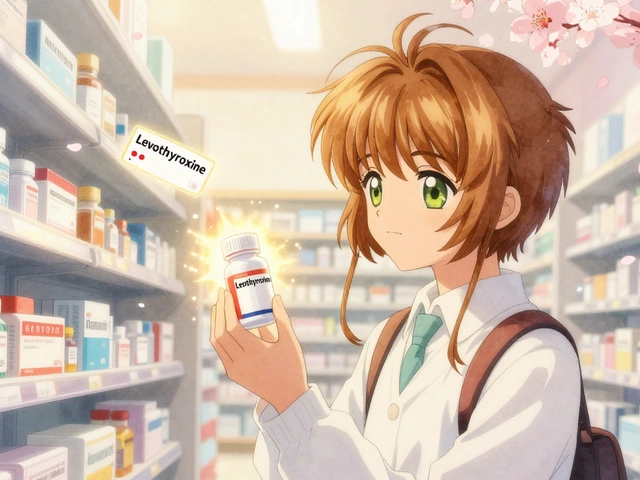
Take levothyroxine, the most common thyroid medication. The brand-name version, Synthroid, used to run $70-$100 for a 30-day supply. Today, the generic version? Around $4 at most pharmacies. That’s not a sale. That’s not a coupon. That’s the standard price. Same chemistry. Same results. Same side effects. Just a fraction of the cost.
How Generic Drugs Are Exactly the Same - And Why That Matters
The FDA doesn’t approve generics lightly. Before a generic drug hits the shelf, the manufacturer must prove it delivers the same amount of active ingredient into your bloodstream as the brand-name version - within a tight range of 80% to 125%. That’s not a guess. That’s lab-tested, clinical data. And it’s not just about the ingredient. The generic must match the brand in strength, purity, stability, and how quickly it dissolves in your body.
What’s different? The color. The shape. The fillers. The packaging. The name. Those inactive ingredients - things like dyes, binders, or flavorings - can vary. For most people, that’s meaningless. But for a small number of patients on drugs with a narrow therapeutic index - like warfarin, lithium, or levothyroxine - even tiny variations in absorption can matter. That’s why some doctors prefer to stick with one brand for these drugs. But even then, switching between FDA-approved generics is safe for most.
And here’s the kicker: the same factories that make brand-name drugs often make the generics. The FDA inspects them all the same way. There’s no separate standard for "cheap" medicine. If your brand-name drug comes from a plant in New Jersey, chances are the generic version comes from the same line - just labeled differently.
The Real Numbers: How Much You’re Really Saving
Let’s talk numbers that hit your wallet.
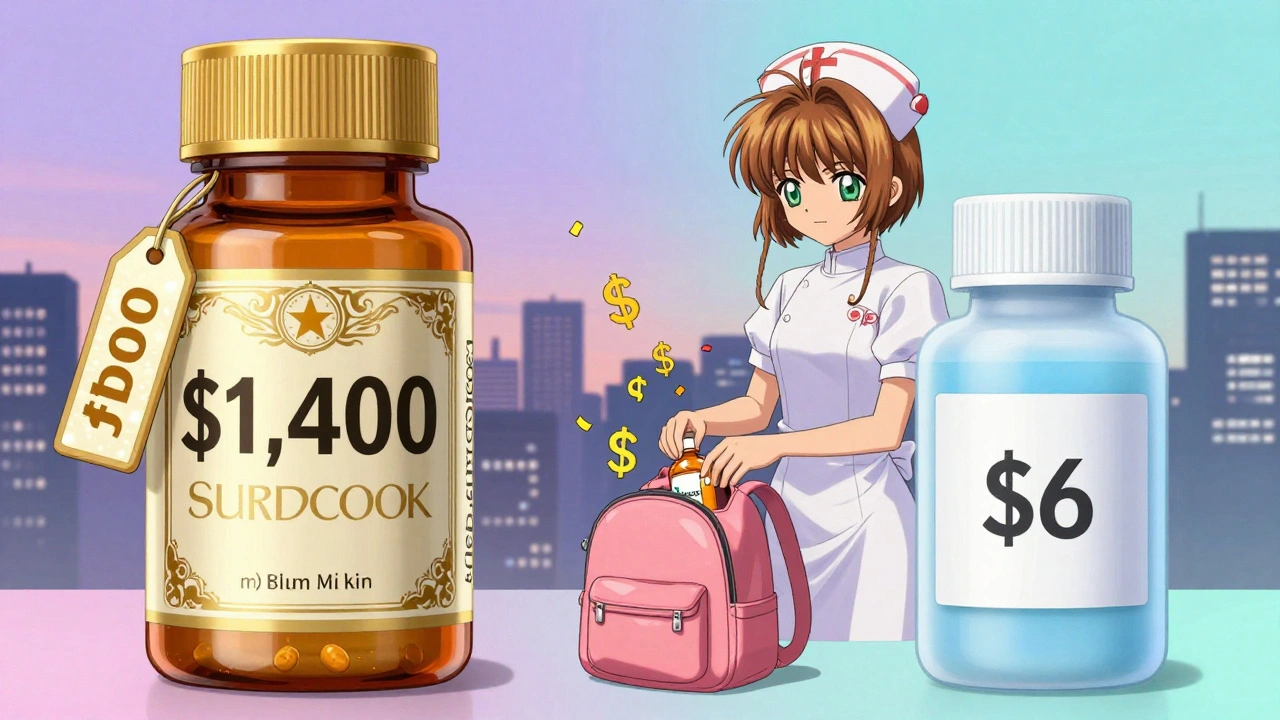
Over the last decade, generic drugs saved U.S. patients more than $2.2 trillion. That’s not a typo. That’s trillion with a T. In 2022 alone, the FDA estimated that just one new generic approval for a common blood pressure medication dropped the 30-day cost from $1,400 to under $60. That’s a $1,340 savings per person. Multiply that by hundreds of thousands of patients, and you’re looking at billions in annual savings.
Here’s another example: a diabetes medication that used to cost $88 per milliliter dropped to under $10 after generics entered the market. For a typical 30-day supply, that meant going from $3,800 down to $500 - a $3,300 savings per prescription.
And it’s not just about big-ticket drugs. Common meds like metformin, atorvastatin (Lipitor generic), or lisinopril (Zestril generic) routinely cost under $5 for a 30-day supply - sometimes under $2 - even without insurance. At Costco, 90% of the top 184 most-prescribed generic drugs cost less than $20 for a month’s supply. That’s cheaper than your morning coffee.
Even with insurance, generics cut your out-of-pocket costs in half compared to brand-name drugs. Between 2010 and 2020, the average amount patients paid directly for generics dropped by nearly 50%. Total costs - including what insurers paid - fell by almost 80%.
How to Make Sure You’re Getting the Generic
Pharmacists are legally allowed to swap a brand-name drug for its generic equivalent unless your doctor writes "dispense as written" or "no substitution" on the prescription. That means, in most cases, you’re already getting the cheaper version - even if you didn’t ask.
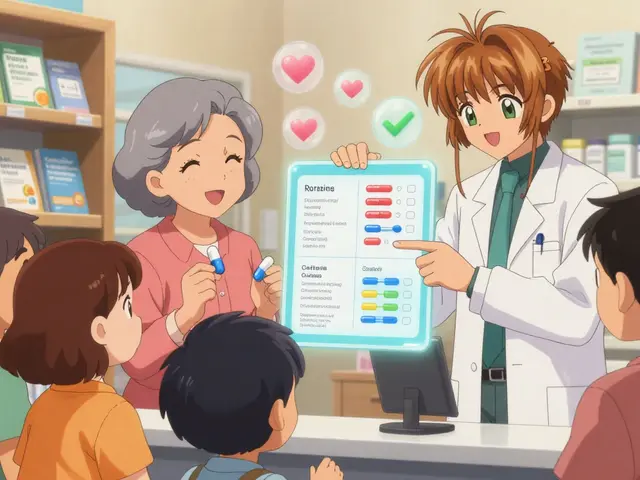
But don’t assume. Always check your receipt. Look at the label. If it says "metformin" instead of "Glucophage," you’re on the generic. If you’re unsure, ask your pharmacist. They’ll tell you right away.
Some insurance plans push generics even harder. They put them on Tier 1 - the lowest copay tier. Brand-name drugs? Tier 3 or 4, with higher costs. If your plan has a formulary, ask for a copy. You might be paying more than you need to.
And don’t forget discount programs. The Mark Cuban Cost Plus Drug Company launched in 2022 with transparent pricing: no middlemen, no markups. Their median savings per prescription? $4.96. For uninsured patients, it was $6.08. Some prescriptions saved over $10. That’s not a gimmick. That’s direct competition breaking the old pharmacy benefit manager system.
When Generics Might Not Be the Best Fit
Let’s be honest - not every situation is black and white. A small number of patients report feeling different after switching from a brand to a generic. For some, it’s a placebo effect. For others, it’s real - especially with drugs where tiny changes in blood levels matter.
Levothyroxine is the classic example. Some patients swear their energy, mood, or weight changes when they switch between generic brands. The FDA says the difference is negligible. But if you’re one of those people who feels off after a switch, tell your doctor. You can request the brand. Or stick with one generic manufacturer - many pharmacies let you refill with the same version each time.
Biosimilars - the generic version of complex biologic drugs like Humira or Enbrel - are still catching up. They’re not exact copies like traditional generics. They’re highly similar, but approval is harder and slower. Prices are coming down, but not as dramatically yet. Still, they’re the next wave of savings.
And while rare, supply chain issues can sometimes delay generic availability. If your usual generic is out of stock, your pharmacist may give you the brand temporarily. Don’t panic. It’s not a trick. It’s a backup.
Why This Isn’t Just About Money - It’s About Health
Cost isn’t just a number on a bill. It’s the difference between taking your medicine every day or skipping it because you’re choosing between rent and refills.
Studies show that when patients can afford their meds, they take them. When they can’t, their health suffers. Hospital visits go up. Complications rise. Blood pressure stays high. Cholesterol climbs. Diabetes gets worse.
One patient in Phoenix told ABC15 she saved hundreds a year by switching her daughter - who has intellectual disabilities - to generics. Another Reddit user said he cut his monthly medication bill from $450 to $80 by switching to generics for his blood pressure, cholesterol, and thyroid meds. That’s $4,400 saved in a year. That’s a vacation. A new tire. A dental visit. A week’s groceries.
Generics aren’t a compromise. They’re a correction. They fix a broken system where profit margins were inflated by decades of patent monopolies. They make treatment accessible, not just for the wealthy, but for the working class, the elderly, the uninsured, and the underinsured.
What You Can Do Today
Here’s what to do right now:
- Look at your last prescription receipt. Is it a generic? If not, ask your pharmacist if one is available.
- Call your pharmacy and ask for the cash price on your medication - even if you have insurance. Sometimes cash is cheaper than your copay.
- Check Costco, Walmart, or the Mark Cuban Cost Plus Drug Company. Many common generics cost less than $10 there.
- Ask your doctor if your prescription has a generic alternative - especially if it’s expensive.
- If you’re on Medicare Part D, use the Medicare Plan Finder tool. It shows you which pharmacies offer the lowest prices for your drugs.
You don’t need to be a pharmacist. You don’t need to be a policy expert. You just need to ask. One question can save you hundreds - or thousands - a year.
What’s Next for Generic Drugs?
The pipeline is full. Over 100 companies in the U.S. are making generics. The FDA approved hundreds of new generics in 2023 alone. More blockbuster drugs are coming off patent - including major ones for asthma, depression, and heart disease.
Biosimilars are starting to hit the market in bigger numbers. Expect to see savings on drugs like Humira and Enbrel in the next few years - possibly cutting costs by 70% or more.
But the biggest threat isn’t lack of supply. It’s consolidation. A few big manufacturers now control most of the generic market. If one shuts down, shortages can happen. That’s why watchdogs are pushing for more competition and faster FDA approvals.
For now, the message is clear: generics work. They’re safe. They’re effective. And they’re saving lives - one $4 pill at a time.



val kendra December 5, 2025
Just switched my dad’s levothyroxine to generic last month. He’s got more energy now, not less. No weird side effects. Saved him $80 a month. If you’re scared to switch, just try it for a cycle. Worst case? You go back. Best case? You buy yourself a beer with the extra cash.
Shofner Lehto December 6, 2025
I’ve been prescribing generics for 18 years. The fear around them is 90% myth and 10% real edge cases. Most patients don’t even notice the switch. The real problem? Doctors don’t push it enough. Pharmacists are doing the heavy lifting while docs keep scribbling brand names like it’s 2005.
Isabelle Bujold December 7, 2025
It’s fascinating how the pharmaceutical industry has conditioned us to equate price with quality. The FDA’s bioequivalence standards are incredibly rigorous - far more so than many over-the-counter supplements that get sold without any real testing. And yet, people will pay $200 for a branded statin while ignoring that the generic version has identical pharmacokinetics. The psychological barrier here is less about science and more about branding inertia. Even when the data is clear, the mind clings to the familiar label like a security blanket.
George Graham December 8, 2025
My mom’s on warfarin. She switched from brand to generic and had a slight INR fluctuation. Not dangerous, just needed a tiny dose tweak. Her pharmacist flagged it right away. Point is - it’s not about generics being bad. It’s about communication. If you’re on a narrow-therapeutic-index drug, tell your doc. Stick with one generic manufacturer if it works. Don’t let fear stop you, but don’t ignore the details either. Small adjustments make all the difference.
Elizabeth Crutchfield December 9, 2025
i just found out my blood pressure med is generic and i was like wait… this is the same thing as the fancy one? i’ve been paying 70 bucks a month and now its 4?? my brain cant process this
Michael Feldstein December 10, 2025
My buddy’s kid has epilepsy. They tried switching generics and had a seizure spike. Turned out the new generic had a different filler that affected absorption. Not common, but it happened. They went back to the brand - insurance covered it because it was medically necessary. Bottom line: if you feel off after a switch, don’t brush it off. Your body knows. Advocate for yourself.
jagdish kumar December 10, 2025
Capitalism turns medicine into a ritual. We worship the pill with the logo. The truth? We’re all just lab rats in a corporate cathedral.
Jordan Wall December 11, 2025
While I appreciate the utilitarian appeal of generics, one must acknowledge the epistemological void created by commodifying therapeutic equivalence. The pharmacokinetic variance, however statistically insignificant, introduces ontological uncertainty into patient autonomy. Moreover, the hegemonic dominance of a few manufacturers in the generic space undermines the very notion of market competition - a paradox, really.
Jessica Baydowicz December 13, 2025
OMG I JUST SAVED $400 THIS MONTH!! My cholesterol med went from $180 to $12. I bought myself a new pair of boots. No regrets. Generics are the unsung heroes of healthcare. Tell your friends. Tell your mom. Tell your weird uncle who still thinks ‘brand’ means better. We need to normalize this.
Augusta Barlow December 14, 2025
Let’s be real - who really controls the FDA? Big Pharma. They own the labs, the lobbyists, the contracts. The ‘same active ingredient’ line? Total BS. They tweak the fillers just enough to avoid lawsuits but still make you feel weird. And those ‘same factories’? Yeah, right. The generics are made in India or China while the brand stays in New Jersey. You think they’re testing the same way? Please. This is a money scheme disguised as science.
Joe Lam December 15, 2025
You people are naive. The generic industry is a cartel. They collude on pricing. The ‘$4 pill’? That’s a trap. It’s designed to make you feel good while they quietly raise prices on the next 20 drugs. And don’t get me started on the quality control. I’ve seen generics that crumble in your hand. This isn’t saving money - it’s gambling with your health.