OTC Drug Facts Label: How to Read and Use It Right
When you pick up a bottle of pain reliever, cold medicine, or antacid, you’re holding a OTC drug facts label, a standardized, government-mandated summary of what’s in the medicine, how to use it safely, and what to watch out for. Also known as the Drug Facts panel, it’s the only thing standing between you and a dangerous mistake. Most people glance at the brand name and dose, then toss the bottle. That’s how overdoses happen—especially in kids, seniors, and people juggling multiple meds.
The OTC drug facts label isn’t just fine print. It’s your cheat sheet for safety. It breaks down active ingredients, tells you exactly how much to take, warns about interactions, and lists side effects in plain language. For example, if you’re giving your child acetaminophen, the label tells you to dose by weight—not age. Skip that step, and you risk liver damage. Same goes for ibuprofen. And if you’re on blood pressure meds, the label might warn you not to mix it with certain cold remedies. That’s not a suggestion—it’s a red flag.
Many don’t realize that two different OTC products can have the same active ingredient. Take Tylenol and a nighttime cold tablet. Both often contain acetaminophen. Take both together? You’re doubling your dose without knowing it. That’s why the active ingredient section is the most important part. Write it down. Compare it across bottles. If you’re taking more than one OTC medicine, check each label for the same chemical name. The warnings section tells you who shouldn’t take it—like people with liver disease, high blood pressure, or pregnancy. The directions section tells you how often and how much. Ignore it, and you’re gambling with your health.
There’s no magic trick. Reading the label takes 30 seconds. But that 30 seconds stops hospital visits. It keeps your kids safe. It keeps your liver working. It keeps you from wasting money on pills that clash with your other meds. The OTC drug facts label is designed for you—not the manufacturer. It’s not there to impress. It’s there to protect you.
Below, you’ll find real guides that break down how to use these labels for children, for seniors, for people on multiple prescriptions, and even how to spot when a label is hiding risks. These aren’t theory pieces. They’re what people actually need to know before they swallow something.
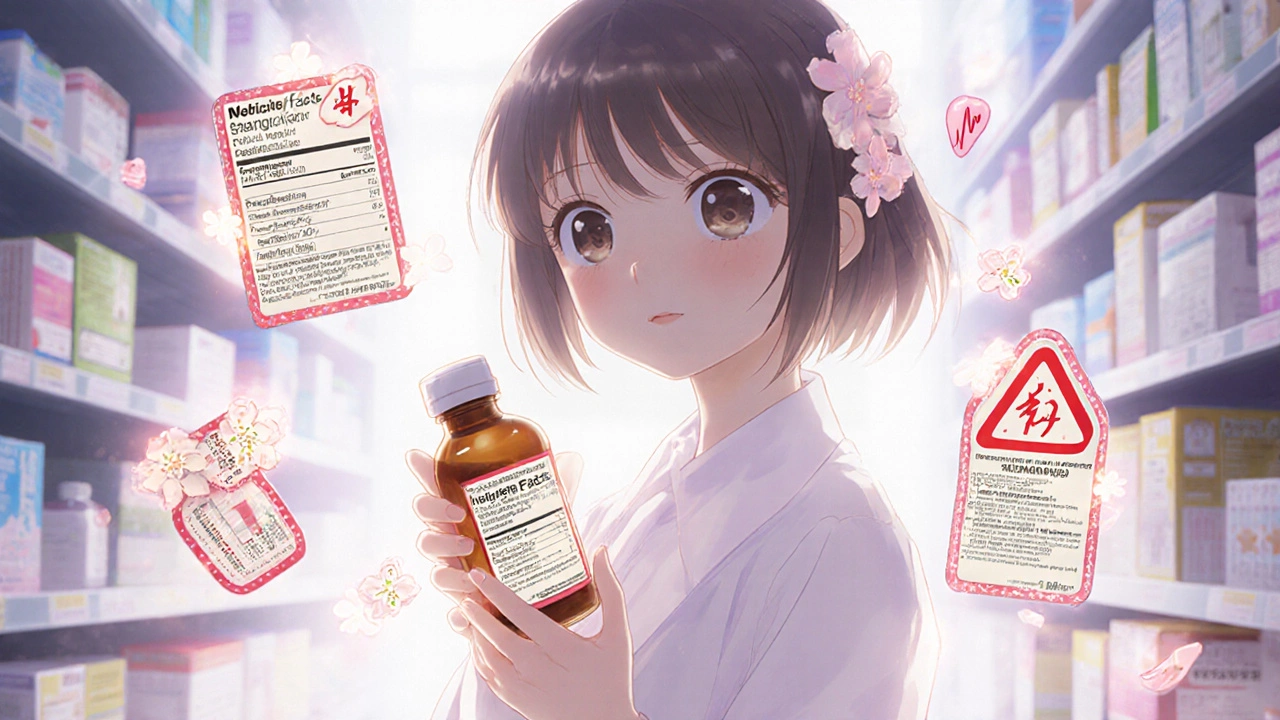
How to Read OTC Drug Facts Labels Correctly and Confidently
Learn how to read OTC drug facts labels to avoid dangerous overdoses, hidden allergies, and ineffective treatments. Understand active ingredients, warnings, and dosing to use over-the-counter medicine safely.