You pick up your prescription for a well-known heart medication, and the pharmacist tells you there is a cheaper option available. It’s not just any generic; it’s an authorized generic, which is a pharmaceutical product identical to the brand-name drug but sold at a lower price by the brand manufacturer or with their permission. You might wonder why this version costs less if it comes from the same company that makes the expensive brand. The answer isn’t magic-it’s market strategy.
Authorized generics (AGs) are often misunderstood as being "lesser" quality because of the lower price tag. In reality, they are chemically identical to the brand-name drug in every way: dosage form, strength, route of administration, safety, and intended use. The only difference is the label and the price. Understanding why AGs cost less requires looking at how pharmaceutical companies compete during the critical window when patents expire.
What Exactly Is an Authorized Generic?
To understand the pricing, you first need to understand the product. An authorized generic is produced by the brand-name company itself or by another manufacturer under the brand’s explicit permission. Crucially, it is marketed under the original New Drug Application (NDA), which is the approval granted by the U.S. Food and Drug Administration (FDA).
This differs significantly from traditional generics. Traditional generic manufacturers must file an Abbreviated New Drug Application (ANDA) to prove their drug is bioequivalent to the brand. Authorized generics skip this step entirely because they rely on the brand’s existing NDA data. This means no separate FDA review process is needed for the AG, saving time and regulatory costs.
The FDA maintains oversight by requiring NDA holders to notify the agency when marketing an AG. The agency then publishes a quarterly list of these products. As of late 2023, there were over 130 active authorized generic products across various therapeutic categories, ranging from common blood pressure medications to specialized treatments.
The Role of the Hatch-Waxman Act
The existence of authorized generics is directly tied to the Hatch-Waxman Act of 1984, which established the framework for generic drug entry in the United States. This law created a balance between rewarding innovation through patents and promoting competition through generics.
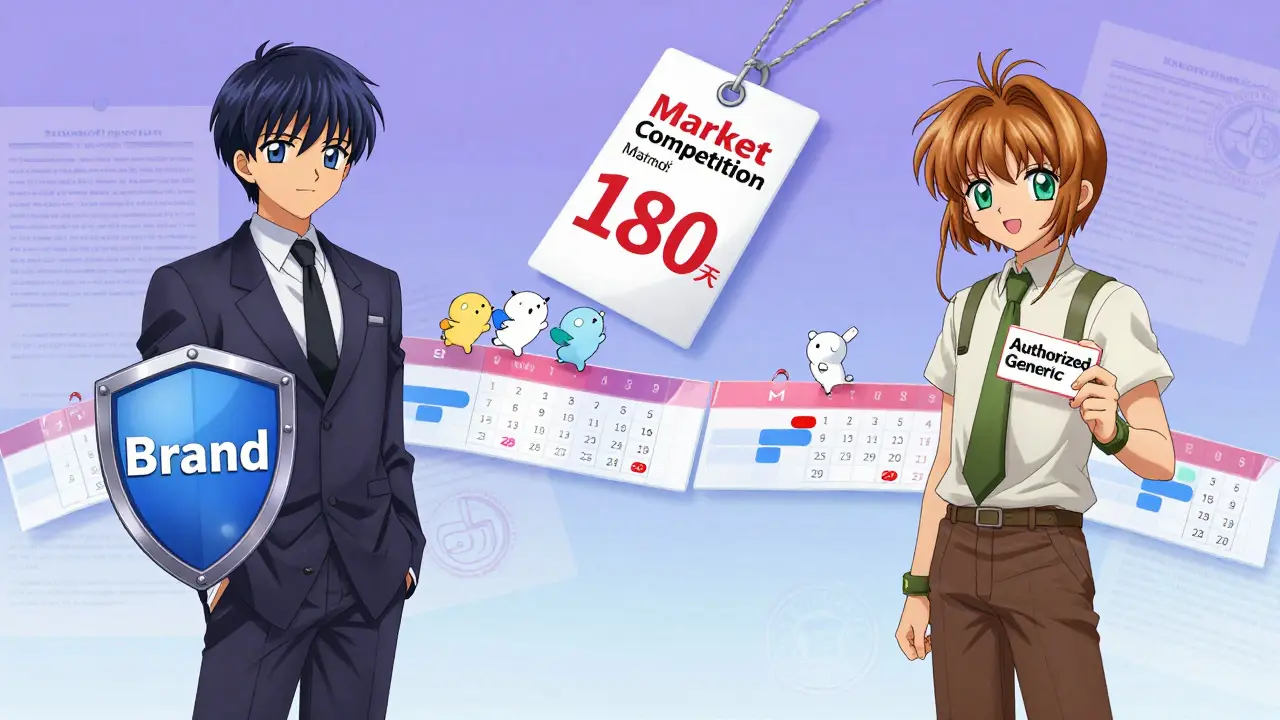
A key provision of the act is the 180-day marketing exclusivity period. When a patent expires, the first generic manufacturer to challenge the patent and get FDA approval gets six months of exclusive rights to sell the generic. During this window, no other generic competitors can enter the market. Historically, this allowed the first generic maker to charge prices close to the brand name, since patients had no other low-cost alternative.
Brand manufacturers realized they could disrupt this monopoly. By launching an authorized generic themselves, they introduce immediate competition into the market. This forces the first generic challenger to lower their prices right away, rather than waiting out the six-month exclusivity period. It’s a strategic move to maintain market share and keep prices competitive from day one.
Why Do Authorized Generics Cost Less?
If the drug is identical, why is the price tag lower? Several factors drive down the cost of authorized generics compared to brand-name drugs:
- No Regulatory Redundancy: Since AGs operate under the original NDA, the manufacturer avoids the significant costs associated with filing and defending an ANDA. These savings are passed on to some degree in the pricing structure.
- Immediate Market Pressure: The presence of an AG signals to the first generic competitor that they cannot charge premium prices. To win market share, both the AG and the generic must price aggressively. Studies show retail prices drop by 4% to 8% simply because an AG is present.
- Marketing Efficiency: Brand companies often launch AGs with minimal marketing campaigns. They don’t need to build brand awareness because doctors already know the brand name. The AG leverages the brand’s reputation without the high advertising spend.
- Distribution Channels: AGs are often distributed through different channels or wholesalers than the brand, allowing for more flexible wholesale pricing. Wholesale prices have been observed to drop by 7% to 14% when AGs enter the market.
It’s important to note that while AGs are cheaper than brands, they are not always the cheapest option available. Once the 180-day exclusivity period ends, multiple traditional generics may enter the market, driving prices down even further-sometimes by 50% or more in the first year.
How Pharmacy Benefit Managers Influence Your Price
Your final out-of-pocket cost doesn’t depend solely on the manufacturer’s list price. It depends heavily on how Pharmacy Benefit Managers (PBMs) position the drug on their formularies. PBMs negotiate rates with drug manufacturers and decide which tier a medication falls into for insurance plans.
Here is where it gets tricky. Sometimes, PBMs place authorized generics on the same tier as the brand-name drug. If this happens, you pay the same copay for the AG as you would for the brand, negating the potential savings. Other times, PBMs place AGs on a generic tier, which offers significant savings for the patient.
Data from Truveris, a healthcare analytics firm, analyzed 1.2 million patient records and found that when AGs are placed on the same formulary tier as traditional generics, patient adherence improves by 8.2 percentage points. This suggests that clear pricing advantages lead to better health outcomes. However, if the PBM favors the brand or the first generic competitor, the AG’s price advantage may not reach the consumer.
Real-World Examples of Authorized Generic Strategy
Looking at specific cases helps illustrate how this strategy works in practice. One of the most famous examples involves Mylan and its EpiPen epinephrine auto-injector.
In 2016, following intense public criticism over price hikes that raised the EpiPen cost from $100 in 2007 to $600, Mylan launched an authorized generic version. They priced it at $300-exactly half the brand price. This move was designed to calm public outrage and capture price-sensitive customers who could no longer afford the brand.
Another example is Gilead Sciences, which launched authorized generic versions of its hepatitis C drugs Harvoni and Epclusa in 2019. These launches occurred well before patent expiration. By introducing AGs early, Gilead aimed to maintain market share in a highly competitive landscape where traditional generics were anticipated. This proactive approach allows companies to control the narrative around their drug’s transition from brand to generic status.
| Feature | Brand Name Drug | Authorized Generic (AG) | Traditional Generic |
|---|---|---|---|
| Manufacturer | Original Brand Company | Brand Company or Partner | Third-Party Manufacturer |
| FDA Approval Path | New Drug Application (NDA) | Uses Original NDA | Abbreviated New Drug Application (ANDA) |
| Price Relative to Brand | 100% (Baseline) | Typically 92-96% | Varies; can be <20% after full competition |
| Market Entry Timing | Patent Protected | Often during 180-day exclusivity | After patent expiry/exclusivity |
| Quality Standards | Identical Active Ingredients | Identical Active Ingredients | Bioequivalent Active Ingredients |
Are Authorized Generics Safe and Effective?
Safety is a common concern for patients switching from brand to generic. The short answer is yes, authorized generics are safe and effective. Because they are manufactured by the brand company using the same facilities, raw materials, and quality control processes, there is no change in the drug’s performance characteristics.
The FDA requires that all generic drugs, including authorized ones, meet strict standards for purity, potency, and stability. The active ingredient-the part of the drug that does the work-is exactly the same. Any inactive ingredients (like fillers or dyes) may differ slightly, but these differences do not affect how the drug works in your body.
Dr. Aaron Kesselheim, a professor at Harvard Medical School, notes that authorized generics serve as an immediate competitive force. He emphasizes that the presence of an AG prevents the first generic manufacturer from establishing a high-price equilibrium. From a medical standpoint, the therapeutic effect remains consistent whether you take the brand, the AG, or a traditional generic.
Potential Downsides and Controversies
While AGs offer savings, they are not without controversy. Some experts worry about anti-competitive practices. For instance, critics argue that brand companies might use AGs as leverage in patent litigation settlements. By offering favorable terms to launch an AG, a brand might delay the entry of other, potentially cheaper generic competitors.
Dr. Peter Bach of Memorial Sloan Kettering Cancer Center has expressed concerns that AGs can sometimes be used strategically to prolong market dominance rather than purely to save consumers money. The Federal Trade Commission (FTC) monitors these practices closely to ensure that AGs are not used to stifle genuine competition.
Additionally, the complexity of PBM formulary placement can confuse patients. If you expect a lower copay but end up paying the same amount as the brand, the perceived benefit vanishes. Transparency in how PBMs set Maximum Allowable Costs (MAC) is improving, with 32 states now requiring disclosure of MAC list methodologies, but challenges remain.
How to Save Money with Authorized Generics
If you want to take advantage of authorized generic pricing, here are practical steps you can take:
- Ask Your Pharmacist: When picking up a prescription, ask if an authorized generic is available. Pharmacists have access to real-time inventory and pricing data.
- Check Your Insurance Formulary: Log in to your insurance portal or call customer service to see which tier the AG falls into. If it’s on a higher tier than traditional generics, ask if a substitution is possible.
- Compare Total Costs: Don’t just look at the copay. Consider the total out-of-pocket cost, especially if you are nearing your deductible. Sometimes paying cash for an AG is cheaper than using insurance for the brand.
- Monitor Patent Expirations: If you are on a chronic medication, check if the brand patent is expiring soon. This is the window when AGs are most likely to appear.
Remember, the goal is to find the most affordable option that fits your insurance plan. For many Medicare Part D beneficiaries, the recent cap on out-of-pocket costs ($2,000 annually under the Inflation Reduction Act) makes understanding these pricing dynamics even more critical for managing annual expenses.
Is an authorized generic the same quality as the brand name drug?
Yes. Authorized generics contain the exact same active ingredients, dosage form, and strength as the brand-name drug. They are often manufactured in the same facilities by the same company, ensuring identical quality and performance standards approved by the FDA.
Why are authorized generics cheaper than brand names?
They are cheaper primarily due to reduced marketing costs, lack of redundant regulatory fees (since they use the brand's existing NDA), and increased market competition. The presence of an AG forces aggressive pricing from the start, preventing the brand from maintaining monopoly-level prices once generic entry begins.
Do I need a new prescription to switch to an authorized generic?
Usually, no. Since authorized generics are considered interchangeable with the brand in most contexts, pharmacists can often substitute them automatically. However, if your doctor wrote "Dispense as Written" on the prescription, you may need to contact them to allow the substitution.
Are authorized generics always covered by insurance?
Coverage varies by plan. While many insurance plans cover authorized generics, Pharmacy Benefit Managers (PBMs) determine the formulary tier. If the AG is placed on the same tier as the brand, your copay may not decrease. Always check your specific plan details or ask your pharmacist.
When do authorized generics typically enter the market?
Authorized generics often enter the market during the 180-day exclusivity period granted to the first generic challenger. This timing allows the brand manufacturer to compete directly with the single generic entrant, keeping prices lower than they would be if the generic had a temporary monopoly.



Mike Crump June 2, 2026
Hey everyone! 👋 This is actually a really fascinating topic that doesn't get enough attention in the mainstream news. I work in healthcare logistics, and seeing how these authorized generics (AGs) play out in real-time is like watching a chess match between big pharma and generic manufacturers. It's wild to think that the exact same pill can have three different price tags depending on who slaps the label on it and when it hits the shelves. The part about the Hatch-Waxman Act creating this weird little window for competition is key here. Most people just see 'generic' and assume it's all the same, but the timing and the regulatory path make a huge difference in your wallet.
I've noticed with my own prescriptions that sometimes the pharmacist will offer the AG if they know the brand patent is expiring soon. It’s a smart move by the brands to keep some revenue stream open rather than letting their market share drop to zero overnight. Plus, knowing that the FDA oversight is still there gives me peace of mind. We need more transparency like this so patients aren't just passive victims of pricing algorithms.
Henri-Paul Soulodre June 4, 2026
The sheer audacity of these pharmaceutical companies to treat human health as a mere commodity for strategic market manipulation is absolutely repugnant! 🤬 They sit in their ivory towers, deciding who gets to live and who gets to suffer based on some convoluted patent expiration schedule. It is morally bankrupt to exploit the desperation of sick people by playing these games with pricing tiers. You call it 'market strategy,' I call it legalized extortion. The fact that they can sell the exact same life-saving medication at half price simply because they changed the wrapper proves that profit is the only god they worship. It makes my blood boil to think that someone might die or skip doses because a PBM decided to place an authorized generic on the wrong tier. Shame on them all!
Daniel Tremblay June 5, 2026
Oh, look at Henri-Paul getting his moral high ground ready before coffee even kicks in. ☕ Typical. But seriously, let's cut the drama and look at the facts. The system isn't perfect, sure, but calling it 'extortion' is a bit hyperbolic, don't you think? These companies are businesses; they exist to make money. If they didn't, we wouldn't have any new drugs developed. The authorized generic model is actually a clever way to disrupt the monopoly of the first generic challenger. It keeps prices lower than they would be otherwise. So instead of throwing tantrums, maybe appreciate the slight dip in cost? Or are you too busy judging everyone else's soul?
Henri-Paul Soulodre June 6, 2026
Daniel, your sarcasm is as thin as your understanding of ethics! 😡 To suggest that profit motives justify keeping people from affordable medication is despicable. I am not judging souls; I am judging actions that harm the vulnerable. Your 'clever disruption' is just corporate greed wearing a nice suit. And yes, I am judging, because someone has to stand up against this systemic injustice. You defend the oppressors while pretending to be reasonable. Disgusting.
Daniel Tremblay June 6, 2026
Wow, touchy today, aren't we? 🙄 Look, I'm not defending greed, I'm explaining how the sausage is made. You want change? Vote for better regulations. Don't blame the players for following the rules. End of story. Now, if you'll excuse me, I have actual work to do.
Samantha Arbuckle June 7, 2026
hey guys lets take a breath 🌬️ this is super interesting info tho i never knew ags were chemically identical to the brand name drugs 🤯 it really changes how i look at my prescription bills. the part about pbms placing them on different tiers is crazy because that totally messes with our savings. i feel like we need more education on this so we can ask our pharmacists the right questions 💊✨ #healthcareawareness
Jonathan Paul June 8, 2026
its not magic its just capitalism doing what it does best exploiting loopholes lol. the whole hatch-waxman act is a joke really. they say its for balance but its just another way for big pharma to squeeze every last dollar out of us before the patents expire. dont fall for the marketing speak about 'market strategy'. its all about control. and the fda? theyre just rubber stamping everything. wake up sheeple 🐑
ANGELA CHINENYE June 10, 2026
Actually, Jonathan, that is a significant oversimplification of a complex regulatory framework. The Hatch-Waxman Act was designed specifically to incentivize innovation while promoting competition through generics. Authorized generics are a legal and regulated mechanism within that framework. While one may critique the profit margins, dismissing the entire structure as a 'joke' ignores the substantial benefits of increased access to lower-cost medications. It is important to rely on factual information rather than conspiracy-adjacent rhetoric when discussing public health policy. Please review the FDA guidelines on NDA vs ANDA processes for a clearer understanding.
Jonathan Paul June 10, 2026
oh wow miss chinney come in with your fancy words and 'regulatory frameworks' 🙄 nobody asked for your lecture. you sound like a robot programmed by pfizer. keep reading your textbooks while the rest of us deal with reality. the system is rigged period. end of discussion.
ANGELA CHINENYE June 11, 2026
I understand your frustration, Jonathan, but ad hominem attacks do not contribute to a productive dialogue. My intent is to provide accurate information that can help others navigate their healthcare options effectively. If you find the current system flawed, which many experts agree upon, then engaging in informed discourse is the most effective way to advocate for change. Personal insults only serve to derail meaningful conversation.
Aishwarya Thankachan June 13, 2026
Guys, let's talk about the KPIs here 📉 The real issue is the PBM formulary placement algorithm. When AGs are placed on Tier 3 instead of Tier 2, the patient adherence metrics tank 📉📉. It's not just about the list price; it's about the net acquisition cost (NAC) and the rebate clawbacks. Pharma companies are gaming the MAC lists. We need better interoperability between pharmacy systems and insurance formularies to ensure the lowest cash price is presented to the consumer at the POS. Otherwise, the 4-8% retail price drop mentioned in the post is irrelevant if the copay stays the same. #HealthTech #PharmaStrategy
Jerry Mathews June 15, 2026
Hey Aishwarya, that's some heavy jargon for a Tuesday morning! 😅 But you make a good point about the PBMs. I tried asking my pharmacist about an authorized generic for my dad's blood pressure med, and he said our insurance plan didn't cover it differently than the brand. It was frustrating because the box looked exactly the same, just different colors. I guess we just have to keep pushing for better transparency. Thanks for sharing the technical side of things though, helps explain why it's so confusing for regular folks like us.
Jennifer Legore June 16, 2026
It is truly encouraging to see such a detailed breakdown of this often-overlooked aspect of pharmaceutical economics! 😊 Understanding the nuances of authorized generics empowers us to make more informed decisions about our healthcare. As Jennifer Legore always says, knowledge is power! Let us continue to support initiatives that promote transparency and affordability in medicine. Together, we can advocate for a system that prioritizes patient well-being over corporate profits. Keep up the great work, everyone! 🌟💪