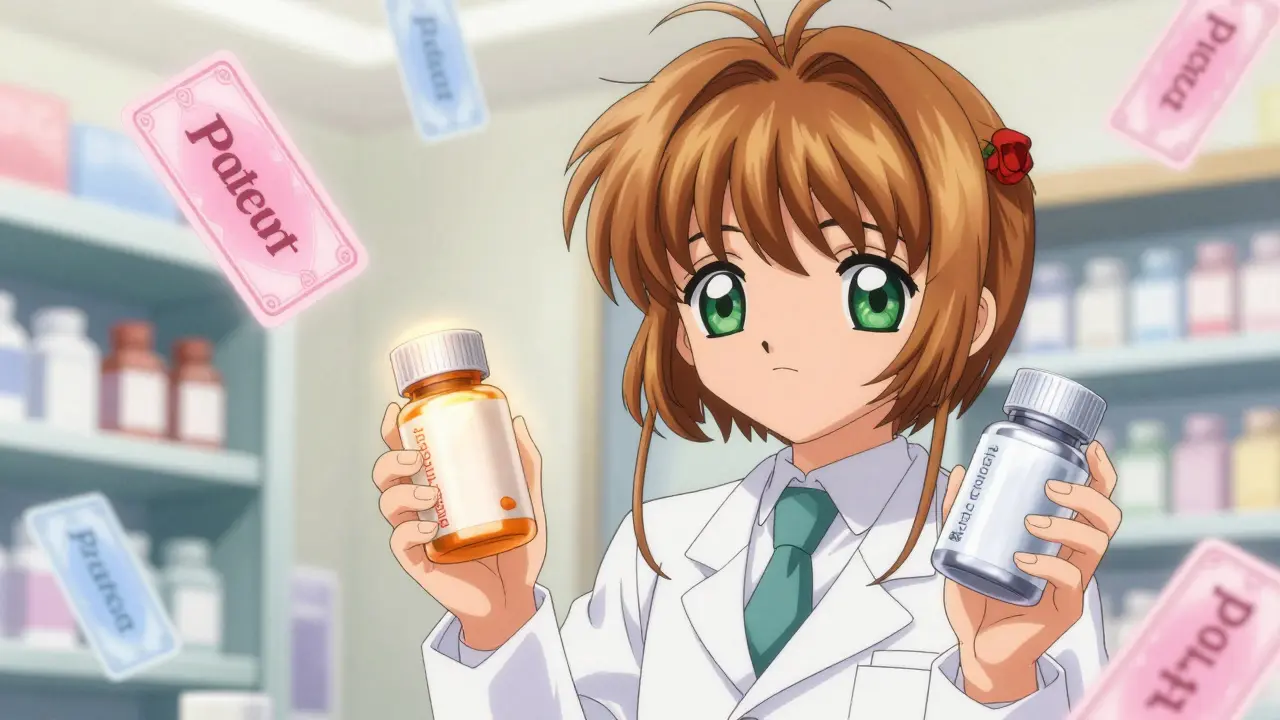
Have you ever looked at your prescription bill and wondered why some medications have a cheap "authorized generic" version while others don't? It’s frustrating. You see a lower price tag for one drug, but when you try to find the same deal for another essential medication, it’s nowhere to be found. The short answer is that authorized generics are not a public service; they are a strategic business tool used by big pharmaceutical companies.
The reason most drugs lack an authorized generic comes down to profit margins, patent cliffs, and legal risk. Brand manufacturers only launch these versions when it makes financial sense for them to do so. If a drug isn't selling well enough, or if the patent situation is too messy, the company will simply ignore the option. This leaves patients and pharmacies stuck with higher prices or limited choices.
What exactly is an authorized generic?
Authorized generics are pharmaceutical products approved as brand-name drugs but marketed without the brand-name or trademark, sold at generic prices. Unlike traditional generics that require a separate Abbreviated New Drug Application (ANDA) to prove they work the same way, authorized generics are manufactured under the brand's existing New Drug Application (NDA). This means they are chemically identical to the brand-name drug because they come from the same factory, using the same ingredients and processes. The only difference is the label and the price.
Why don't all drugs have an authorized generic version?
The primary limitation is economic strategy. Brand manufacturers only create authorized generics for high-revenue drugs where they want to compete with upcoming traditional generics or protect their market share during the critical 180-day exclusivity period granted to the first generic filer. According to data from Evaluate Pharma, 89% of brand manufacturers with top-selling drugs earning over $1 billion annually use this strategy, compared to only 22% of those with smaller revenue streams. If a drug doesn't generate massive sales, the cost and complexity of launching an authorized generic aren't worth it for the company.
How do authorized generics affect drug prices?
For consumers, authorized generics can mean immediate savings. The Federal Trade Commission (FTC) reported in 2011 that retail prices drop by 4-8% and wholesale prices fall by 7-14% when an authorized generic enters the market during the exclusivity period. However, this benefit is short-lived and selective. While you might save $18.75 per prescription on average, these discounts only apply to the specific drugs the brand owner chooses to release. Most medications never get this treatment, leaving patients paying full brand price until a traditional generic competitor eventually wins approval years later.
Are authorized generics safer than traditional generics?
Yes, in terms of manufacturing consistency. Because authorized generics are produced under the original brand's New Drug Application (NDA), they bypass the rigorous bioequivalence testing required for traditional generics. They are made in the same facilities with the exact same formulation. However, this creates confusion rather than safety issues. Pharmacists report 27% more processing errors when both brand and authorized generic versions exist, and 63% of physicians find substitution decisions complicated. The drug itself is safe, but the supply chain logistics can lead to mix-ups.
Will the government ban authorized generics?
There have been repeated attempts, but no bans yet. The Generic Pharmaceutical Association argues that authorized generics violate the spirit of the Hatch-Waxman Act by discouraging true generic competition. Legislation like the Preserve Access to Affordable Generics Act has been introduced multiple times, including in 2023 with bipartisan support. However, brand manufacturers argue that authorized generics increase competition and lower prices immediately. Until Congress passes a definitive law, the FDA continues to list them, though they updated their listing methodology in 2022 to provide quarterly updates instead of annual ones.
The Strategic Game of Authorized Generics
To understand why your medication lacks an authorized generic, you have to look at how pharmaceutical companies think about money. It’s not about helping you save cash; it’s about protecting their bottom line. When a brand-name drug is approaching the end of its patent life, the company faces a "patent cliff." Once that patent expires, other companies can make cheaper copies, known as traditional generics. These competitors usually slash prices by 80-90%, wiping out the brand owner's profits.
An authorized generic is a way for the brand owner to fight back. By releasing their own "generic" version, they keep some of that money in-house. Instead of losing all their revenue to a competitor, they split the difference. They sell the brand at a high price to loyal customers and the authorized generic at a lower price to cost-conscious buyers. But here is the catch: they only do this if the potential loss is huge. If a drug sells for $50 million a year, fighting off generics with an authorized version isn't worth the legal fees and logistical hassle. But if it sells for $500 million, it becomes a priority.
This explains the stark disparity in availability. As of September 2019, there were 1,215 authorized generics listed with the FDA. That sounds like a lot, but it represents a tiny fraction of the total drug market. The vast majority of prescriptions-especially those for common conditions or older medications-never get an authorized generic version. The companies just let the traditional generic market handle them.
The Role of Patent Law and Exclusivity
The legal framework surrounding drugs in the United States is built on the Drug Price Competition and Patent Term Restoration Act of 1984, commonly known as the Hatch-Waxman Act. This law created a system designed to balance innovation with access. It gave brand companies patents to recoup research costs, but it also created a fast-track process for generic manufacturers to enter the market once patents expired.
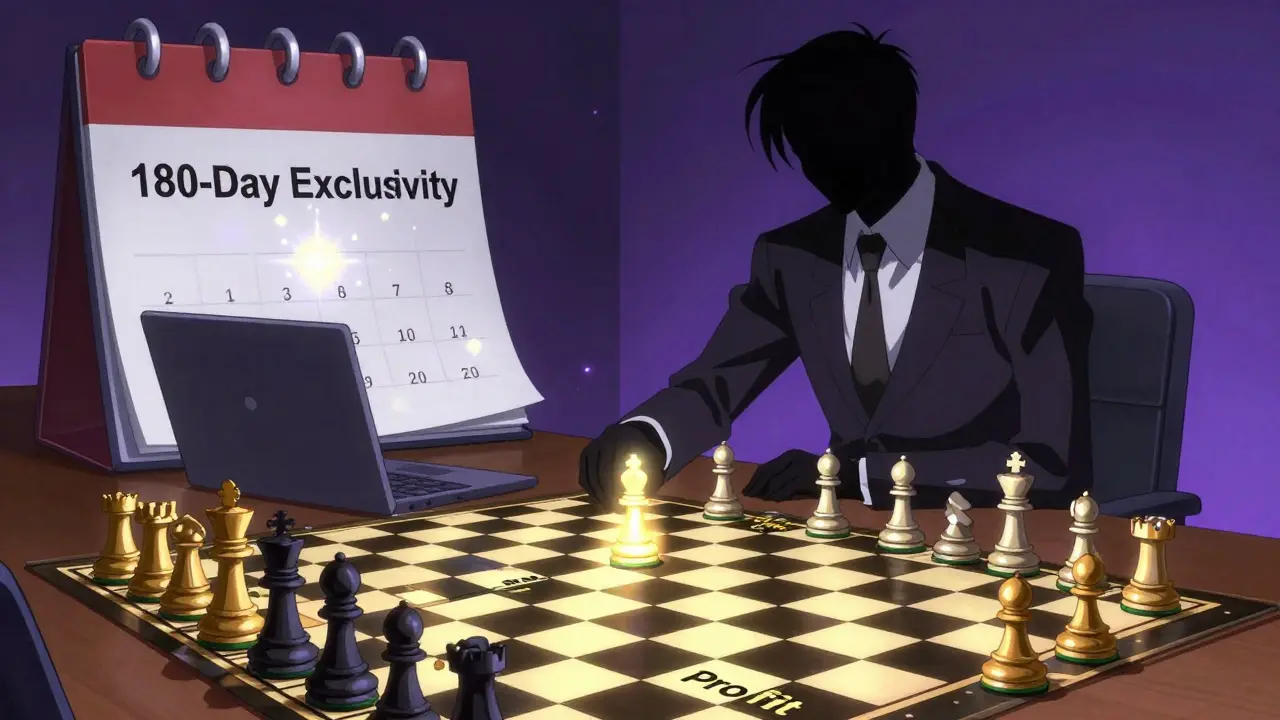
A key part of this system is the 180-day exclusivity period. The first generic company to challenge a brand's patent and win gets six months of exclusive rights to sell that generic. During this time, no other generics can enter. This is a golden ticket for the generic manufacturer, often worth hundreds of millions of dollars. Brand companies hate this. So, they launch an authorized generic right before or during this window. Why? To steal thunder from the exclusive generic maker.
If the brand launches an authorized generic, the exclusive generic maker suddenly has to compete with the original manufacturer. Their projected revenues can drop by 40-52% during those crucial 180 days. This dynamic chases away many potential generic challengers. If a generic company thinks the brand will launch an authorized generic, they might decide the lawsuit isn't worth the risk. They need a 10% chance of winning to justify the cost when an authorized generic is expected, compared to only a 4% chance otherwise. This chilling effect means fewer traditional generics ever get developed for certain drugs, which ultimately hurts long-term competition.
Who Actually Gets an Authorized Generic?
If you're wondering whether your specific medication will ever get an authorized generic, look at the sales numbers. Data shows that authorized generics are heavily concentrated in high-value therapeutic areas. About 42% of all authorized generics are for central nervous system drugs, 28% for gastrointestinal medications, and 19% for cardiovascular drugs. These are categories where patients take medication daily for years, creating steady, predictable revenue streams.
Consider the case of Mylan and the EpiPen. In 2016, facing public backlash over high prices, Mylan launched an authorized generic version of the EpiPen Auto-Injector. They did this while the brand was still under patent protection. It was a PR move as much as a financial one. On the other hand, Teva launched an authorized generic for Protonix in 2010, pricing it 35% below the brand. Both moves were calculated risks based on the sheer volume of sales. If you are taking a niche antibiotic or a rare disease treatment, the chances of seeing an authorized generic are near zero. The market isn't big enough to justify the dual-brand strategy.
| Feature | Authorized Generic | Traditional Generic |
|---|---|---|
| Regulatory Pathway | Uses existing Brand NDA | Requires new ANDA filing |
| Time to Market | Immediate (weeks) | 3-4 years average |
| Manufacturer | Original Brand Company | Independent Competitor |
| Bioequivalence Testing | Not required (identical product) | Required by FDA |
| Pricing Impact | Modest reduction (4-14%) | Significant reduction (80-90%) |
| Availability | Selective (High-revenue drugs only) | Widespread (Most off-patent drugs) |
The Confusion at the Pharmacy Counter
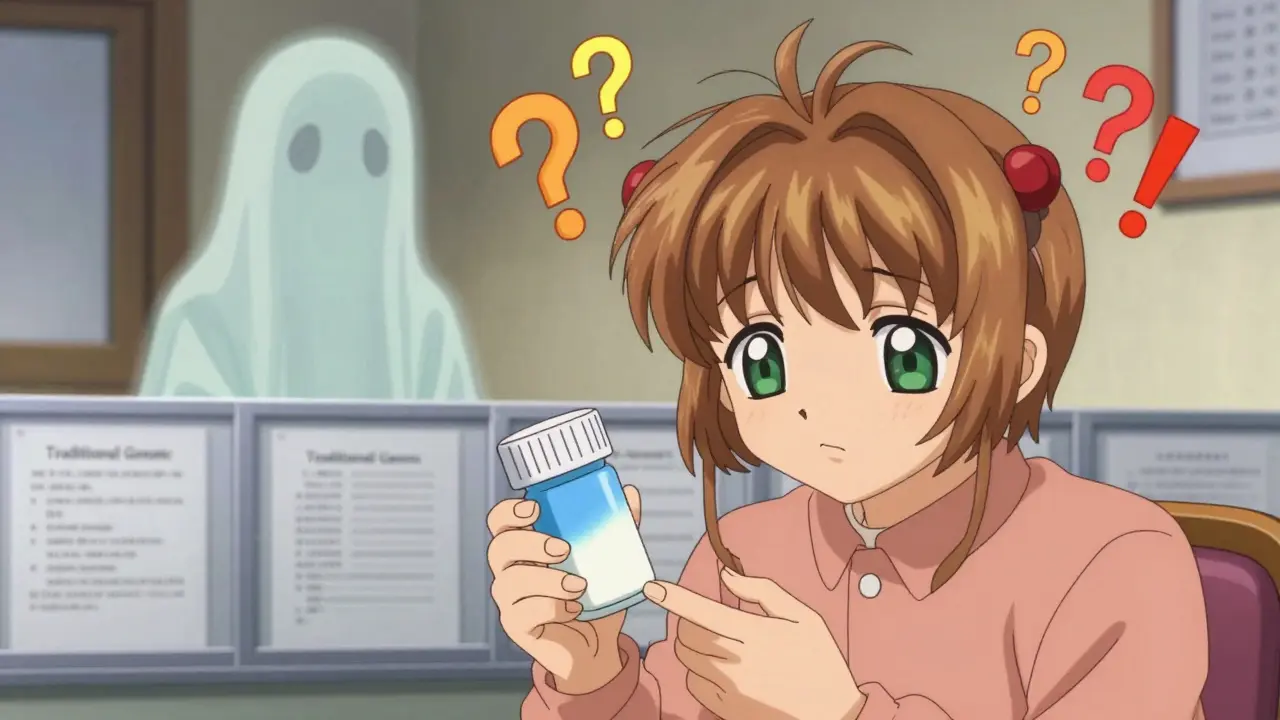
You might think that having two versions of the same drug-one branded, one authorized generic-is a simple matter of checking a box. But for pharmacists and doctors, it creates real headaches. Since the authorized generic is chemically identical to the brand, it looks almost the same. The packaging might differ slightly, but the pill itself is often indistinguishable.
A study published in U.S. Pharmacist found that Walgreens staff experienced 27% more prescription processing errors when both versions were available. Imagine picking up your heart medication, expecting the blue bottle you’ve had for years, and getting a white one with different labeling. Is it the brand? Is it the generic? Did the pharmacy make a mistake? This confusion leads to delays, extra phone calls, and anxiety for patients. In a 2018 survey by the American Medical Association, 63% of physicians said the proliferation of authorized generics complicated their therapeutic substitution decisions. They weren't sure if they should trust the authorized version or stick to the brand, even though the science says they are the same.
Patients aren't immune to this stress either. AARP’s analysis showed that while patients saved money, 72% of Medicare Part D respondents reported confusion when their "generic" medication suddenly appeared in different packaging. For elderly patients managing multiple medications, visual consistency is a safety feature. Breaking that consistency, even for a small discount, introduces risk.
Future Outlook: Will Authorized Generics Disappear?
The landscape is shifting. Regulatory bodies are watching closely. The FTC has filed briefs arguing that authorized generics undermine the competitive spirit of the Hatch-Waxman Act. In 2023, legislation was reintroduced in Congress with 43 cosponsors aiming to restrict their use during the 180-day exclusivity period. Meanwhile, the FDA updated its listing system in 2022 to provide quarterly updates, trying to bring more transparency to a previously opaque market.
However, industry trends suggest authorized generics aren't going away anytime soon. They are becoming a standard part of patent settlement strategies. Between 2018 and 2022, 78% of "reverse payment" settlements included clauses where brand companies promised *not* to launch authorized generics. This proves that both sides view them as powerful weapons. Brands use them to deter litigation; generic makers demand guarantees against them to secure fair deals.
Looking further ahead, Goldman Sachs predicts that authorized generic usage may decline by 15-20% over the next decade. Why? Because biosimilars-complex biological versions of generics-are becoming more prevalent. Biosimilars follow different rules and don't lend themselves easily to the authorized generic model. As the drug pipeline shifts toward biologics, the era of the simple chemical authorized generic may slowly fade. But for now, if you're taking a blockbuster chemical drug, expect the brand owner to play this game. And if you're taking a smaller, less profitable drug, expect to wait for a traditional generic-or pay the brand price indefinitely.




Ashley Jacelyn June 18, 2026
I really appreciate how clearly this breaks down the economic incentives behind authorized generics. It’s so easy to feel frustrated when you can’t find a cheaper option for your meds, but understanding that it’s purely a strategic move by big pharma helps contextualize why some drugs get them and others don’t. It’s reassuring to know that at least for some high-revenue drugs, there is a mechanism to lower costs slightly, even if it’s not perfect. Let’s hope more transparency leads to better access for everyone in the future.
Amy Bogdahn June 19, 2026
Typical corporate greed. They profit off our suffering while hiding behind legal loopholes. Pathetic.
Bruno Sarri June 20, 2026
It’s important to remember that while the system is flawed, many people are working hard to navigate these challenges every day. I’ve seen friends struggle immensely with medication costs, and it’s heartbreaking. However, dismissing the entire industry as purely evil might overlook the complex regulatory environment they operate in. Maybe we can focus on supporting policies that encourage genuine competition rather than just criticizing the current model? Understanding the nuances here could help us advocate for more effective solutions that actually benefit patients like us.
Sonam Norbu June 20, 2026
You people need to wake up and realize that this is happening because we allow foreign companies to dictate our domestic healthcare standards! If we had true American manufacturing dominance and strict borders on intellectual property, we wouldn't be seeing this kind of price gouging. It’s weak leadership that lets these globalists exploit our citizens. We need to bring production back home and stop subsidizing inefficiency. Only then will we see real change and protect our own interests first.
Dez Johnston June 22, 2026
I tend to stay quiet in these discussions, but I wanted to share that I recently switched to a traditional generic for a chronic condition after reading similar articles. The savings were significant, though the transition was a bit confusing initially due to packaging changes. It made me realize how much we rely on brand loyalty without questioning the cost implications. Perhaps sharing personal experiences like this could help others feel less alone in navigating the pharmacy counter chaos. It’s a small step, but every bit of awareness helps.
Koushiki Behera June 22, 2026
The philosophical implication here is profound: when does commerce cease to serve humanity and begin to enslave it? 🧘♀️ We must question the very nature of value in healthcare. Is life priced by market forces or by intrinsic worth? This dichotomy between profit and well-being is the central conflict of our age. We need a shift in consciousness, not just policy. Embrace the truth that health is a right, not a commodity. 🌿✨
KESHAV KUMAR June 24, 2026
Sure, let’s pretend the FDA is some benevolent guardian angel watching over us. Please. The whole system is a joke. They update their listing methodology to 'quarterly updates' like that fixes anything. It’s just bureaucratic theater. Meanwhile, we’re stuck paying through the nose because the suits in DC can’t agree on whether to ban something or not. Classic. 🙄
Hafiz Omeiza June 26, 2026
It is imperative to understand the Hatch-Waxman Act’s original intent versus its current exploitation. The legislation was designed to balance innovation with access, yet it has been twisted into a tool for monopolistic behavior. The data presented regarding the 180-day exclusivity period is particularly illuminating. One must recognize that the 4-8% price drop cited by the FTC is negligible compared to the 80-90% reduction seen with traditional generics. Therefore, the existence of authorized generics effectively delays meaningful competition. This is not a minor inconvenience; it is a structural failure of market regulation that demands rigorous academic and legislative scrutiny. Ignorance of these mechanisms is no excuse for accepting inflated drug prices.
Alex Johnston June 26, 2026
Wake up, sheeple! 🐑 The authorized generic is just another layer of the deep state’s control grid. They want you confused at the pharmacy counter so you don’t notice what they’re putting in your pills. The ‘mix-ups’ aren’t accidents; they’re features. The FDA isn’t protecting you; they’re part of the syndicate. Read between the lines. The 27% error rate? That’s them testing compliance. Don’t let them gaslight you into thinking this is about money. It’s about control. Stay vigilant. 👁️🚫