
Ever since you've stood at a pharmacy counter and felt your heart sink as the pharmacist tells you the price of a prescription? You aren't alone. The U.S. healthcare system is a maze of list prices, net prices, and middle-men that makes it feel like you need a degree in finance just to get your medicine. But here is the truth: the price you're quoted isn't always the price you have to pay. Between new laws like the Inflation Reduction Act a 2022 law that allows the government to negotiate drug prices for the first time and simple pharmacy hacks, there are real ways to cut your bills.
The Quick Way to Save on Prescriptions
If you need to lower your costs right now, start with these three moves. They are the fastest ways to reduce out-of-pocket spending without waiting for insurance approvals.
- Ask for the generic: Generic versions of drugs are chemically identical to brands but cost a fraction of the price. If your doctor wrote "Dispense as Written," ask them if a generic is safe for you.
- Search for manufacturer coupons: Many pharmaceutical companies offer coupons that can knock hundreds of dollars off a brand-name drug. Just remember, these usually can't be combined with government insurance like Medicare.
- Check cost-plus pharmacies: Some new models, like Cost-Plus Drugs, strip away the middle-man markup and charge a flat service fee plus the actual cost of the drug. This can save you 30% or more on generics.
Understanding Generic Drugs and Biosimilars
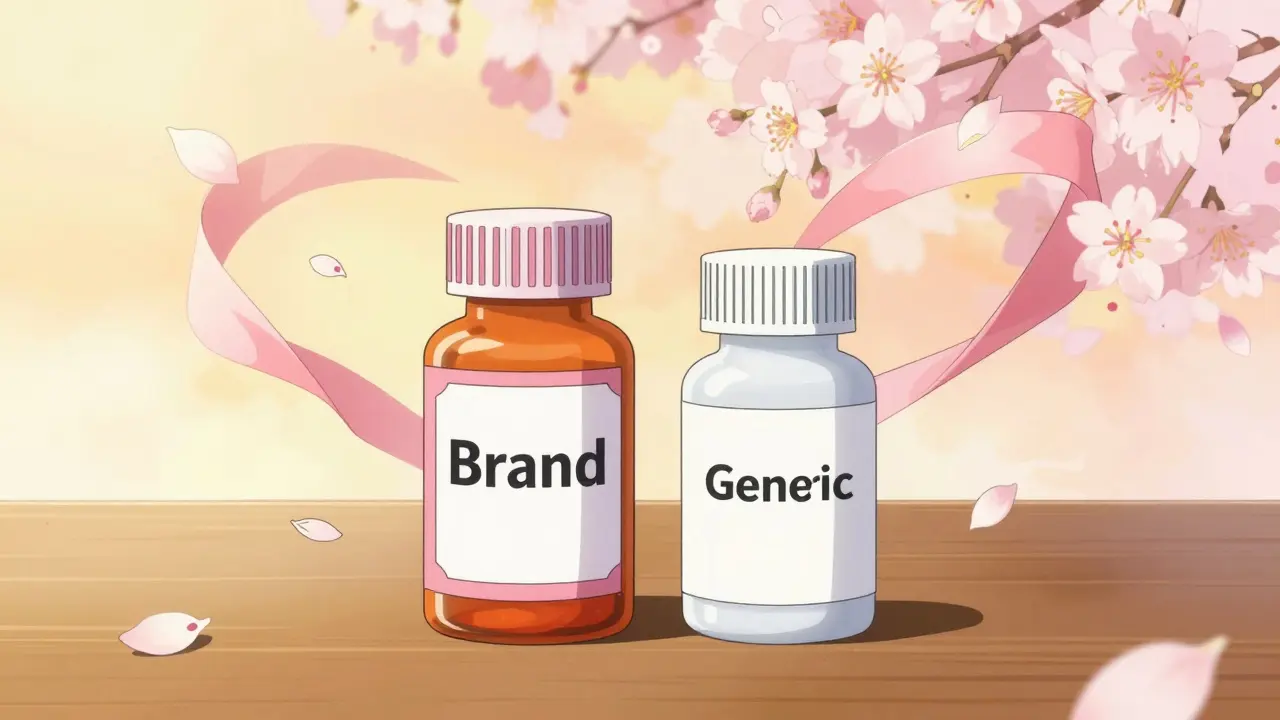
When a drug is first invented, the company gets a patent. This means they are the only ones who can sell it for a few years, which is why the price is so high. Once that patent expires, other companies can make Generic Drugs medications created to be the same as an approved brand-name drug in dosage, safety, strength, and quality. They aren't "knock-offs"; they are regulated by the FDA to ensure they work exactly the same way.
For more complex medicines, like those used for autoimmune diseases, you'll see Biosimilars. These are essentially the "generics" of biological drugs. Because biologics are grown from living cells, they can't be exact copies, but biosimilars are designed to provide the same clinical result. Switching to a biosimilar can be a huge win for your wallet, especially for high-cost specialty medications.
| Feature | Brand-Name Drug | Generic Drug | Biosimilar |
|---|---|---|---|
| Cost | High (Patent Protected) | Low (Competitive Market) | Lower than Brand Biologic |
| Composition | Original Formula | Identical Chemical Copy | Highly Similar (Biological) |
| FDA Approved? | Yes | Yes | Yes |
| Availability | Single Manufacturer | Multiple Manufacturers | Few Manufacturers |
Dealing with Prior Authorizations
There is nothing more frustrating than getting to the pharmacy only to be told your insurance requires a Prior Authorization a requirement from a health insurance company that a physician must provide a justification before a specific drug is covered (PA). Basically, your insurance is saying, "We might pay for this, but first, prove that the patient actually needs it and that cheaper alternatives didn't work."
Don't let a PA stop your treatment. Often, the insurance company just wants to see that you tried a cheaper drug first-a process called "step therapy." If you have a medical reason why the cheaper drug won't work, your doctor needs to write a letter explaining that. Be proactive: ask your doctor's office if they've submitted the PA paperwork before you even leave the clinic. If it's denied, you can appeal the decision, and in many cases, a second look by a medical reviewer will flip the result to an approval.
Navigating Medicare Part D and the New 2026 Changes
If you're on Medicare, the landscape is shifting in a way that actually favors the patient. For years, the "donut hole" or coverage gap left millions of seniors paying full price for their meds after hitting a certain limit. That is changing. As of 2025 and into 2026, there is a $2,000 out-of-pocket cap on prescription drugs. This means once you spend $2,000 on covered meds in a year, you're done paying for the rest of that year.
Even bigger is the government's new role in pricing. For the first time, the Centers for Medicare & Medicaid Services (CMS) the federal agency that manages Medicare and Medicaid programs is negotiating prices directly with drug companies. By January 2026, the first 10 negotiated drugs will take effect, which is expected to save Medicare billions of dollars. This is a fundamental shift from the old system where the government just accepted whatever price the manufacturer set.
The Role of Pharmacy Benefit Managers (PBMs)
You've probably never heard of a Pharmacy Benefit Manager (PBM), but they control almost everything about what you pay. PBMs are the middle-men between the drug makers and the insurance companies. They create the "formulary"-the list of drugs your insurance will cover.
PBMs often use "spread pricing," where they charge the insurance company one price and pay the pharmacy a much lower price, pocketing the difference. This lack of transparency is why you might see a price of $50 at one pharmacy and $150 at another for the exact same pill. To fight this, some states are creating drug affordability boards to set upper limits on what can be charged, trying to bring some sanity back to the pharmacy counter.
Practical Tips for Long-Term Savings
Managing medication costs isn't a one-time fix; it's a strategy. Here are a few rules of thumb to keep your costs down over the long haul:
- Sync your prescriptions: Ask your pharmacist about "med synchronization." This aligns all your refills to one day a month, reducing trips and potentially allowing you to negotiate better bulk pricing or shipping.
- Use mail-order for 90-day supplies: Insurance companies almost always prefer 90-day supplies over 30-day refills, and it's usually cheaper per pill.
- Review your formulary annually: Insurance companies change their covered drug lists every year. A drug that was "Tier 1" (cheap) last year might be "Tier 3" (expensive) this year. Check your plan in the fall to avoid surprises in January.
- Look into the 340B Program: If you visit a federally qualified health center, ask if they participate in the 340B Drug Pricing Program. These clinics get drugs at a deep discount and can often pass those savings to underserved patients.
Are generic drugs really as safe as brand names?
Yes. The FDA requires generic drugs to have the same active ingredient, strength, dosage form, and route of administration as the brand-name drug. They must also prove "bioequivalence," meaning the drug works in the body at the same rate and to the same extent as the original.
What should I do if my prior authorization is denied?
First, ask your doctor for the specific reason for the denial. If it's because you haven't tried a cheaper alternative, ask your doctor if that alternative is safe for you. If it is, try it. If not, have your doctor submit a "letter of medical necessity" explaining why the specific drug you were prescribed is the only viable option for your condition.
Can I use a drug coupon if I have Medicare?
Generally, no. Federal law prohibits the use of manufacturer coupons for people enrolled in government programs like Medicare or Medicaid. However, there are often "Patient Assistance Programs" (PAPs) run by the drug companies that provide free or low-cost medicine to eligible low-income patients regardless of insurance.
How does the $2,000 out-of-pocket cap work?
Under the new Medicare Part D rules, once you have spent $2,000 of your own money on covered prescription drugs in a calendar year, you no longer have to pay any out-of-pocket costs for covered drugs for the remainder of that year. This eliminates the previous "coverage gap" where patients faced higher costs.
What is the difference between a generic and a biosimilar?
Generics are chemical copies of simple molecules (like aspirin or metformin). Biosimilars are "highly similar" versions of complex biological proteins (like insulin or monoclonal antibodies). Because biologics are grown in living cells, they can't be identical copies, but biosimilars are designed to have no clinically meaningful difference in safety or effectiveness.



Sue Stoller April 23, 2026
Omg this is so helpful!! 🌟 I had no idea about the cost-plus pharmacies, I'm definitely going to check those out tomorrow morning! Keep fighting the good fight everyone, we got this! 💪✨💖
Emma Cozad April 24, 2026
typical us gov nonsense lol. why do we even pay for insurance when the pbm's just steal the money and the laws are too lated anyway. totaly broken system
Rick Brewster April 25, 2026
one must ponder if the very act of seeking a discount is a symptom of a late stage capitalist decay where health is mere commodity and the pharmaceutical complex is the new priesthood of our era though frankly the lack of transparency in pbm pricing is just a clumsy veil for systemic greed that most people are too blinkered to see in their daily grind
Ajinkya Joshi April 27, 2026
Oh wow, a guide on how to navigate a broken system. Truly groundbreaking. I'm sure the drug companies are shaking in their boots now that we know what a generic is. 🙄
Chidi Prosper April 27, 2026
The point about the 340B program is critical. Many people simply don't know that community health centers have these pathways to make meds affordable.
Sarah Watters April 27, 2026
The government negotiating prices is just another way for them to control what we put in our bodies. First they tell you which generic to take and then they decide who gets the medicine based on some secret algorithm. It's all a play to keep us compliant and dependent on the system while the elites just laugh from their bunkers.
Nicole Antunes April 28, 2026
It is truly heartening to see more options for the elderly. :) The $2,000 cap is a wonderful step forward for accessibility.
vimal purwal April 30, 2026
While I generally agree with the premise of the author's guidance, it is imperative that we recognize that the complexity of prior authorizations often stems from a systemic failure in the communication bridge between the prescribing physician and the insurance adjudicator, which creates a vacuum of care that can only be filled by patient advocacy and a rigorous adherence to the documentation process to ensure no one is left behind in the pursuit of health, especially in underserved regions where such administrative burdens are amplified by a lack of medical staff to handle the endless paperwork required by these bureaucratic entities.
Divyanshu Giri April 30, 2026
This is gold! Pure gold! Go get those discounts people! Let's smash those high prices together!
Anantha Lakshmi May 1, 2026
Just a heads up everyone, if you're struggling, don't be afraid to be a bit assertive with your doctor's office! 💥 Sometimes they just need a nudge to get that PA sent over quickly. We can do this! 🌈
Ally Warren May 1, 2026
The duality of the PBM is fascinating; they exist as a shield for the insurance company while pretending to be a bridge for the pharmacy. It's a corporate paradox that mirrors the broader absurdity of modern healthcare.
Mel Glick May 2, 2026
The PBMs are absolutely parasitic. They don't provide a service, they just extract wealth from the sick and the pharmacies. It's a disgrace that this is legal in a developed country. We need a total overhaul, not just a few tweaks to the formulary.