When a drug’s patent runs out, the price doesn’t just drop-it crashes. For patients, that can mean paying 80% less for the same medicine. For hospitals and insurers, it’s a chance to save millions. But none of that happens automatically. If you’re on a chronic medication like Humira, Enbrel, or Lipitor, and you don’t plan ahead, you could face disruptions, confusion, or even higher out-of-pocket costs. The patent cliff isn’t coming-it’s already here. Between 2025 and 2029, over $90 billion in brand-name drug sales in the U.S. will lose protection. That’s not a future threat. It’s happening right now.
What Happens When a Patent Expires?
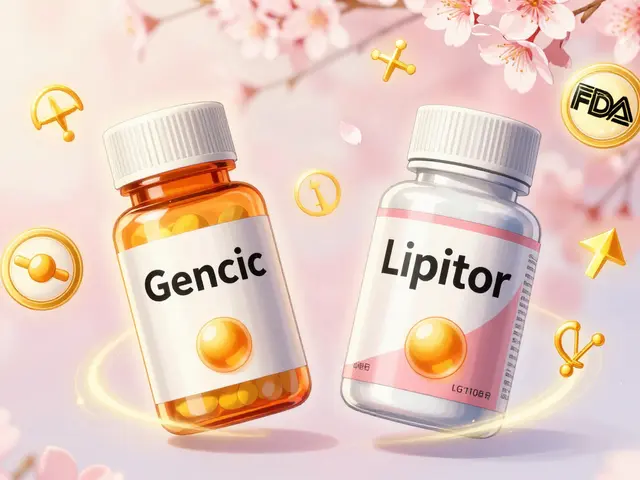
When a drug’s patent expires, other companies can legally make and sell generic versions. These generics must meet the same safety and effectiveness standards as the brand-name drug. The FDA requires them to be bioequivalent-meaning they deliver the same amount of active ingredient into your bloodstream within a narrow range (80-125% of the original). That sounds straightforward, but it doesn’t mean they’re identical. The inactive ingredients-fillers, dyes, coatings-can be different. For most people, that’s no problem. But for some, those changes cause side effects like stomach upset, rashes, or headaches. A 2022 Kaiser Family Foundation survey found that 37% of patients on long-term meds reported new symptoms after switching to generics, even though the drugs were legally approved as equivalent.
For complex drugs like biologics-used to treat cancer, rheumatoid arthritis, and Crohn’s disease-the story is different. These aren’t simple chemicals; they’re made from living cells. Copying them is like cloning a tree instead of copying a recipe. That’s why we get biosimilars, not generics. Biosimilars are highly similar, but not identical. They’re harder to make, take longer to get approved, and cost more to produce. As a result, they don’t drop in price as fast. While a small-molecule generic might cost 85% less than the brand within a year, a biosimilar might only be 20-40% cheaper, even after two years on the market.
Why Don’t Prices Drop Overnight?
You’d think once a patent expires, generics flood the market and prices plummet. But in the U.S., that’s not how it works. Unlike in Europe, where governments set price benchmarks and force pharmacies to use the cheapest option, the U.S. system is tangled in rebates, contracts, and formularies. Drugmakers pay pharmacies and insurers huge rebates to keep their brand-name drugs on the preferred list-even after generics are available. This means your insurance might still push you toward the expensive brand because it gets a bigger kickback. You end up paying more out of pocket, even when cheaper options exist.
Companies also use tricks to delay competition. One common tactic is called “product hopping.” They make a tiny change-switching from a pill you take twice a day to a pill you take once a day-and then patent that new version. Suddenly, the old drug is no longer covered, and patients are pushed to the new, still-patented version. Another tactic is “pay-for-delay,” where the brand-name company pays a generic maker to wait before launching its cheaper version. The FTC reported a 35% drop in these deals in 2023, thanks to new laws, but they still happen.
What Patients Should Do
If you’re taking a drug that’s about to lose its patent, don’t wait for your doctor to bring it up. Start asking questions now.
- Check your drug’s patent status. Use the FDA’s Drug Approvals database or sites like GoodRx to see if a generic or biosimilar is available or coming soon. Many drugs have public expiry dates listed.
- Ask your pharmacist about alternatives. Pharmacists know what’s coming down the pipeline. They can tell you if a cheaper version is approved and when it might be in stock.
- Don’t assume your insurance will switch you. Even if a generic is available, your plan might not cover it unless you request it. Call your insurer and ask: “Is there a generic version of my drug? Will it be covered at a lower cost?”
- Watch for side effects after switching. If you feel worse after switching to a generic, talk to your doctor. It’s not just in your head. Some people react to different fillers or coatings. You may need to try a different generic brand.
- Use mail-order or discount programs. Once generics hit the market, prices can drop dramatically. Sites like GoodRx or SingleCare often list prices lower than your insurance copay. For some drugs, paying cash is cheaper than using insurance.
What Healthcare Systems Must Plan For
Hospitals, clinics, and insurers have a bigger job. They’re managing thousands of prescriptions and millions of dollars in spending. A single drug losing patent protection can change their entire budget.
The best systems start planning two years before a patent expires. That’s not optional-it’s essential. Here’s what they do:
- Build a patent expiry task force. This team includes pharmacists, doctors, finance staff, and contract negotiators. They track every drug with an upcoming expiry-over 1,400 in the U.S. each year.
- Forecast the market. They check how many generic manufacturers are ready to enter, what their pricing will be, and whether biosimilars are coming. Some use AI tools that predict delays or approvals with 89% accuracy.
- Update formularies early. A formulary is the list of drugs a plan covers. They remove the brand-name drug from preferred status and put the generic or biosimilar in its place. This happens 12 months before expiry to give providers time to adjust.
- Train clinicians and educate patients. Doctors need to know how to switch patients safely. Patients need to understand why the change is happening and what to expect. Materials are distributed six months before the switch.
- Negotiate contracts with manufacturers. The moment a generic launches, prices drop fast. Systems lock in contracts for the lowest possible price before the flood hits. Those who wait lose savings.
Systems that start early save an average of $4.7 million per drug. Those who wait 12 months or less save only $3.8 million. That’s a 22% difference in savings-just from timing.
Therapeutic Areas at Highest Risk
Not all drugs are created equal. Some are hitting the patent cliff harder than others.
- Immunology (Humira, Enbrel, Stelara): These biologics are the biggest money-makers. Humira alone brought in $20 billion in 2022. Biosimilars are finally coming, but adoption is slow. Only 18% of patients switched in the first year.
- Neuroscience (Lipitor, Nexium): These small-molecule drugs are easier to copy. Once generics arrive, 90% of prescriptions switch within a year. Savings are massive.
- Oncology (Avastin, Rituxan): Biosimilars are gaining traction here faster than in other areas. About 45% of patients switched within 12 months. But the drugs are expensive, so even a 30% discount saves millions.
- Cardiovascular (Lipitor, Plavix): These are the success stories. Once generics hit, over 90% of prescriptions become generic. Prices drop to 10-15% of the original.
The difference? Simplicity. Pills you swallow are easier to copy than injections made from living cells. That’s why biologics are the next big challenge.
The Bigger Picture: Regulation and Reform
Change is coming. The 2022 Inflation Reduction Act lets Medicare negotiate prices for some drugs after they lose patent protection. Starting in 2026, 10-20 drugs will be selected each year. That could force manufacturers to lower prices even faster.
Also, the FDA is speeding up approvals for complex generics. Their new GDUFA III rules aim to cut the approval timeline from 18 months to 12. That means more generics will hit the market sooner.
But the biggest threat to patients and systems isn’t the patent expiry-it’s the delay tactics. The CREATES Act, passed in 2023, made it harder for companies to block generic manufacturers from getting samples to test their drugs. That’s a win. But patent thickets-where one drug has 50+ patents-are still legal. A single drug can have patents on the pill shape, the coating, the manufacturing process, even the way it’s packaged. That’s how companies stretch exclusivity for years beyond the original patent.
What’s Next?
The next wave is gene therapies and personalized medicines. These aren’t pills you take every day. They’re one-time treatments costing over $1 million. Their patent timelines are unclear. Will they get 20 years? Will regulators treat them like biologics? No one knows yet. But if we don’t fix the system now, we’ll face even bigger cost shocks down the road.
The bottom line: patent expiry isn’t a technical footnote. It’s a financial earthquake. For patients, it’s a chance to save hundreds or thousands a year. For systems, it’s a chance to redirect billions into care instead of profits. But only if you plan for it.
What happens to my prescription when a drug’s patent expires?
Your doctor or pharmacy may switch you to a generic or biosimilar version, which is cheaper and legally equivalent. But this doesn’t happen automatically. You need to check with your provider and insurer to confirm the change and ensure it’s covered at a lower cost.
Are generic drugs as safe as brand-name drugs?
Yes. The FDA requires generics to have the same active ingredient, strength, dosage form, and route of administration as the brand-name drug. They must also be bioequivalent, meaning they work the same way in your body. However, inactive ingredients can differ, which may cause side effects in some people.
Why is my generic drug more expensive than expected?
Insurance rebates and formulary rules can make brand-name drugs cheaper for you than generics-even after the patent expires. Your insurer may get a bigger rebate from the brand company, so they keep it on the preferred list. Always compare prices using GoodRx or your pharmacy’s cash price-it’s often lower than your copay.
How do I know if a biosimilar is right for me?
Biosimilars are highly similar to biologics but not identical. Your doctor will consider your condition, past response to the original drug, and any side effects. For most patients, biosimilars are safe and effective. But if you’ve had a bad reaction to a previous switch, discuss it with your provider before switching.
Can I stay on my brand-name drug after the patent expires?
Yes, but you’ll likely pay more. Many insurance plans require you to try the generic first (a process called step therapy). If you still want the brand, you may need a prior authorization or pay the full price out of pocket. Some patients with allergies or intolerances to generics can get exceptions.
How long does it take for prices to drop after a patent expires?
For small-molecule drugs, prices usually drop 70-90% within a year. For biosimilars, it takes longer-often 18-24 months to reach 20-40% savings. The speed depends on how many manufacturers enter the market and whether your insurer negotiates a good contract.




Edith Brederode January 20, 2026
This is such a needed post! 🙌 I switched my mom from Humira to a biosimilar last year and she’s been fine-saved us $1,200/month. Just make sure to monitor for any weird rashes or fatigue. Pharmacist was super helpful!
Emily Leigh January 20, 2026
Ugh, another ‘plan ahead’ lecture… like I have time to research drug patents while juggling two jobs and a kid with asthma. Just lower the prices already.
clifford hoang January 20, 2026
They don’t want you to know this-but the real reason generics don’t drop fast is because the FDA, Big Pharma, and Medicare are all in a secret cabal. The ‘bioequivalent’ standard? A lie. They’re testing on homeless people in rural clinics. Look up Project Echo. It’s all connected.
thomas wall January 21, 2026
The American healthcare system is a grotesque parody of market efficiency. In the UK, generics are automatically dispensed upon patent expiry-no formularies, no rebates, no corporate theatrics. Patients are not commodities. This is not a market failure. It is a moral failure.
Nadia Watson January 22, 2026
I'm a nurse in Ohio and I see this every day. Patients get switched to generics and then come in saying 'I feel like a zombie' or 'my joints ache more'. It's not all in their head. The fillers matter. Especially for folks with autoimmune stuff. Just tell 'em to call their doc if something feels off. No shame.
pragya mishra January 24, 2026
Why do you think this is only a US problem? In India, we get generics in weeks. Prices are 95% lower. Your system is broken because you let corporations write laws. Stop blaming patients.
Manoj Kumar Billigunta January 25, 2026
I live in rural India and we get all the generics before the US does. My cousin takes Lipitor generic for $2 a month. Here in the US, people pay $400 because of insurance tricks. This isn't about science. It's about greed. I'm glad someone finally said it.
Art Gar January 27, 2026
The notion that patients must ‘plan ahead’ for drug affordability is an indictment of a society that has abdicated its responsibility to ensure basic healthcare access. One cannot reasonably expect individuals to navigate regulatory mazes when systemic reform remains politically anathema. This is not empowerment; it is victim-blaming dressed in clinical language.
Crystal August January 28, 2026
I’ve been on Enbrel for 8 years. They switched me to a biosimilar without telling me. I got a rash that lasted 3 weeks. Now my doctor says ‘it’s probably coincidence’. Bullshit. I want my brand back, even if I pay more. My body isn’t a lab rat.
Courtney Carra January 30, 2026
The real tragedy isn't the patent cliff-it's that we treat medicine like a commodity instead of a right. I'm not mad at the companies. I'm mad at us. We let this happen. We voted for the people who let this happen. And now we're supposed to ‘shop around’ for cheaper insulin? That’s not capitalism. That’s cruelty.
Paul Barnes January 30, 2026
The FDA’s bioequivalence range of 80–125% is statistically absurd. A 25% variance in plasma concentration is not ‘equivalent’-it’s a therapeutic wildcard. This is not science. It’s regulatory theater.
Shane McGriff February 1, 2026
I appreciate this breakdown. One thing I’d add: if you're switching to a generic and feel off, don’t just accept ‘it’s normal.’ Try a different generic brand. Sometimes it’s just one filler-like lactose or FD&C yellow-that’s the issue. I had a patient who switched from one generic to another and her migraines vanished. No one told her to try again.
Renee Stringer February 3, 2026
I'm not sure why this is even a conversation. If you can't afford your medication, you shouldn't be taking it. There are charity programs. There are clinical trials. There are government aid options. If you're still struggling, then maybe your priorities are misplaced.