Excipients: What They Are and Why They Matter in Your Medications
When you swallow a pill, you’re not just taking the medicine you need—you’re also taking excipients, non-active ingredients added to medications to help with manufacturing, stability, or absorption. Also known as inactive ingredients, these substances make up most of the pill’s weight and play a quiet but critical role in how your body responds to the drug. Without excipients, tablets wouldn’t hold their shape, capsules wouldn’t dissolve at the right time, and liquids wouldn’t stay mixed. They’re the unsung heroes—or sometimes the hidden troublemakers—in every medication you take.
Think of excipients like the ingredients in a cake. Flour, sugar, and eggs are the main parts, but baking powder and vanilla extract? They don’t give you energy, but they make the cake rise and taste right. In pills, common excipients include lactose, a sugar used as a filler in many tablets, microcrystalline cellulose, a plant-based binder that helps pills stay solid, and magnesium stearate, a lubricant that keeps machines running smoothly during production. These aren’t random chemicals—they’re carefully chosen to match the drug’s needs. But here’s the catch: if you’re allergic to lactose, sensitive to dyes, or have celiac disease, even a tiny amount of an excipient can trigger a reaction. That’s why some people feel worse on generics, even when the active ingredient is identical. It’s not the drug—it’s the filler.
Generic medications follow the same rules as brand-name drugs for active ingredients, but manufacturers can swap out excipients to cut costs or improve shelf life. A generic version of your blood pressure pill might use cornstarch instead of lactose, or a different coating that dissolves slower. For most people, it doesn’t matter. But for those with sensitivities, allergies, or digestive issues, that small change can mean the difference between feeling fine and feeling sick. That’s why switching between brands and generics isn’t always as simple as saving money. It’s about matching the whole formula to your body.
What you’ll find below is a collection of real-world stories and facts about how medications work behind the scenes—from how generics are made, to how insurance pushes certain formulations, to why some people react to pills they’ve taken for years without issue. These aren’t just drug guides. They’re about the hidden parts of your medicine that no one talks about until something goes wrong. And if you’ve ever wondered why your new prescription feels different, you’re not imagining it. The excipients might be why.
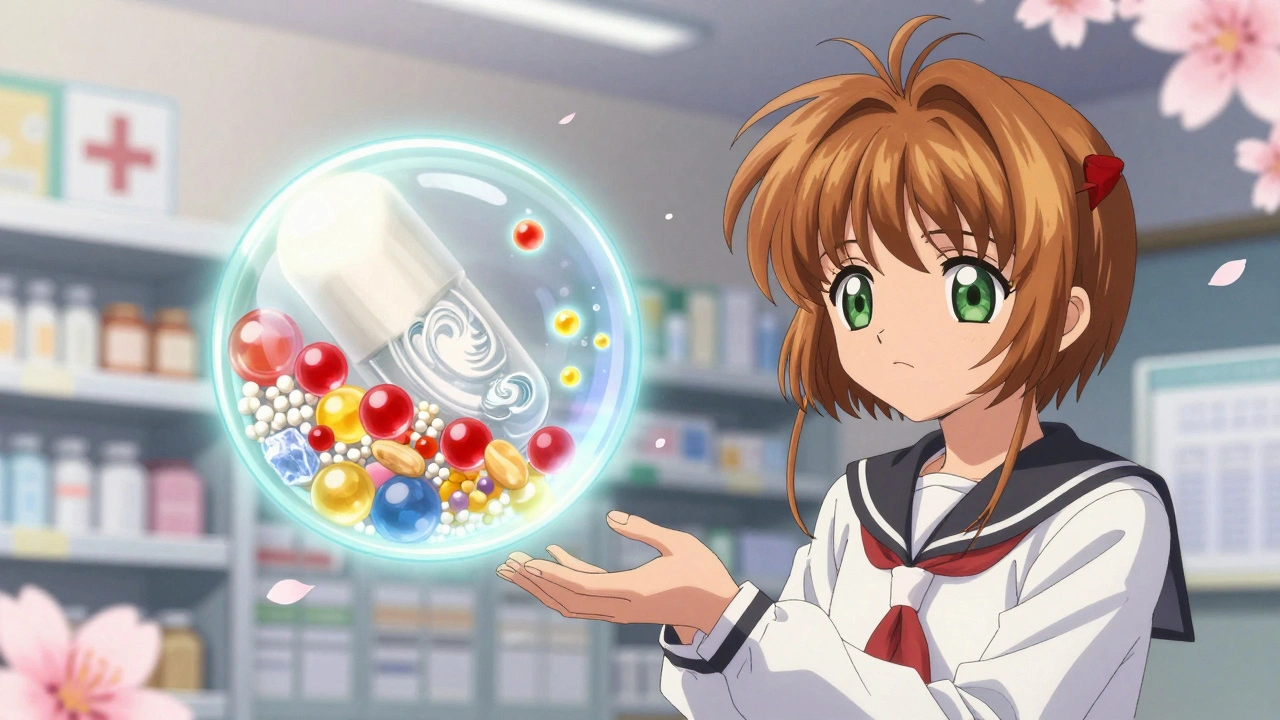
Inactive Ingredients in Generic Medications: What You Need to Know
Generic medications save money but may contain different inactive ingredients than brand-name drugs. These fillers can trigger allergies, digestive issues, or reactions in sensitive individuals. Learn what to look for and how to protect yourself.